COLUMN: CONSUMER PERSPECTIVE
When Beauty Routines Become Sleep Rituals
About the Author
Michelle Niedziela
I have over 10 years of experience in the cosmetic & personal care industries. I specialize in cosmetic research from concept to product launch, integrating knowledge of active ingredient benefits, and preclinical & clinical testing protocols to substantiate innovative marketing claims. Passionate about cell and skin biology, I create scientific content for B2B marketing strategies, translating complex data and results into clear, compelling, and science-based claims and storytelling for both professionals and non-scientific audiences to enhance brand identity in a constantly evolving industry.

Michelle Niedziela
Founder, Nerdoscientist LLC

KEYWORDS —
Consumer trends;
Sleep; Nighttime beauty;
Sensory experience;
Consumer behavior; Beauty innovation
“
“A study in healthy women providing probiotic yogurt for four weeks showed an improvement in emotional responses as measured by brain scans”
“I need my beauty sleep.”
We have long associated a good night’s rest with looking and feeling better the next day. But more and more often, that relationship seems to be moving in both directions. Beauty products are no longer simply positioned as something that benefits from sleep. They are also being positioned as part of the experience of preparing for it.
Nighttime skincare, pillow sprays, calming fragrances, body care, and other sensory products are finding their way into increasingly elaborate bedtime routines. A 2025 Vogue article described how sleep has become a growing area of interest for beauty brands, with products and rituals extending beyond traditional overnight skincare (Scott, 2025). And it is not uncommon to see consumer surveys for these evening products including a question or two on fit for bedtime.
At first this might seem like another example of beauty expanding into wellness. But from a consumer perspective, I think there is a more interesting question: What are consumers actually looking for when they incorporate these products into their nighttime routines?
Are they looking for better skin? Better sleep? A moment of relaxation? A sense of control over the end of a busy day? Or perhaps some combination of all of these?
Having worked on research exploring the role of sensory experiences in sleep rituals, including whether those experiences might translate into measurable sleep benefits, I have become particularly interested in this distinction. It is one thing to develop a product that consumers enjoy using before bed. It is another to understand whether that product becomes part of a meaningful wind-down routine, and another still to demonstrate that it actually improves sleep.
And for R&D and innovation teams, these are different questions than found in traditional consumer testing. And they may require us to think beyond the formula itself.
The Hero Ingredient Problem
When we think about products designed for nighttime use, a familiar cast of ingredients tends to appear: lavender, chamomile, sandalwood, bergamot, and other botanicals or fragrance notes associated with calm and relaxation.
Lavender is probably the clearest example. It has become almost shorthand for sleep. Pillow sprays, body lotions, bath products, candles, and overnight treatments routinely use lavender to signal that a product belongs in the nighttime routine. And there is some evidence behind that association. A recent systematic review and meta-analysis of 11 randomized controlled trials found that lavender essential oil was associated with improvements in adult sleep quality, although the studies varied considerably in population, delivery method, and methodology (Shen et al., 2026).
Chamomile carries a similar cultural association. A 2024 systematic review and meta-analysis involving 10 studies and 772 participants found improvements in overall sleep-quality scores and some measures of sleep initiation and maintenance, but not in sleep duration, sleep efficiency, or daytime functioning (Kazemi et al., 2024). Earlier trials have also produced mixed findings, underscoring how difficult it is to reduce “better sleep” to a single ingredient effect.
That nuance matters.
Consumers may recognize lavender or chamomile as “sleep ingredients” before they ever smell, touch, or use the product. The ingredient itself therefore does more than provide a sensory cue. It also creates an expectation. And once that expectation becomes part of a repeated nighttime routine, it becomes difficult to separate the effect of the ingredient from the effect of the ritual surrounding it.
Did the lavender improve sleep? Did the familiar scent help someone feel calmer? Did the act of applying the product signal that the day was over? Did the consumer expect it to work and therefore attend more closely to signs that they were relaxing?
For R&D, that may be the more interesting question. Rather than simply asking which “sleep ingredient” to formulate with, we may need to understand how the ingredient, sensory experience, expectation, and repeated behavior work together. Because the strongest sleep cue may not be the ingredient alone.
It may be what that ingredient has come to mean.
From Product Application to Learned Ritual
Most of us have some version of a nighttime routine, even if we do not think of it as one. We brush our teeth, wash our face, change clothes, turn down the lights, or perhaps apply a familiar moisturizer before getting into bed. Some routines are more elaborate. Others take only a few minutes.
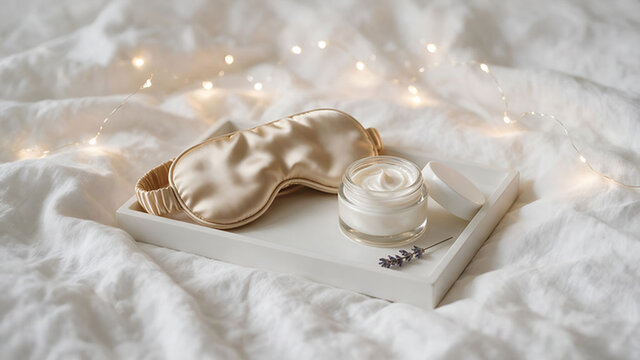
What makes these behaviors interesting is not just that they happen at night. It’s that, through their repetition, they become associated with a particular context and purpose. “I need X to do Y.” Like children with a favorite blanket, some people require a particular night face cream, eye mask, or white noise machine.
Research on habit formation has shown that repeating a behavior in a consistent context can increase its automaticity over time (Lally et al., 2010). In other words, we do not necessarily have to make a new decision every evening about whether to perform each step. The context itself can begin to cue the behavior.
This raises an interesting possibility for nighttime beauty products. A familiar scent, texture, or sequence of application may become part of the learned transition from the activities of the day toward rest. The product is no longer experienced only as a moisturizer, cleanser, or fragrance. It may also become a cue associated with winding down.
Importantly, that does not mean the product itself causes sleep. And making such claims can be much more complicated. Yet still, its value may develop partly through the role it plays in a repeated behavior.
This distinction is important because sleep routines are not simply a matter of adding more products or more steps. A 2024 review of sleep hygiene research found considerable inconsistency in how sleep hygiene is defined, although behavioral and environmental factors, including wind-down routines, are commonly included (De Pasquale et al., 2024). The broader lesson is that the context and structure of a routine matter, and we should be careful about assuming that any particular activity automatically produces a sleep benefit.
For beauty and personal care R&D, this suggests a different way of thinking may be required for product development. Instead of asking only, “How does this product perform?” we might also ask, “What role does this product play in the consumer’s transition into sleep?”
The Sensory Experience of Winding Down
Sensory experiences are particularly interesting in this context because they can become closely associated with memories, emotions, and familiar environments. A fragrance may remind someone of a particular place or experience. A warm shower may mark the end of the workday. The texture of a familiar cream may become part of a routine that feels comforting or predictable. But the relationship between sensory experience and sleep is not as simple as choosing an ingredient commonly associated with relaxation.
Fragrance provides a useful example. While lavender is frequently positioned as a calming or sleep-supportive scent, individual responses to odors can vary considerably. A scent that one person finds pleasant or comforting may be less appealing to another, and the context in which it is experienced may also matter.
A study by Sabiniewicz and colleagues (2022) examined the effects of several odors on sleep in 139 healthy participants. The researchers did not find a consistent overall improvement in sleep quality associated with a particular odor. However, the pleasantness of the odor to the individual was associated with more positive subjective sleep evaluations.
This is an important finding for sensory product development. It suggests that the question may not simply be whether a fragrance contains a particular ingredient, but how the consumer experiences that fragrance and what associations it carries.
There is also the question of delivery. A scent experienced briefly during application may be quite different from one that remains present throughout the night. A fragrance that feels pleasant when first applied may become too persistent, too intense, or simply unnecessary once someone is trying to sleep.
A more recent study by Li and colleagues (2025) examined nighttime odor exposure using different fragrances and delivery methods, including nasal clips, pillows, and diffusers. Some conditions were associated with improvements in subjective sleep quality, particularly diffuser delivery, but the researchers did not observe significant differences in objective sleep parameters measured by Fitbit devices. The study also found no sustained improvement after the exposure period.
However, these findings do not provide a simple answer about whether fragrance improves sleep. They can reinforce the importance of considering the sensory experience, the method of delivery, and the outcome being measured. And that is where the distinction between relaxation and sleep becomes especially important.
Feeling Relaxed Is Not the Same as Sleeping Better
Imagine asking consumers to evaluate a nighttime body lotion. They may tell us that the fragrance is calming, the texture feels luxurious, and the application helps them unwind. They may even report that they feel more ready for bed after using it.
Those are meaningful consumer experiences. But what exactly have we actually demonstrated?
Feeling relaxed is not necessarily the same as falling asleep faster. Falling asleep faster is not necessarily the same as sleeping longer. And sleeping longer is not necessarily the same as experiencing better sleep quality.
The scientific literature reflects this complexity. The Shen review, cited earlier in this article, reported an overall improvement in sleep quality, while also emphasizing limitations in study quality and the need for stronger research (Shen et al., 2025). The findings are interesting and encouraging, but they do not establish that every lavender-containing product, delivery method, or nighttime ritual will produce the same effect.
This is an area where I think consumer neuroscience and sensory research can make a particularly useful contribution. We can examine the immediate experience of a product, but we can also ask how that experience relates to physiological arousal, expectations, learned associations, and subsequent sleep outcomes.
The methods should follow the question. If the objective is to understand whether a product helps consumers feel more relaxed, self-report measures may be entirely appropriate. If the objective is to demonstrate improvements in sleep, then sleep diaries, validated questionnaires, actigraphy, or more comprehensive sleep measurements may be needed, depending on the claim and the research context.
The point is not that every nighttime beauty product needs to be tested in a sleep laboratory. It is that we should be clear about what we are trying to understand and avoid treating all sleep-related outcomes as interchangeable.
Designing for the Nighttime Experience
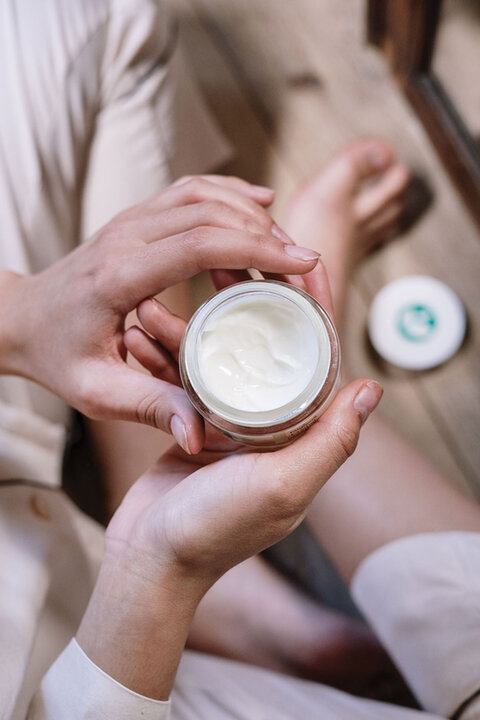
There is another reason (besides getting a better night's sleep) that I think this category deserves a broader consumer perspective: nighttime products are used in a very different context from daytime products.
A consumer may enjoy a rich cream during an afternoon sensory evaluation but find it uncomfortable when lying against a pillow. A fragrance may be appealing during application but too persistent at bedtime. A multi-step routine may feel like an enjoyable moment of self-care for one person and another obligation at the end of an exhausting day for someone else. These are not necessarily problems that can be identified through immediate liking or traditional product performance measures alone.
The relevant experience may begin before application and continue through the night and into the following morning. Does the product fit naturally into the consumer’s existing routine? Does it require additional effort? Does it interfere with comfort? Does the consumer remember the experience positively the next day? And, importantly, does the product deliver the benefit the consumer believes it is supposed to deliver?
Beauty brands are already beginning to frame nighttime care as a broader journey. For example, Estée Lauder’s nighttime skincare guidance organizes the experience around winding down, sleeping, and waking up, rather than focusing exclusively on the application of an overnight treatment (Estée Lauder, 2024).
For R&D, this creates an opportunity to think about the entire experience rather than only the moment of product use. It also raises a question that I think is particularly relevant to innovation: Are we designing a product that works at night, or are we designing a product that works with the consumer’s nighttime routine?
What This Means for R&D
The opportunity in sleeping beauty may not simply be to develop more products with calming fragrances, richer textures, or overnight claims. It may be to understand how sensory products can fit into the behaviors consumers already use to prepare for rest.
That requires looking beyond immediate product liking and asking how the product functions within the broader routine. What does the consumer do before using it? What happens afterward? Which sensory characteristics support the intended experience, and which create friction? Does the product become part of a repeated behavior, or is it abandoned after the novelty wears off?
It also requires distinguishing between different kinds of value. A product may provide a pleasant sensory experience, support a meaningful self-care ritual, or contribute to a perception of relaxation without necessarily producing measurable changes in sleep. Those benefits should not be dismissed simply because they are not equivalent to objective sleep improvement. But they should be understood and communicated accurately.
For products intended to make stronger sleep-related claims, the research needs to go further. The question becomes not only whether consumers enjoy the experience, but whether the product or ritual produces a measurable benefit, for whom, and under what conditions.
This is where combining sensory science, behavioral science, and appropriate physiological or sleep measures can help R&D move beyond assumptions about what a “relaxing” product should be.
The next opportunity in nighttime beauty may not come from adding another step to the routine. It may come from understanding which experiences help consumers leave the day behind and designing products that fit naturally into that transition.
Because sometimes the most important question is not simply, “Does the consumer like this product?”
It’s, “What does this product help the consumer do?”
References and notes
- De Pasquale, C., El Kazzi, M., Sutherland, K., Shriane, A. E., Vincent, G. E., Cistulli, P. A., & Bin, Y. S. (2024). Sleep hygiene–What do we mean? A bibliographic review. Sleep Medicine Reviews, 75, 101930.\
- The Estée Lauder Experts. (2024, July 25). Sleep tips for better skin: Discover how to maximize each phase of night for ultimate rest and renewal. Estée Lauder.
- Kazemi, A., Shojaei-Zarghani, S., Eskandarzadeh, P., & Hashempur, M. H. (2024). Effects of chamomile (Matricaria chamomilla L.) on sleep: A systematic review and meta-analysis of clinical trials. Complementary therapies in medicine, 84, 103071.
- Lally, P., Van Jaarsveld, C. H., Potts, H. W., & Wardle, J. (2010). How are habits formed: Modelling habit formation in the real world. European journal of social psychology, 40(6), 998-1009.
- Li, Z., Gerami-Manesch, J. C., Hoehnel, L. M., Warr, J., Haehner, A., & Hummel, T. (2025). Effects of nighttime odor exposure and delivery methods on subjective sleep quality in healthy adults. Scientific Reports, 15(1), 32452.
- Sabiniewicz, A., Zimmermann, P., Ozturk, G. A., Warr, J., & Hummel, T. (2022). Effects of odors on sleep quality in 139 healthy participants. Scientific Reports, 12(1), 17165.
- Scott, N. (2025, May 23). How good sleep became a beauty status symbol. Vogue. https://www.vogue.com/article/how-good-sleep-became-a-beauty-status-symbol
- Shen, H., Zhang, L. J., & Zhu, W. Y. (2025). The Sleep-Enhancing Effect of Lavender Essential Oil in Adults: A Systematic Review and Meta-Analysis. Holistic Nursing Practice, 40(2), 105.