
Packaging
Skin care
KEYWORDS
PPWR; cosmetic packaging; post-consumer recycled content; recyclability; product safety; innovation management
Peer Reviewed
Beyond Compliance: Steering Cosmetic Packaging Innovation Towards 2030
Judith Fiedler
Founder & Managing Director, oneRD GmbH, Wasterkingen, Switzerland
ABSTRACT: Cosmetic packaging has always shaped desirability, usability and differentiation. The PPWR does not change its strategic importance, but it changes the conditions under which packaging will create value towards 2030. Recyclability, recycled content and minimisation must now be developed together with formula protection, product safety, brand expression and consumer acceptance. This paper looks beyond compliance and explores how regulation can become a catalyst for better innovation. It connects emerging packaging solutions with a structured Stage Gate approach and shows how cosmetic companies can turn regulatory pressure into safer, more circular and commercially relevant products, even while parts of the technical framework remain uncertain.
Looking towards 2030
What will the cosmetics market and its packaging look like in 2030 under the PPWR?
Packaging has always been part of the product in cosmetics. It creates the first impression, communicates the position of the brand and often influences the purchase before the formula can be experienced. Design, usability, dispensing performance and differentiation remain decisive in both mass market and selective cosmetics. The PPWR does not make packaging strategically important. It changes the framework in which this strategic value must be created.
There will not be one material, one recycling claim or one universal solution for 2030. Packaging placed on the European market will need to meet new expectations for recyclability, minimisation and recycled content. At the same time, it must protect the formula, maintain safety and stability, work reliably throughout the product's shelf life and offer an experience that consumers understand and value.
This creates a real opportunity for the cosmetics industry. The Green to Gold (see Figure 1) logic is not about presenting compliance as innovation. It is about using regulatory pressure to challenge established solutions and create packaging that performs better for the product, the consumer and the circular economy. Less material can lead to greater precision. Simpler structures can improve usability. Refill concepts can create loyalty and new rituals. Better evidence can strengthen trust and make sustainability claims more credible.
The market will not move in one direction. Mass market brands will need scalable solutions, reliable supply and clear consumer instructions. Selective and luxury brands will need to redefine premium value with less material and fewer unsupported decorative layers. New luxury may be expressed through quality, durability, intelligent refill systems and the visible precision of design rather than through weight and complexity alone.
The transition will influence portfolio strategies, product concepts, supplier relationships, investment decisions and marketing claims. It will also change responsibilities. Brands, importers and private label retailers need to understand when they become the manufacturer of the packaging under the PPWR. The evidence behind the packaging will become part of the value and risk of the product.
At the same time, the packaging landscape is developing quickly. Mono material tubes as presented by Hoffmann Neopac, see Figure 3, simplified dispensing systems, aluminium packaging, fibre based refills and new bio based materials are widening the design space. Some solutions are already commercially available. Others still raise questions about barrier performance, formula compatibility, collection, sorting, recycling or composting infrastructure. This uncertainty must be managed, but it should not stop exploration.
Packaging development, testing, tooling and industrialisation take time. Yet important drafts and technical details in the secondary legislation are expected only from 2027 onwards, while the central design requirements converge on 2030. Waiting for every answer is therefore not a realistic strategy. Companies need to make the best possible informed guess today, document the assumptions behind it, define review points and retain the ability to adapt as the framework develops.
This is where structured innovation becomes essential. A final regulatory review shortly before launch will not be sufficient. PPWR requirements need to enter the process with the first product concept and remain visible at every decision point. A Stage Gate (Figure 1) approach can connect regulatory direction with formula safety, packaging performance, consumer acceptance and commercial potential. Packaging needs to become an integral part of each development, with deliverables defined. The Stage Gate approach enables clear decisions and risk taking. This is how Green to Gold becomes a method rather than a slogan.
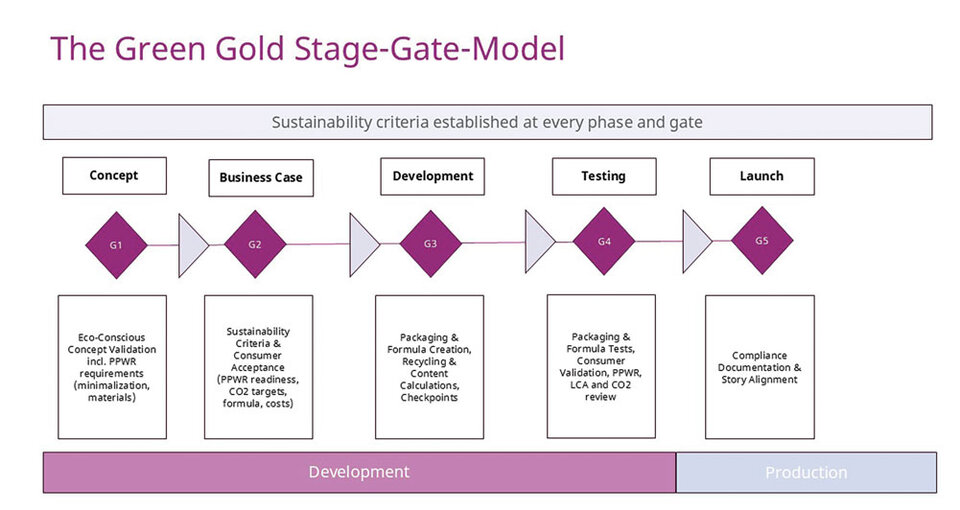
Figure 1. The Green Gold Stage Gate Model
Integration of sustainability, PPWR readiness, formula development, packaging development, consumer acceptance and compliance documentation across the Stage Gate process. Source: J. Fiedler and W. Haentjens, 2025. Adapted for this article.
What the PPWR changes towards 2030
The Regulation covers the entire packaging life cycle and combines requirements on substances, recyclability, recycled content, compostability, minimisation, re-use, labelling and extended producer responsibility (1). For cosmetic companies, five points deserve immediate attention, which Figure 2 illustrates.
First, packaging minimisation becomes a design requirement for 2030. Packaging will need to use no more weight and volume than necessary while retaining the functions required for product protection, hygiene, transport, legal information and consumer use. Premium presentation is not prohibited, but unsupported volume, weight and layers will become increasingly difficult to defend. The detailed assessment criteria will depend on technical work that is still developing (1).
Second, recyclability becomes a market access criterion. From 2030, packaging must meet the applicable design for recycling performance requirements, subject to the detailed timing mechanisms and acts foreseen in the Regulation. From 2035, recyclability at scale is added. Components, decorations, adhesives, colours, barriers and dispensing systems therefore need to be assessed as one packaging system, not as isolated materials (1).
Third, recycled content becomes mandatory for plastic packaging. Cosmetic primary packs are included within the PPWR definition of contact-sensitive packaging. The 2030 targets are 30% post-consumer recycled content for PET-dominant contact-sensitive plastic packaging and 10% for other contact-sensitive plastics; the 2040 targets rise to 50% and 25%, respectively. The legal start date is linked to the relevant implementing methodology (1). Contrary to a common assumption, the current Regulation does not provide cosmetics with the broad health-risk exemption available for certain food-contact applications. Safety must therefore be engineered into compliance.
Fourth, packaging manufacturers must carry out conformity assessment, compile technical documentation and issue an EU declaration of conformity. The dossier must permit assessment of compliance and include, where applicable, intended use, materials and drawings, applied standards or specifications, assessment methods, risk analysis and test reports. Records must generally be retained for five years for single-use and ten years for reusable packaging (1). This is more than collecting supplier declarations: it requires a traceable evidence chain from design input to series production.
Fifth, roles change. A company that has packaging or a packaged product designed or manufactured under its own name or trademark is generally the manufacturer under the PPWR, subject to a micro-enterprise exception. An importer or distributor placing packaging under its own name or trademark can likewise assume manufacturer obligations (1, 4). Private-label retailers and drugstore brands can therefore no longer treat the packaging converter or contract manufacturer as the sole owner of compliance. Their need for technical competence, contractual data access and governance will increase substantially.
Why cosmetics is a special case
Cosmetics starts from a stronger position than many sectors. Companies already operate product information files, safety assessments, good manufacturing practice, stability and compatibility programmes, change controls and market-surveillance processes under the Cosmetic Products Regulation (5). These systems provide a useful blueprint. However, the packaging dossier is not simply another section of the cosmetic PIF. Responsibilities, evidence and retention periods follow the PPWR, while the interfaces must be managed coherently.
The main technical constraint is direct product contact. Recycled polymers can vary in colour, odour, mechanical performance and trace-substance profile. Changing a bottle resin, barrier layer, lacquer, elastomer, adhesive or pump component can affect migration, sorption, permeation, oxidation, preservation, dosing and shelf life. The PPWR explicitly applies without prejudice to Union rules on product safety, quality, health and hygiene (1). A lower-impact pack that causes leakage, microbiological risk, product degradation or premature disposal is not a sustainable outcome.
Particular pressure will arise in airless systems and pumps with springs and mixed components; high-barrier tubes and sachets; fragranced and solvent-rich products; sunscreens and oxidation-sensitive actives; colour cosmetics with small multi-material components; miniatures and samples; heavily decorated prestige packs; and refill systems requiring repeated cleaning, handling or long service life. Mass-market portfolios face scale, cost and high SKU counts. Selective and luxury brands face a different challenge: preserving sensorial codes and perceived value while removing weight, void space and ornamental layers. The transformation pathway cannot be identical, but neither segment can postpone portfolio decisions until 2029.
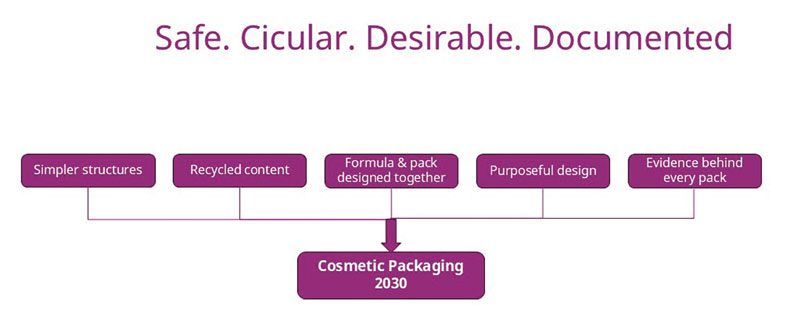
Figure 2. The cosmetic packaging landscape in 2030
Expected development of the cosmetic packaging landscape towards 2030 under the PPWR. Author concept.
Innovation is already widening the design space
The relevant innovation question is not ‘Which sustainable material should replace the current one?’ It is ‘Which product-packaging system can deliver protection, circularity and adoption in the intended market?’ Several market developments illustrate the expanding design space. Table 1 showcases some examples in relation to the innovation pathway.
Mono-material and near-mono-material tubes can replace difficult multilayer structures while retaining meaningful barrier performance. Neopac, for example, describes a PE-based high-barrier tube with less than 5% foreign material and third-party recyclability assessment (6). Film developers are similarly reducing incompatible layers and redesigning barrier architectures around one polymer family (7). Such solutions are promising, but recyclability claims remain dependent on the final structure, components and applicable collection, sorting and recycling infrastructure.
Aluminium offers another route, particularly where premium tactility and high material value are important. Full-aluminium or aluminium-led jar concepts, including developments shown by suppliers such as Seidel, can reduce material complexity and preserve luxury cues (8). They still require formula compatibility, internal coating assessment where relevant, decoration review and a system-level environmental evaluation; material reputation is not a substitute for evidence.
Fibre-based structures are also moving from transport protection into prestige primary or refill formats. Knoll Packaging and Guerlain have presented a moulded-pulp skincare refill using plant-based fibre, demonstrating that paper-based engineering can serve precision and luxury applications (9). Cross-industry learning is equally useful: Diageo's Baileys trial used a bottle reported as 90% paper with a thin plastic liner and foil seal and deliberately tested transport, consumer interaction and understanding (10). The example matters not because an alcoholic beverage pack can be copied into cosmetics, but because it treats packaging innovation as a staged experiment across technology, supply chain and behaviour.
These examples also expose a critical distinction. Recyclability, recycled content, carbon footprint, renewable feedstock and reusability are different attributes. A mono-material pack may contain no PCR. A refill may reduce material per use but fail if return or repurchase rates are low. A paper-based pack may still contain functional barriers. Companies should avoid single-metric decisions and assess the complete life cycle, while communicating only what can be substantiated.
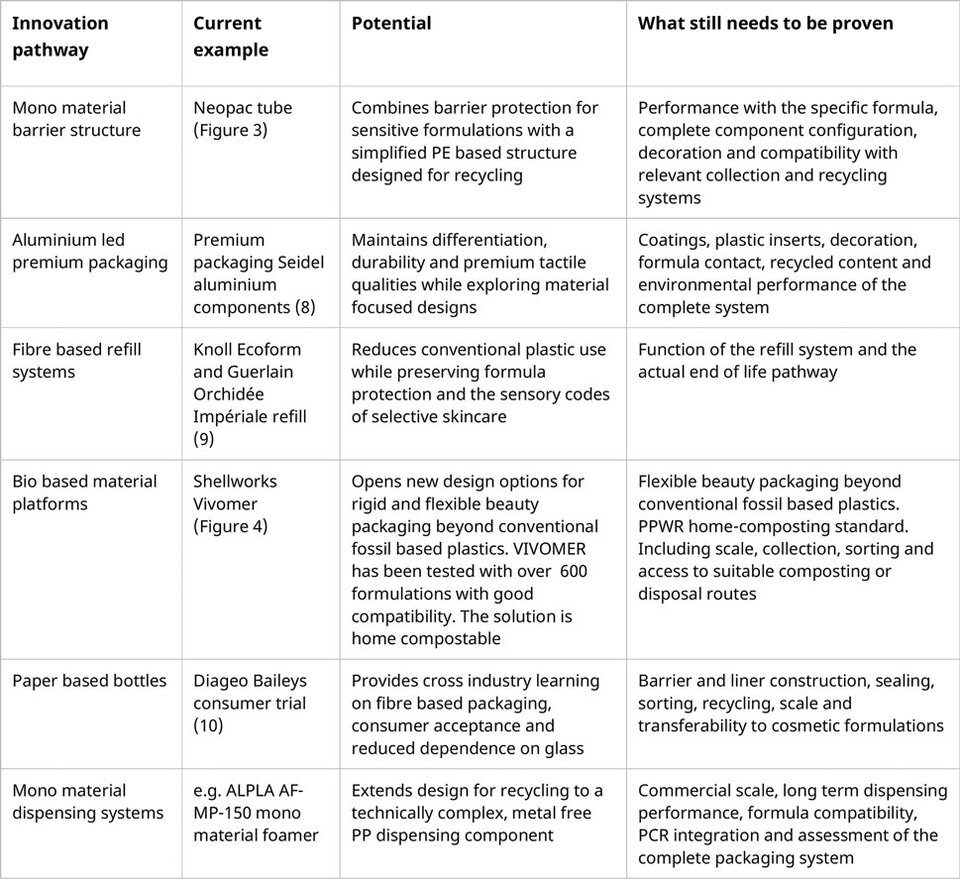
Table 1. Selected packaging innovation directions and open questions
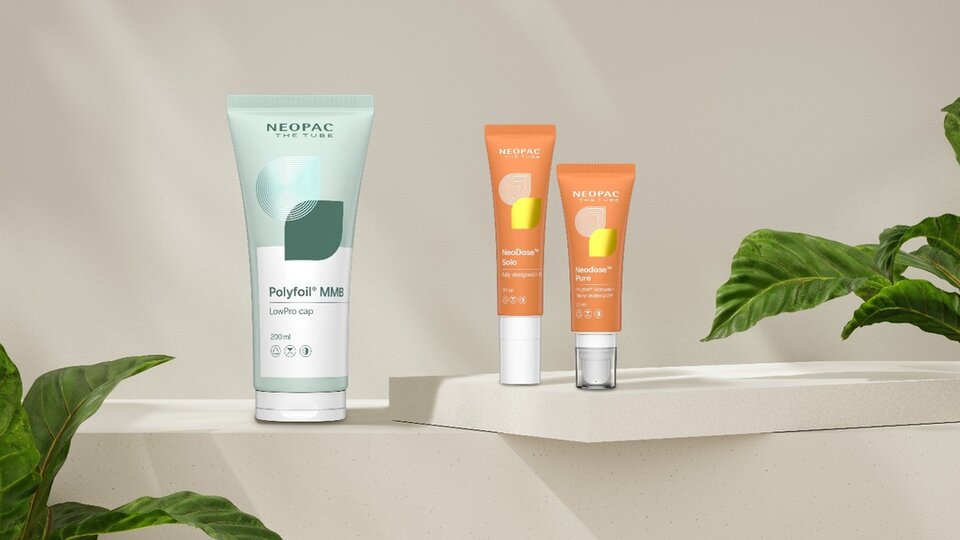
Figure 3. Europe’s first mono-material barrier tubes including caps in PE or PP designed for recycling. The tube is a mono material barrier tube designed to combine the protection of sensitive formulations with compatibility with established plastic recycling streams. Image: Hoffmann Neopac AG
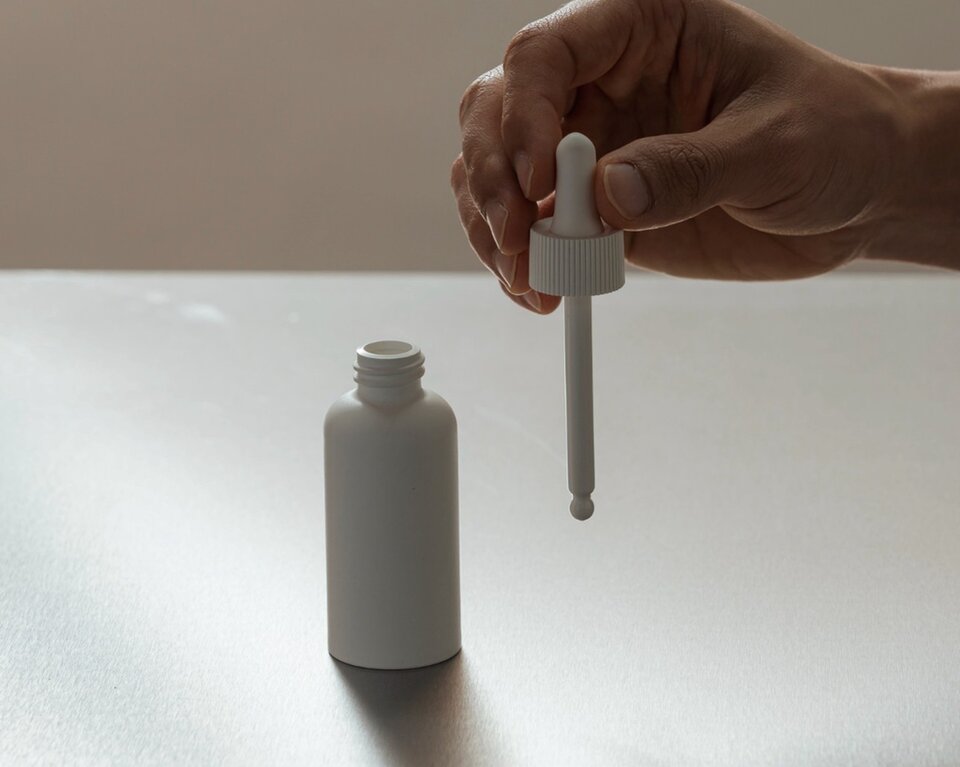
Figure 4. VIVOMER is Shellworks’ proprietary PHA-based material platform for applications including beauty and personal care packaging and homeware. All VIVOMER products are home compostable. Image: Shellworks
A pragmatic innovation pathway
The PPWR should be embedded into the innovation process as a set of design inputs and evidence gates. A six-part approach is practical as show cased in Figure 5.
- Map roles and portfolio exposure. Establish who is manufacturer, importer, supplier, distributor, producer and final distributor for each business model and market. Cluster the portfolio by packaging type and format, material, contact sensitivity, sales volume, launch horizon and technical risk. Private-label arrangements require explicit responsibility maps rather than assumptions.
- Create a requirements baseline with controlled assumptions. Translate Articles 5-12, Annex IV, Annex VII and relevant timelines into design requirements. Separate fixed legal text from pending secondary legislation, standards and company policy. Record every assumption with an owner, review trigger and decision date. This prevents uncertainty from becoming inactivity.
- Triage instead of redesigning every SKU. Prioritise high-volume packs, long-life tooling, formats likely to score poorly, products with high compatibility risk and launches extending beyond 2030. Decide whether each pack should be retained with evidence, lightweighted, simplified, converted, refilled, replaced or phased out. Portfolio management is more powerful than isolated hero projects.
- Develop formula and packaging together. At concept and business-case gates, define required barrier, compatibility, dispensing, preservation, transport and consumer performance alongside recyclability, PCR, weight and re-use targets. Use risk-based testing, but do not shorten stability or compatibility programmes merely to recover time lost in late regulatory decisions.
- Build the dossier during development. Use a packaging bill of materials at component level; record suppliers, specifications, composition, recycled-content evidence, substances information, drawings, risk assessments, test reports, manufacturing controls and change notifications. The declaration of conformity should be the output of the evidence system, not a document created at launch. Supplier contracts must secure timely data, audit rights and change control (1).
- Validate desirability and use. Test opening, dosing, emptying, separation, refill handling, sorting comprehension and willingness to repurchase with consumers. Mass-market concepts need simple instructions and scalable economics. Selective concepts must translate less material into a new code of quality, precision and permanence. Marketing must be involved early enough to create that value, but late enough in the evidence chain to avoid unsupported claims.
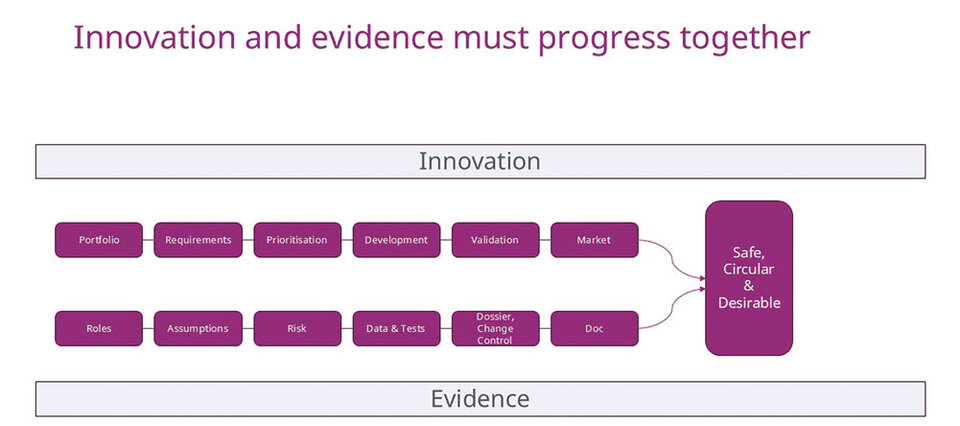
Figure 5. From packaging decision to technical dossier
Evidence flow from packaging design input to the PPWR technical dossier and EU Declaration of Conformity. Author concept.
Organisation: PPWR literacy must extend beyond packaging
A packaging or regulatory team cannot deliver this transition alone. Marketing determines claims and aesthetic codes. Sales commits to customer specifications and private-label expectations. Procurement controls supplier access and commercial leverage. Formulation defines compatibility and protection needs. Operations determines filling feasibility and scrap. Quality owns change control and evidence integrity. Finance evaluates tooling, PCR premiums and short-run costs. Senior management must resolve trade-offs across the portfolio.
Training should therefore be role-specific. Everyone needs a common PPWR foundation, while functions need deeper modules connected to their decisions. A sales team must recognise when a customer request changes the economic-operator role or dossier obligation. A formulator must understand why a material change can be regulatory-critical. Marketing must distinguish a verified environmental attribute from an attractive but incomplete story. Governance should include a cross-functional packaging compliance owner and a decision board that can approve assumptions, deviations and phase-outs.
The remaining uncertainty is material. Drafts and further clarification of important secondary legislation are expected from 2027 onwards and will continue to emerge over several years (4). This creates a difficult asymmetry. Companies must prepare packaging portfolios for 2030, but some of the methods, criteria and evidence requirements needed to validate those choices will become clear only after development programmes and tooling decisions have started. The harmonised labelling rules illustrate the operational risk. Companies need artwork and tooling decisions, yet final specifications and their timing have not always provided the predictability needed for industrial implementation. This drives short production runs, delayed tooling and duplicated artwork, all of which increase cost and may work against environmental goals. The practical response is not to wait. It is to make the best possible informed guess, document its legal and technical basis, use scenario planning, keep artwork and specifications modular, and establish pre agreed review windows as new drafts appear.
Conclusion
The PPWR is a compliance obligation, but its larger effect is to change how beauty packaging is conceived, governed and proven. Cosmetic companies possess a genuine advantage: mature safety, quality and documentation systems. They should extend these capabilities to packaging rather than build a disconnected compliance island. The winners will combine portfolio triage, formula and packaging development, supplier evidence, consumer validation and disciplined innovation gates. They will also accept that not every legacy code, component or SKU should survive unchanged. Circular packaging must still protect the formula, earn consumer adoption and work at industrial scale. The necessary transformation is therefore neither regulation led design nor sustainability led storytelling alone. It is evidence based innovation that remains safe, desirable and ready to adapt as the PPWR rulebook becomes complete.
About the Author
Judith Fiedler brings over 20 years of leadership experience in cosmetic formulation, packaging and regulation. She is the Founder and Managing Director of oneRD GmbH, a Swiss-based consultancy supporting brands in cosmetic innovation, PPWR, packaging, formulation and regulatory compliance. She previously was Global Head of Product Development at La Prairie.

Judith Fiedler
Founder & Managing Director, oneRD GmbH, Wasterkingen, Switzerland

References and notes
- European Parliament and Council. Regulation (EU) 2025/40 of 19 December 2024 on packaging and packaging waste. Off J Eur Union. 2025;L 2025/40.
- European Commission. New EU rules on packaging enter into application (Internet). Brussels: European Commission; 2026 Aug 11 (cited 2026 Aug 23). Available from: https://environment.ec.europa.eu/news/new-eu-rules-packaging-enter-application-2026-08-11_en
- Fiedler J, Haentjens W. Green is the new Gold: how EU, China, and US regulations are challenging global beauty brands and redefining the luxury playbook. Sofw Journal 12/2025
- European Commission. Guidance document for Regulation (EU) 2025/40 on packaging and packaging waste. Commission Notice C(2026) 3702 final. Brussels: European Commission; 2026.
- European Parliament and Council. Regulation (EC) No 1223/2009 of 30 November 2009 on cosmetic products. Off J Eur Union. 2009;L342:59-209.
- Neopac. Polyfoil MMB: recyclable tube packaging with mono-material barrier (Internet). Oberdiessbach: Hoffmann Neopac; (cited 2026 Aug 23). Available from: https://www.neopac.com/en/tubes/recyclable-tube-packaging
- Toppan Inc. Mono-material barrier packaging (Internet). Tokyo: Toppan; (cited 2026 Aug 23). Available from: https://www.toppan.com/en/living-industry/packaging/products/mono-material_flexible_packaging/
- Seidel GmbH & Co. KG. Cosmetics: aluminium components (Internet). Marburg: Seidel; (cited 2026 Aug 23). Available from: https://www.seidel.de/en/products/references/cosmetic/
- Knoll Packaging. Knoll Packaging and Guerlain release breakthrough skincare refill using Knoll Ecoform molded pulp (Internet). (cited 2026 Oct 2026). Available from: https://knollpack.com/news/knoll-packaging-and-guerlain-release-breakthrough-skincare-refill-using-knoll-ecoform-molded-pulp
- Diageo. Diageo announces paper-based bottle trial for Baileys Irish Cream Liqueur (Internet). London: Diageo; 2024 May 22 (cited 2026 Aug 23). Available from: https://www.diageo.com/en/news-and-media/press-releases/2024/diageo-announces-paper-based-bottle-trial-for-baileys-irish-cream-liqueur