
Artificial Intelligence
Skin care
KEYWORDS
ARTIFICIAL INTELLIGENCE;
DIGITAL TRANSFORMATION;
AI ADOPTION;
AUTOMATION;
COSMETICS;
PERSONAL CARE
peer-reviewed
AI Is Coming After Your Job in Cosmetics
Chris Lykke Christiansen
Co-founder & CEO, Lifebloom, Copenhagen, Denmark
ABSTRACT: This article examines the rapid integration of artificial intelligence across three core functions of the cosmetics and personal care industry: formulation, marketing, and regulatory compliance. Drawing on named platforms already in commercial deployment, including Nouryon's BeautyCreations, Givaudan's Carto, BASF's predictive chemistry tools, and compliance systems such as AutoPIF and Signify. It argues that AI is not augmenting these roles but systematically replacing the knowledge work that defines them. The article challenges industry professionals to recognise that the skills traditionally considered irreplaceable — technical depth, pattern recognition, regulatory expertise — are precisely those most susceptible to automation and urges a deliberate shift toward capabilities that remain beyond AI's reach.
Introduction
Introduction
The integration of AI in the cosmetics industry is set to transform how companies operate, from research and development to marketing and regulatory compliance. The implications are clear: tasks that previously required a team of specialists are now being handled by a small group of individuals aided by AI, reducing costs and altering the economic landscape. While these AI tools are not yet perfect, they are improving quickly, and their adoption is expected to increase, leading to a fundamental shift in industry dynamics.
However, the rise of AI presents a challenge for professionals in the field. As AI becomes more capable, the skills that once made employees indispensable are at risk of being automated. Professionals must adapt by focusing on areas where AI cannot yet replace human expertise, such as strategic judgment, creative innovation, and physical problem-solving. Those who continue to rely on skills that are easily codifiable or data-driven may find themselves displaced by AI in the near future.
Daily implications of AI - a case study
In my experience running a small biotech company, I work with a small team that relies heavily on AI agents for essential tasks such as ingredient safety checks, performance testing analysis, legal management, presentation creation, and content development. Although these AI tools are not yet fully autonomous or perfect, they provide notable benefits like speed, constant availability, and ongoing improvement. As they develop, their capabilities are advancing rapidly, which could significantly impact the broader cosmetics industry. This is not a temporary arrangement until hiring becomes affordable; it is the operational model. For many startups, it isn’t just a temporary solution until they can afford more staff—it’s their core way of working.
The significance of this shift needs clear communication, as many in the cosmetics sector haven't fully grasped its implications. Each AI agent now performs tasks that, eighteen months ago, would have required a human expert — such as a post-doctoral researcher synthesising findings from hundreds of papers, an external lab costing tens of thousands of euros for early stage tests now done in-house, a marketing specialist managing LinkedIn accounts, building a website, creating investor decks, and preparing conference presentations, a regulatory expert reviewing safety documents, or a legal advisor on call.
These roles involve real costs. This is not a first company; teams have been built and managed before, with budgets structured around headcount. From that experience, it is clear that the economics have shifted in ways most industry insiders have not yet realised. Tasks that once required a team of six or seven people and the corresponding payroll are now managed by two people and a set of tools costing a fraction of a single salary.
And here is the key point: this is not unusual. It is simply early days. Every company in this sector will resemble this within five years. The only question is whether the current role-players will have adapted by then, or whether they will be replaced.
I founded my current company in 2024, in the middle of the generative AI wave. There were no legacy processes to defend, no institutional resistance, and no ingrained habits about how things ‘should’ work. I built the company around AI from the very beginning. That vantage point is worth sharing, because the outlook from here is stark. It reveals an industry about to undergo a fundamental transformation across nearly every function, happening far more quickly than most expect.
Datasets - the formulator's new competition
R&D chemists and formulators in cosmetics have dedicated years, sometimes decades, to developing expertise that is truly hard to acquire. They understand how raw materials interact, anticipate stability issues before they occur, and develop an intuitive sense of texture, performance, and processing behaviour that only comes from countless hours at the bench. This expertise is genuine and valuable.
It is also becoming a dataset.
In 2025, Nouryon introduced BeautyCreations, an AI-driven formulation discovery tool built on the Albert Invent platform. A user describes their needs in natural language, and the system produces formulation recommendations—no bench time required, no experienced chemist needed in the loop.
Givaudan's Carto offers a similar approach for fragrance: an AI tool with an Odour Value Map that suggests ingredient combinations via a touchscreen, complemented by high-speed robotic sampling. It encodes and automates a perfumer’s intuition.
BASF developed an AI system that converts 150 years of chemical knowledge into predictive intelligence, reducing research timelines from 18 months to just 3 weeks while uncovering breakthrough formulations that traditional methods would never find. That is not merely a research project; it is a production-grade screening system operating at a speed and scale that no human team can match.
Similarly, Debut's BeautyORB, supported by L'Oréal's venture fund, screens 50 billion molecules using AI to predict their effectiveness for specific skin pathways. Development cycles that once took three to five years are now being compressed into months.
Each of these tools performs those tasks that a formulator used to do. Not completely, nor in every instance, and not without oversight. But the trend is clear: the expertise that made formulators indispensable is being encoded, productised, and marketed as a platform. The organisations purchasing this platform are their employers.
The global market for AI-driven cosmetics formulation was valued at approximately 455 million USD in 2025 and is expected to surpass 2.2 billion USD by 2033. This reflects investment capital flowing into tools that replace traditional chemist roles. When such significant funds are involved, jobs typically follow.
The marketer's new competition
For those working in marketing, brand management, or consumer insights in cosmetics, the disruption is, if anything, further along.
Spate, a New York-based intelligence platform used by over 200 clients including L'Oréal and LVMH's Kendo Brands, analyses 900 billion Google search signals and 200 million TikTok and Instagram posts. It predicts trends twelve months ahead with 72% accuracy. The consumer insight that normally takes weeks to develop from surveys, focus groups, and social listening: Spate produces a version of it within hours. Not a rough draft. A data-rich, actionable version that clients utilise to shape product briefs and guide formulation strategies.
Estée Lauder has partnered with Adobe to use generative AI to reduce the time it takes to create and launch digital marketing campaigns. Content that used to require a creative team, a copywriter, a designer, and weeks of iteration is now being produced at a fraction of the cost and time.
LVMH is ramping AI investment across 75 luxury brands. Unilever is running AI-powered personalisation engines for Dove to deliver tailored consumer experiences and enhance product discovery and engagement.
My own experience illustrates this from another perspective. I now manage two LinkedIn accounts and an email newsletter, create investor presentations, prepare conference speeches, and synthesise data from hundreds of research papers, all while running the business. A year ago, this workload would have taken up all available hours or required at least one or two extra hires. I could have handled some of this before AI. But not all of it. And not at this level of quality and speed.
The question for marketers is not whether AI can do the job. In many cases, it already can. The question is whether the person who controls the budget knows that yet. And increasingly, they do.
The regulatory specialist's new competition
This is the area that surprises people most, because regulatory and compliance work has long been considered safe from automation. It demands deep expertise, meticulous attention, and years of accumulated knowledge about what gets flagged, what gets approved, and what triggers an audit.
AI is coming for all of it.
AutoPIF, an AI-enabled platform for Product Information File development, combines large language models with a regulatory rules engine and smart document structuring. It transforms raw technical files into submission-ready PIFs. Published performance data demonstrates a 60% reduction in effort and 95% accuracy in structured content creation. It is a tool that handles the majority of tasks typically performed by a regulatory affairs specialist, more quickly, with a documented error rate that is competitive with experienced humans.
Signify, a compliance AI platform, validates product labelling, safety reports, and formulation documents against FDA regulations in real-time. In validation studies, it achieved 92% accuracy in spotting non-conformance risks across 60,000 product label revisions. And here is the number that should keep regulatory professionals awake at night: it cuts compliance review time by up to 90%. Work that once took a week now takes only a few hours.
These tools are not just theoretical. They are being marketed, sold, and adopted now, amidst increasing regulation on both sides of the Atlantic. The EU's expanded fragrance allergen declarations, the upcoming CMR substance bans in 2026, and the USA’s FDA MoCRA compliance requirements are all driving demand for faster, more affordable compliance. And the quickest, most cost-effective compliance is automated compliance.
The value that regulatory specialists offered was thoroughness and judgment developed over many years. AI now possesses the thoroughness. The remaining challenge is judgment.
The following is a concrete example that illustrates the point. When the safety profile of one of our first novel ingredients needed evaluation, there was a choice: spend tens of thousands of euros with an external consultancy and wait weeks for an assessment plan, or use AI to conduct the initial literature review, cross-reference toxicological databases, and draft a preliminary safety assessment plan. The latter was chosen. What would have taken a specialist consultant several weeks of billable hours was completed, in draft form, in just a few days. It still required expert review. But the amount of work the expert needed to do was a fraction of what it would have been without AI. That fraction is shrinking every business quarter.
Three things nobody wants to say out loud
The first point is that AI is not being used to help people do their jobs better. That is what the press releases claim. That is what the internal memos say. But it is not the economic logic driving adoption. AI is being deployed to cut the number of people needed. When a compliance tool reduces review time by 90%, companies do not give their regulatory team 90% more leisure. They shrink the team. When a formulation platform produces recommendations in minutes rather than weeks, companies do not keep the same number of chemists and just encourage them to think more deeply. They reorganise.
The second point is that the most advanced companies in AI adoption are not obscure startups. They are the clients and suppliers that the rest of the industry relies on. L'Oréal, BASF, Givaudan, Estée Lauder, LVMH, Unilever. These are the companies issuing purchase orders and settling invoices. They are developing internal AI capabilities that will alter their requirements from partners and suppliers, as well as the number of people they need.
The third point is perhaps the most difficult to accept: the skills that made people employable five years ago are now the ones most at risk. Deep technical knowledge that can be codified, pattern recognition across data, thorough familiarity with regulatory frameworks, and trend sensitivity built on consuming large volumes of information—these are exactly what AI excels at. The skills that once seemed like irreplaceable expertise are proving to be the first to be automated.
What AI cannot do, and what that means for the future
The aim of this article is not to be gloomy. It is to confront what seems to be an industry sleepwalking into a transformation that will benefit those who see it clearly and penalise those who do not.
There are things AI cannot do. It cannot run a fermentation process. It cannot cultivate cyanobacteria. It cannot create an extraction process or set up a manufacturing line. We are an industry that builds real, physical objects. The digital world can greatly support that work, but it cannot replace it. Not yet. In bio-manufacturing, cosmetics manufacturing, lab sciences, or any field where the work is inherently physical, human hands are still crucial.
AI also struggles with genuine strategic judgment under deep uncertainty. It can analyse options, but it cannot decide which risks are worth taking when the data is ambiguous and the stakes are life-changing. It cannot navigate the politics of a boardroom, read between the lines of a negotiation, or build trust over years with a supplier or a regulator. It cannot make ethical decisions in grey areas where the right answer depends on values, not data.
These are the areas where human expertise will remain important. But notice what they have in common: they are not the skills most people in cosmetics are hired for. Most people are hired for knowledge, diligence, and pattern recognition — exactly the things that AI does best.
The individuals who will succeed in the next decade are those actively pursuing work that AI cannot do: strategic thinking, creative leaps from nothing, physical problem-solving, and the kind of cross-domain judgment that comes from actually constructing something rather than merely analysing it.
Additionally, there is one more area where AI currently falls short, though this is expected to change: the construction of physical objects. Robots will eventually manage laboratories, carry out experiments, and run manufacturing processes. In bio-manufacturing, early versions of this are already appearing. The adoption will be slower than digital disruption because atoms are more difficult than bits. However, anyone who believes the physical sector of the industry will remain permanently untouched by automation is making the same mistake as formulators, marketers, and regulatory specialists are now. They assume that since it has not happened yet, it will not occur anytime soon.
The others are defending a position that is already undergoing automation, whether they recognise it or not.
A challenge for us all
Over the past year, AI tools have shifted from being helpful to essential. Models that were awkward and unreliable twelve months ago now generate work that could have cost tens of thousands of euros in consulting fees. Each quarter, the gap between what AI can do and what previously needed a specialist narrows.
This isn't slowing down. It's speeding up.
Here's a challenge for everyone in cosmetics and personal care. Stop convincing yourself that your expertise remains safe because it's complex. Complexity is precisely what AI was built for. Stop assuming that because AI makes mistakes now, it will continue to do so in the future. The rate of improvement is steep and relentless. And cease waiting for your company to tell you what to do. By the time they do, restructuring will already be in progress.
Instead, ask yourself one question: if AI can handle 80% of your work today, what is the 20% that makes you irreplaceable? And are you heading in that direction?
Because AI isn't coming for your job in cosmetics. It's already here. The only question is whether you have noticed.
About the Author
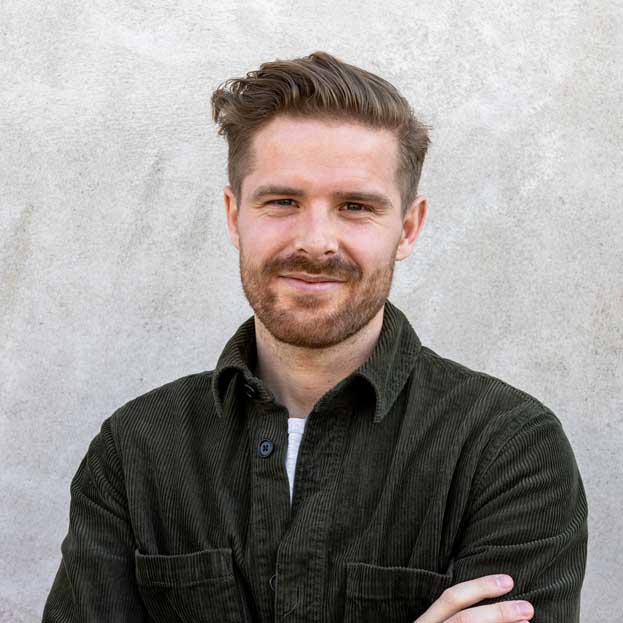
Chris Lykke Christiansen is Co-founder and CEO of Lifebloom, a Copenhagen-based biotechnology company developing next-generation cosmetics ingredients from photosynthetic bacteria. A serial entrepreneur, he previously co-founded NØIE, an AI-driven personalised skincare company, and HelloSkin, built within LEO Pharma's Innovation Lab. He writes and speaks on the intersection of AI, biotechnology, and the future of the cosmetics industry.

Chris Lykke Christiansen
Co-founder & CEO, Lifebloom, Copenhagen, Denmark
References and notes
- Nouryon, "BeautyCreations: A Powerful New AI-Driven Personal Care Formulation Discovery Tool," 2025. https://www.nouryon.com/news-and-events/news-overview/2025/beautycreationstm-a-powerful-new-ai-driven-personal-care-formulation-discovery-tool
- Givaudan, "Carto: The Future of Fragrance Formulations." https://www.givaudan.com/fragrance-beauty/perfumery-school/carto-the-future-of-fragrance-formulations
- Chief AI Officer, "How BASF Cut Chemical Research From 18 Months to 3 Weeks Using 150 Years of AI Data," 2025. https://chiefaiofficer.com/blog/how-basf-cut-chemical-research-from-18-months-to-3-weeks-using-150-years-of-ai-data
- Cosmetics Business, "L'Oréal-backed biotech firm Debut launches AI ingredient discovery platform," 2025. https://cosmeticsbusiness.com/l-or%C3%A9al-backed-biotech-firm-debut-launches-ai-ingredient
- Congruence Market Insights, "AI-Powered Cosmetics Formulation Market Forecast 2033." https://www.congruencemarketinsights.com/report/ai-powered-cosmetics-formulation-market
- Spate, "AI Beauty Trend Forecasting & Consumer Insights Tool." https://www.spate.nyc/industries/beauty-personal-care
- Adobe, "The Estée Lauder Companies Partners with Adobe to Scale the Production of Digital Marketing with Firefly Generative AI," March 2025. https://news.adobe.com/news/2025/03/adobe-estee-lauder
- Global Cosmetics News, "LVMH Leverages AI to Future-Proof Luxury Beauty and Fashion Operations." https://www.globalcosmeticsnews.com/lvmh-leverages-ai-to-future-proof-luxury-beauty-and-fashion-operations
- Unilever, "The AI-powered personalised experiences boosting our brands," 2024. https://www.unilever.com/news/news-search/2024/how-aipowered-ultrapersonalised-experiences-are-boosting-our-beauty-brands
- Neves, J. et al., "AutoPIF: A platform to optimize cosmetic regulatory documentation: An AI-Enabled Approach," Toxicology Letters, Vol. 411, 2025. https://www.sciencedirect.com/science/article/abs/pii/S0378427425017941
- Signify, "Cosmetics Manufacturing Compliance Software." https://www.getsignify.com/cosmetics-manufacturing-compliance-software
- European Commission, Commission Regulation (EU) 2023/1545 on fragrance allergen labelling in cosmetics. https://eur-lex.europa.eu/legal-content/EN/TXT/PDF/?uri=CELEX:32023R1545
- European Commission, Commission Regulation (EU) 2026/78 on CMR substance restrictions in cosmetics, January 2026. https://cosmeservice.com/news/commission-regulation-eu-2026-78-new-cmr-related-restrictions-under-the-eu-cosmetics-regulation
- U.S. Food and Drug Administration, "Modernization of Cosmetics Regulation Act of 2022 (MoCRA)." https://www.fda.gov/cosmetics/cosmetics-laws-regulations/modernization-cosmetics-regulation-act-2022-mocra