Sensorial Skincare
Skin care
KEYWORDS
SENSORIAL SKINCARE;
SKINFEEL;
TEXTURE INNOVATION;
CONSCIOUS FORMULATION;
NEUROCOSMETICS;
CONSUMER EXPERIENCE
GREEN BIOACTIVES.
peer-reviewed
The Global Rise of Sensorial Skincare: How Texture & Feel Are Redefining Innovation
Emilie Gombert-Alexandru
Senior Product Development Manager, Oat Cosmetics, Southampton, United Kingdom
ABSTRACT: The rise of sensorial skincare is reshaping product development, where texture, transformation and skinfeel have become as critical as efficacy. Influenced strongly by East Asian beauty cultures, particularly K-Beauty and J-Beauty, sensoriality is now a strategic differentiator for global brands. Beyond ingredient transparency and sustainability, consumers expect products that deliver both performance and pleasure. This article explores the science of sensorial formulation, from rheology to neurocosmetic impact and highlights how conscious beauty constraints are driving innovation in texture design. For formulators and ingredient suppliers alike, sensoriality represents both a challenge and an opportunity to build the next generation of skincare.
??????????????????
“
“A study in healthy women providing probiotic yogurt for four weeks showed an improvement in emotional responses as measured by brain scans”
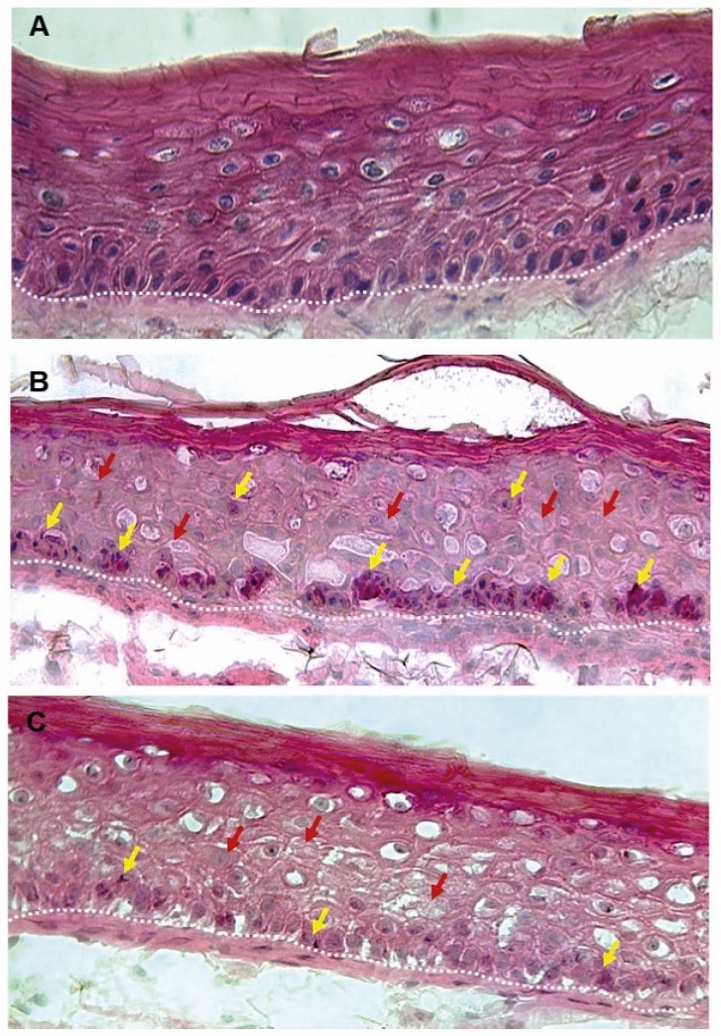
Figure 1. Skin Section with Microbiome. Most microorganisms live in the superficial layers of the stratum corneum and in the upper parts of the hair follicles. Some reside in the deeper areas of the hair follicles and are beyond the reach of ordinary disinfection procedures. There bacteria are a reservoir for recolonization after the surface bacteria are removed.
Materials and methods
Studies of major depressive disorder have been correlated with reduced Lactobacillus and Bifidobacteria and symptom severity has been correlated to changes in Firmicutes, Actinobacteria, and Bacteriodes. Gut microbiota that contain more butyrate producers have been correlated with improved quality of life (1).
A study in healthy women providing probiotic yogurt for four weeks showed an improvement in emotional responses as measured by brain scans (2). A subsequent study by Mohammadi et al. (3) investigated the impacts of probiotic yogurt and probiotic capsules over 6 weeks and found a significant improvement in depression-anxiety-stress scores in subjects taking the specific strains of probiotics contained in the yogurt or capsules. Other studies with probiotics have indicated improvements in depression scores, anxiety, postpartum depression and mood rating in an elderly population (4-7).
Other studies have indicated a benefit of probiotic supplementation in alleviating symptoms of stress. In particular, researchers have looked at stress in students as they prepared for exams, while also evaluating other health indicators such as flu and cold symptoms (1). In healthy people, there is an indication that probiotic supplementation may help to maintain memory function under conditions of acute stress.
The global rise of sensorial skincare where texture, transformation and feel are as critical as efficacy, has been shaped largely by the innovation-led beauty cultures of East Asia, particularly South Korea and Japan. These markets have long prioritised the elegance of ‘skinfeel’ and multi-step routines as emotional rituals, setting new global benchmarks in conscious and functional beauty.
The feel of efficacy
Skincare is evolving. While ingredient transparency, clinical performance and sustainability remain critical pillars in product development, an equally powerful element has emerged: sensoriality. From melting balms to skin-cooling serums and gel-to-cream transformations, how a product feels is now a defining factor in consumer perception, emotional engagement and brand loyalty.
Today’s conscious beauty consumers expect more than results, they expect a sensorial, multi-dimensional journey. This shift is particularly significant for brands navigating the conscious, minimalist and multifunctional landscape, where functional overlap can make products feel indistinguishable. Sensoriality, then, becomes not just a sensory pleasure, but a strategic differentiator for brands.
East asia sets the standard: why sensoriality is rising now
The rise of sensorial skincare is not an isolated Western trend; it is rooted in long-standing innovation from South Korea and Japan, where beauty routines are deeply intertwined with self-care, cultural rituals and sensorial performance.
In K-Beauty and J-Beauty, ‘skinfeel’ is not a secondary feature, it is the essence of product success. Korean brands pioneered feather-light emulsions, water-drop textures, transforming cleansers and multi-layer routines where each step delivers distinct tactile and emotional experiences. Japan introduced gel textures, milky lotions and minimalist water creams that feel almost invisible, yet deeply efficient (1).
These markets have shown that while biological efficacy occurs over time, the initial perception of effectiveness is driven by sensorial cues: how the product feels on application and how the skin feels immediately after. As their influence spreads globally, Western consumers are adopting similar expectations. For brands, this means sensorial formulation is no longer a “nice to have”, it’s a commercial necessity.
As sensoriality becomes a strategic tool, formulators must decode its physical, emotional and neurocosmetic foundations. From first pickup to dry-down, every stage of interaction communicates function, care and identity.
The science of sensoriality: formulating for feel
Sensoriality arises from a complex interplay of formulation variables, each influencing how a product is experienced from first touch to final absorption. It is both a technical outcome and an emotional signal, especially important in conscious beauty, where consumers seek more with less.
Key formulation factors include:
- Rheology: Thickeners and gelling agents shape initial pickup, glide and spreadability. For example, oat beta-glucan not only offers a natural, high-viscosity profile but also provides a soft, cushion-like feel consistency that enhances the tactile richness of creams and masks, especially those positioned for hydration or barrier care (2).
- Volatility and absorption: The dry-down phase affects perceived greasiness or residue. Oat oil, rich in linoleic acid and naturally fast-absorbing, delivers a lightweight, non-greasy finish. Its soft after feel makes it well suited for quick-penetrating serums, day creams or hybrid emulsions where a clean finish is essential (3).
- Delivery systems: How actives are released and perceived on the skin also impacts sensoriality. Systems such as lamellar emulsions or micellar structures can modulate glide, release rate and afterfeel. For example, biotech-derived oat peptides can be delivered in low-viscosity emulsions or water-phase serums, providing a smooth application with no tack, ideal for morning routines or layering steps (4).
- Phase behavior & transitions: Products that transform during application, like balms that melt into oils or gels that liquefy upon touch, add dimension to the sensory arc. These transformations not only enhance perceived efficacy but also signal luxury and innovation. Oat lipid complex or structured oat waxes can be used to support viscosity breaks and transitions, contributing to transformative textures such as oil-in-balm or gel-to-serum formats that feel dynamic and indulgent (5).
- Cushioning & film formation:
A product’s ability to form a breathable, flexible film impacts the skin’s perception of comfort, protection and richness. Oat beta-glucan, with its natural film-forming properties, delivers a soft, cushioned finish that supports barrier integrity without feeling heavy. This is especially valuable in leave-on formats where users expect both sensorial and functional benefits like moisture retention and calmness (6).
Sensoriality is not only physical; it is neuro-cosmetic. Tactile stimulation during skincare, whether from a gel’s cooling sensation or the enveloping feel of a balm, has been shown to influence the release of dopamine and oxytocin, reinforcing emotional comfort, pleasure and trust (7). This fosters deeper consumer connection and long-term loyalty to both products and brands.
For formulators, creating a texture means crafting a sensorial message, one that now must resonate across conscious, multifunctional and emotionally expressive skincare. Oat-based ingredients offer a unique advantage: they deliver both technical performance and sensory sophistication, helping brands create products that are as enjoyable to use as they are effective.
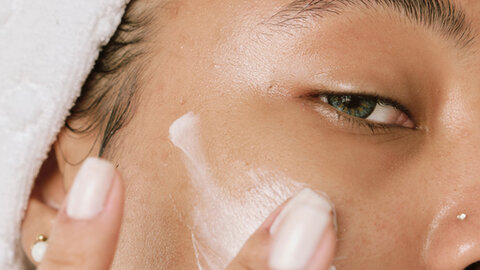
Sensorial consciousbeauty: the new formulation frontier
Conscious beauty demands ingredient minimalism and safety transparency, often limiting the palette of traditional texturisers. With the removal of silicones, mineral oils and synthetic thickeners, formulators face a new challenge: how to recreate sensorial elegance using eco-friendly, skin-compatible alternatives.
To meet this demand, formulators are turning to:
- Biodegradable esters (8) and fermentation-derived emollients
- Biomimetic lipids (such as ceramides) and naturally derived esters
- Gel-cream hybrids leveraging polysaccharide (9) or starch-based networks
- Responsive textures that transform upon touch (e.g., thermotropic gels, water-break creams)
In this ingredient-conscious landscape, sensorial sophistication becomes a proof point of quality, especially in an eco-conscious market where "less" must still feel like more.
Personalisation and ritual: sensoriality meets modern skincare routine
Personalisation is becoming a cornerstone of modern skincare and sensoriality sits at the heart of this shift. Texture is no longer a static feature; it adapts to time, mood and context.
- Circadian skincare brings richer, more enveloping night creams for restorative evening rituals, contrasted with lightweight, fast-absorbing gels for daytime wear.
- Cyclic skincare acknowledges hormonal and skin-fluctuation rhythms, designing sensorial profiles that range from calming, soft textures during sensitive phases to energising, refreshing gels when resilience is high.
- Layering rituals—a signature of East Asian beauty culture—have become global, with consumers expecting sensorial journeys that evolve from water-light steps to cocooning finishes without sensory fatigue.
Here, texture is not just functional; it is ritualistic, transforming skincare into a daily act of self-expression and wellbeing.
Emotional resonance: skin feel as a psychological anchor
Beyond the biological, sensoriality also speaks to the brain. Neuroscience is increasingly showing how textures, temperatures and tactile sensations trigger emotional responses. A cooling gel can evoke freshness and clarity, while a rich balm may foster comfort and reassurance. These “micro-wellness moments” are especially resonant with Gen Z and Millennial consumers, who view skincare not as correction, but as daily care.
This is where neurocosmetics intersect with sensorial design: textures become emotional anchors, reinforcing a consumer’s perception of safety, care and pleasure. In competitive categories where functional claims are easily replicated, these subtle psychological cues can be the strongest differentiators (7).
Sensoriality as strategic science for brand differentiation
For brands, sensoriality offers a unique opportunity to embed value beyond traditional efficacy claims. It can:
- Enhance perceived performance—a smooth-gliding serum often “feels” more potent, influencing consumer trust from first use.
- Drive repeat usage and loyalty by transforming routines into enjoyable rituals.
- Create signature sensory codes that become instantly recognisable as part of brand identity.
- Bridge the gap between conscious formulation constraints and consumer expectations, proving that minimalism can still deliver indulgence.
For ingredient suppliers, the task is clear: to support formulators not just with performance-driven actives, but with texture-building systems that allow brands to craft experiences as sophisticated as they are sustainable. Sensorial science is no longer a niche—it is a strategic lever for growth in conscious and functional beauty.
Conclusion
As conscious beauty continues to evolve, brands must move beyond clinical efficacy alone. Sensoriality is a critical third pillar—offering emotional engagement, perceived performance and brand memorability. And as Korean and Japanese markets have long shown, products that deliver a sensorially rich experience are more likely to be loved, used consistently and embedded in daily rituals (repurchased).
For formulators and product developers, this creates both a challenge and an opportunity. How can you maintain clean standards while delivering rich, transformative textures? How do you create layering routines with no sensory fatigue? How do you bring function and feel together in a cohesive brand experience?
As sensoriality becomes a new form of benefit, partnering with ingredient experts who understand both the science and the sensibility of texture will be key to building the next generation of skincare products that consumers not only trust—but love to use.
Conclusion
The future of cosmetics lies in the continued evolution of holistic approaches which represents a transformative shift in the industry, merging scientific advancements, natural ingredients, and wellness principles. By understanding and embracing the interconnectedness of these elements, the cosmetics industry can cultivate products that not only enhance external beauty but also contribute to the overall well-being of individuals and the planet.
The interplay between beauty from within and topical cosmetics is the key for future products. The integration of biotechnology and green chemistry is revolutionizing cosmetic formulations, offering sustainable and biocompatible alternatives.
Developers can implement blockchain to trace the journey of ingredients from source to product. Nevertheless, the efficacy of the natural products should be scientifically proven. Marketers can communicate transparency as a brand value, and parallelly educate consumers by highlighting how specific ingredients contribute to radiant and healthy skin.
By embracing the synergy between these approaches and leveraging scientific advancements, the cosmetics industry can provide consumers with comprehensive beauty solutions that cater to both internal and external dimensions of beauty.
Surfactant Applications
The application area lends itself particularly well to the use of AI. Active today in this area is the US company Potion AI (6). The company provides AI-powered formulation tools for beauty and personal care R&D. Their offerings include Potion GPT, next generation ingredient and formula databases and AI document processing. Potion’s work could have a significant impact on the entire surfactant value chain, from raw material suppliers to end consumers. By using their GPT technology, they can help target work toward novel surfactant molecules that have optimal properties for specific applications. By using their ingredient and formula databases, they can access and analyze a vast amount of data on surfactant performance, safety, and sustainability. By using their AI document processing, they can extract and organize relevant information from patents, scientific papers, and regulatory documents. These capabilities could enable Potion AI's customers to design and optimize surfactant formulations that are more effective, eco-friendly, and cost-efficient. A particularly interesting application for this type of capability is deformulation.
Deformulation is the process of reverse engineering a product's formulation by identifying and quantifying its ingredients. Deformulation can be used for various purposes, such as quality control, competitive analysis, patent infringement, or product improvement. However, deformulation can be challenging, time-consuming, and costly, as it requires sophisticated analytical techniques, expert knowledge, and access to large databases of ingredients and formulas.
AI can potentially enhance and simplify the deformulation process by using data-driven methods to infer the composition and structure of a product from its properties and performance. For example, AI can use machine learning to learn the relationships between ingredients and their effects on the product's characteristics, such as color, texture, fragrance, stability, or efficacy. AI can also use natural language processing to extract and analyze information from various sources, such as labels, patents, literature, or online reviews, to identify the possible ingredients and their concentrations in a product.
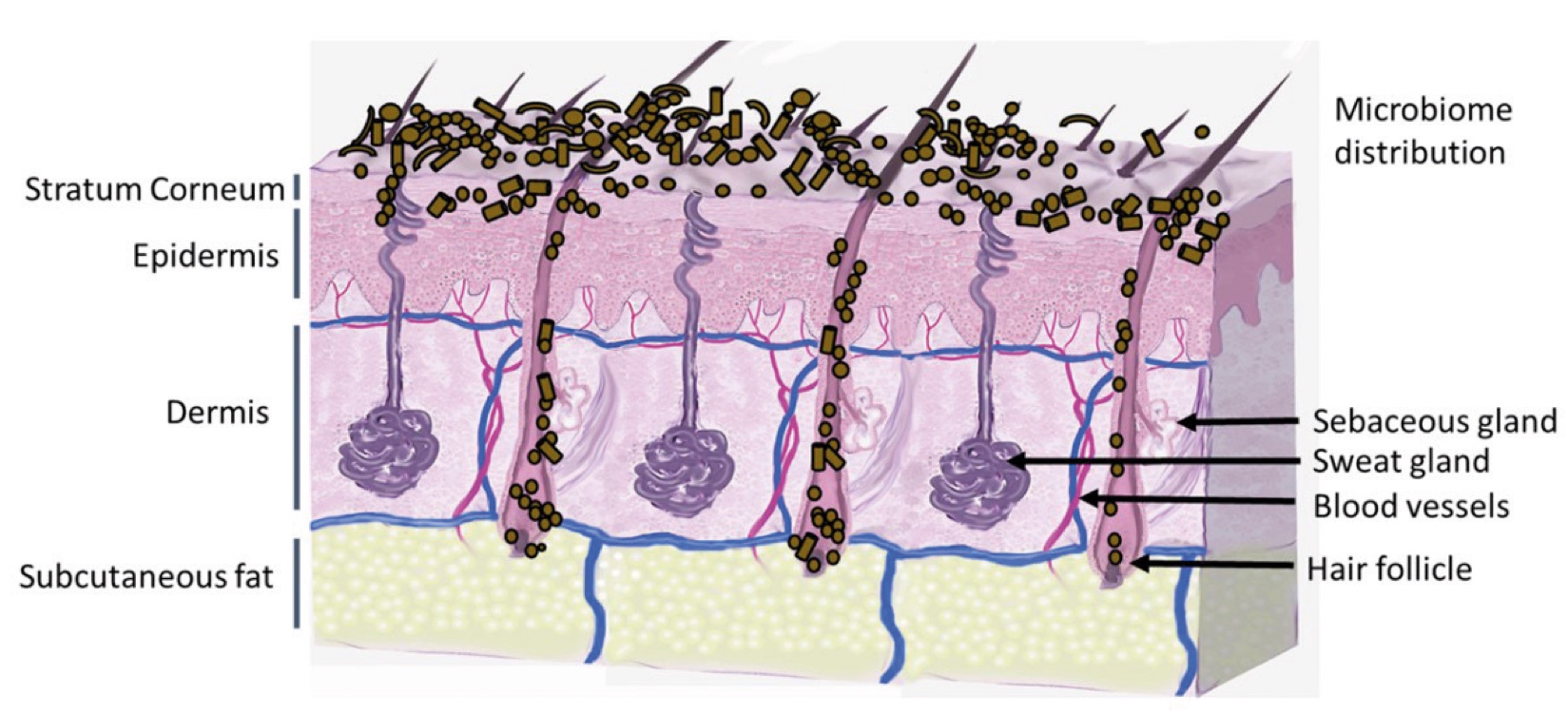
Figure 2. Skin Section with Microbiome. Most microorganisms live in the superficial layers of the stratum corneum and in the upper parts of the hair follicles. Some reside in the deeper areas of the hair follicles and are beyond the reach of ordinary disinfection procedures. There bacteria are a reservoir for recolonization after the surface bacteria are removed.
About the Author
Senior Product Development Manager at Oat Cosmetics, leading supplier of oat-derived ingredients for the beauty and personal care industry. With over 7 years of experience in the beauty sector, my work bridges scientific research with market-driven innovation—focusing on high-performance actives for both skin and hair care.
Holding a master’s degree in chemical engineering and an additional master’s in environmental chemistry and bioresources, allow me to combine scientific expertise with a forward-thinking approach to product innovation. I’ve authored 15+ scientific articles and regularly speak at technical seminars, where I enjoy sharing insights and helping shape future beauty trends.
At Oat Cosmetics, my goal is to lead the development of cutting-edge, sustainable ingredients with proven efficacy that meet the highest industry standards, empowering brands to create effective and environmentally conscious products.

Emilie Gombert-Alexandru
Senior Product Development Manager, Oat Cosmetics, Southampton, United Kingdom

References and notes
- Mintel. Korean beauty trends continue to capture consumers in APAC [Internet]. 2024 Sep 26 [cited 2025 Sep 3].
- T. Sun et al. Rheological and functional properties of oat β-glucan with different molecular weight. Journal of Molecular Structure, 2020; 1209:127944.
- J. Arct, K. Pytkowska, A. Piech. Oat (Avena sativa) – an underestimated beauty plant. Polish Journal of Cosmetology, 2021; 24(2):88–94.
- E. Gombert-Alexandru. Revitalising skin from within: a multi-dimensional approach to slowing ageing with novel natural peptide. H&PC Today, 2025; 20(4): 8-12.
- M. Kaimainen, et al. Polar lipid fraction from oat (Avena sativa): characterization and use as an o/w emulsifier. European Food Research and Technology, 2012; 235(3):507–515.
- X. Feng, J. Shang, Y. Wang, Y. Chen, Y. Liu. Exploring the properties and application potential of β‐glucan in skin care. Food Science & Nutrition, 2025; 13(4):e70212.
- S. Ghalamghash, R. Ghalamghash. From Brain to Skin: Neurocosmetics Pave the Way into a No-Cosmetics Future. Regenerative Engineering and Translational Medicine, 2025.
- Gronan C. The unique multifunctionality of polyglyceryl esters: The science, sustainability, and strategy fuelling next-gen formulations. H&PC Today [Internet]. 2025; 20(3) Jun 19 [cited 2025 Sep 3].
- X. Hou et al. Towards superior biopolymer gels by enabling interpenetrating network structures: A review on types, applications, and gelation strategies. Advances in Colloid and Interface Science, 2024; 325:103113.