Testing
Skin care
KEYWORDS
SCALP;
MICROBIOME;
SKIN;
MODEL;
MALASSEZIA;
LABSKIN
peer-reviewed
Investigating the impact of shampoo ingredients on a simplified scalp microbiome using an in vitro 3D skin model
Dr Nicola Kingswell
Scientific Director, Labskin Limited, York, United Kingdom
ABSTRACT:
The scalp microbiome is a complex consortium of bacteria, fungi/yeast, arachae and viruses. The microbiome helps to regulate pH in the scalp, protect the scalp from infections and to support healthy hair growth. An imbalanced microbiome on the scalp can present as itchiness, flakiness, redness or even conditions such as dandruff, seborrheic dermatitis and even hair loss.
In this article, we use an in vitro human skin model (Labskin-S) colonised with a scalp microbiome (C.acnes, S.epidermidis, C.striatum and Malasseziaspp.) to investigate how ingredients used in hair care products can alter the microbiome composition and the effects on pro-inflammatory markers released in the skin.
We showed that when targeting key microbes in the scalp microbiome, for example anti-dandruff actives against Malasseziaspp., it is important to consider, not only the effects on the microbe, but also on the scalp skin.
“
“A study in healthy women providing probiotic yogurt for four weeks showed an improvement in emotional responses as measured by brain scans”
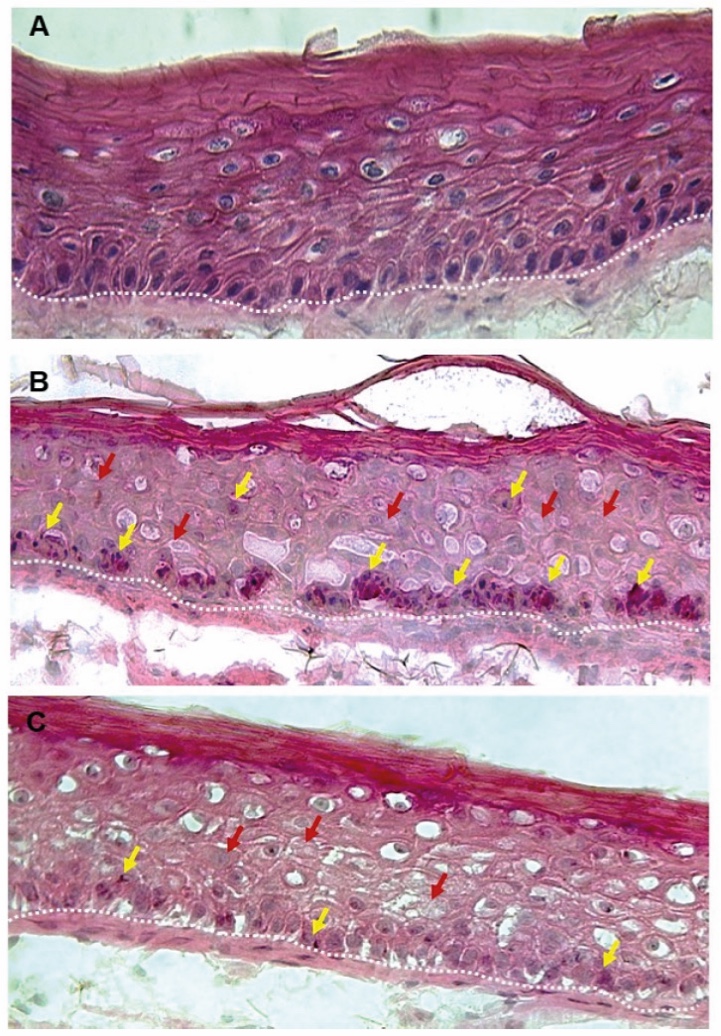
Figure 1. Skin Section with Microbiome. Most microorganisms live in the superficial layers of the stratum corneum and in the upper parts of the hair follicles. Some reside in the deeper areas of the hair follicles and are beyond the reach of ordinary disinfection procedures. There bacteria are a reservoir for recolonization after the surface bacteria are removed.
Materials and methods
Studies of major depressive disorder have been correlated with reduced Lactobacillus and Bifidobacteria and symptom severity has been correlated to changes in Firmicutes, Actinobacteria, and Bacteriodes. Gut microbiota that contain more butyrate producers have been correlated with improved quality of life (1).
A study in healthy women providing probiotic yogurt for four weeks showed an improvement in emotional responses as measured by brain scans (2). A subsequent study by Mohammadi et al. (3) investigated the impacts of probiotic yogurt and probiotic capsules over 6 weeks and found a significant improvement in depression-anxiety-stress scores in subjects taking the specific strains of probiotics contained in the yogurt or capsules. Other studies with probiotics have indicated improvements in depression scores, anxiety, postpartum depression and mood rating in an elderly population (4-7).
Other studies have indicated a benefit of probiotic supplementation in alleviating symptoms of stress. In particular, researchers have looked at stress in students as they prepared for exams, while also evaluating other health indicators such as flu and cold symptoms (1). In healthy people, there is an indication that probiotic supplementation may help to maintain memory function under conditions of acute stress.
Introduction
Dandruff, is a condition of the scalp that results in dry, itchy, flaky skin lesions, and is associated with dysbiosis of the scalp microbiome (1). This dysbiosis is most characterised by an increase in Malassezia spp. and a decrease in beneficial microbes such as C.acnes (2). Charles-Louis Malassez first proposed a link between fungi overgrowth and dandruff in 1874 (3). The microbiome dysbiosis can also result in inflammation of the scalp skin, exacerbating the itch response (4).
Current treatments for dandruff focus on actives to target the Malassezia spp., sebum and oil production in the scalp, and soothing of inflammation and itchiness (5). Therefore, when investigating new active ingredients and formulations to control dandruff, it is important to consider the impact on the microbiome balance and inflammatory responses in the scalp.
Research has shown that several cytokine markers are elevated in dandruff conditions. These include IL-1α, IL-1β, IL-6, IL-8 and TGF-β (8). IL-1α is regarded as a ‘first responder’ in the inflammatory cascade, playing a role in activating other inflammatory cytokines and chemokines (6). IL-8 is released by keratinocyte cells in response to elevated numbers of Malassezia spp (9).
The aim of this study was to use a 3D in vitro human skin model populated with the main microbes found on the human scalp to investigate the impact of two novel test items; one designed to target Malassezia spp. and the other to maintain the balance of microbes.
Materials and Methods
3D in vitro human skin equivalent
Primary adult human dermal fibroblasts were embedded into a fibrin gel matrix to produce dermal equivalents (DEs). The DEs were cultured to allow the fibroblasts to remodel the matrix. Primary neonatal human keratinocytes were applied to the DE surface and cultured under liquid for 48 hours. Labskin was cultured at the air liquid interface until a stratified epidermis was formed. Incubation conditions for all cultures was 37 ± 2°C in 5 ± 1% (v/v) CO2 at ≥95% Relative Humidity (RH).
Scalp microbes
A mixed consortia of bacteria and yeast was created to mimic a simplified scalp microbiome. This consortium included C.acnes, S. epidermidis, C.striatum and M.globosa. These microbes were selected based on published data and in house data from 16SRNA sequenced scalp microbiome swabs (10).
Malassezia globosa (CBS 3990) was cultivated aerobically at 34 ± 2°C for 4 days using Selective Modified Malassezia agar (SMA+).
Cutibacterium acnes (NCTC 737) was cultivated anaerobically at 37 ± 2°C for 4 days using Reinforced Clostridial Agar Medium with Furazolidone (RCAF).
Staphylococcus epidermidis (NCTC 11047) was cultivated aerobically at 37 ± 2°C for 24 hours using Mueller-Hinton agar (MHA).
Corynebacterium striatum (NCTC 764) was cultivated aerobically at 37 ± 2°C for 24 hours using aerobic corynebacterium agar (ACA).
Inoculation buffer was used to prepare the initial inoculum containing 1.1 x 10⁶ CFU mL-1 of each bacterium and ~1.1 x 10⁸ CFU mL-1 of the yeast.
10 µL of the inoculum was used to colonise each Labskin-S unit. This translated to ~106 CFU cm-2 of the yeast.
Study Protocol
Colonised Labskin-S was incubated at 37 ± 2 °C in 5 ±1 % (v/v) CO2 at ≥95% RH for 3 ± 1 hour.
Test items were diluted 1 in 10 using sterile dH2O (one part test item to 9 parts of dH2O). This allowed replication of the conditions of the product’s intended use.
Five Labskin-Sunits were left untreated and incubated at 37 ± 2 °C in 5 ±1 % (v/v) CO2 at ≥95% RH for 21 ± 2 hours.
The remainder of Labskin-S units were treated with 11 µL of dPBS (untreated control) or test item.
Treated Labskin-S units were incubated at room temperature for 10 ± 1 minute. Following this incubation, the test items (or dPBS) were washed off with pre-warmed dPBS to mimic washing off of hair shampoos.
The Labskin-S surface was then dried with sterile filter paper strips.
Labskin-Sunits were incubated at 37 ± 2 °C in 5 ± 1 % (v/v) CO2 at ≥95% RH for 18 ± 2 hours.
Biopsy samples of 8 mm in diameter were aseptically removed from the centre of each Labskin-S unit and placed into sterile microcentrifuge tubes. 1.5mL of Dey Engley neutralizing broth media was added and the tubes containing the samples vortexed to recover the microbes. Serial dilutions were performed and viable microbial numbers were assayed by recovery on appropriate culture media.
Undernatant media was collected from all Labskin-S units and frozen at <-70°C for examination of proinflammatory cytokines.
Test Items
Test items can be any final formulation, active ingredient or carrier that is applied to the scalp to interact with the scalp microbiome. For this study, we investigated two active ingredients designed to target dandruff (Test item 1 – an active ingredient designed to target Malassezia spp. and Test Item 2 - a starch-based product designed to maintain the microbiome consortium), a commercially available shampoo product without an active ingredient and the carrier alone (dH20).
The hypothesis tested was the test item one should reduce the amount of Malassezia globosa recovered, and that test item 2 should neither increase nor decrease the amount of any of the microbes present.
Microbial enumeration
Methodology used to quantify individual microorganisms of the scalp mix.
Technical replicate counts obtained from selective solid media were averaged and used to calculate the colony forming units per square centimetre (CFU cm-2). The limit of detection of this assay is 59 CFU cm-2.
Log10 difference:Calculation of microbial change; the magnitude of this change can be used to compare between microorganisms and between treatment groups.
Log10 was calculated by determining the Log10 value of the mean CFU cm-2 for each treatment group.
Log10 difference was calculated (Figure 7) using the following formula:
Log10 difference = Log10(Treatment) - Log10(Untreated)
Cytokine quantification
Undernatant from all the Labskin constructs colonised with the scalp microbiome consortium was collected 24 hours post treatment and 5 replicates were analysed using the R&D systems ELISA kits in order to quantify the concentration of IL-1α, and IL-8.
Data Analysis
Data handling, statistical analysis and data representation was carried out using Microsoft 365 and GraphPad Prism9. The statistical tests used included Grubbs outlier analysis, ANOVA and Sidaks multiple comparisons tests. These tests will be referred to in the results and discussion.
Protocol overview
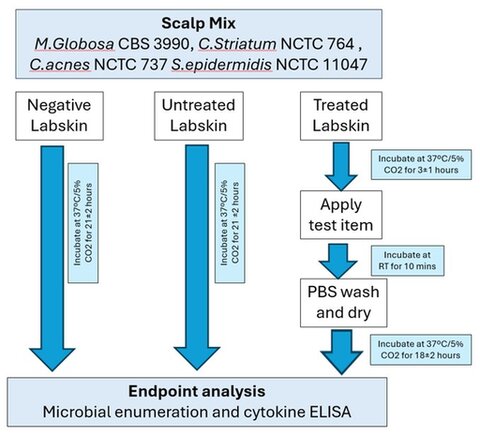
Figure 1.Flow diagram summarising the experimental layout for “Test item effect on scalp microbiome and Labskin immune response” protocol.
Results and Discussion
Test item effect on scalp microbiome - analysis explanation
To assess the test items’ effect on the scalp microbiome model, the consortium was plated onto selective media for each individual microorganism and enumerated and analysed.
This determined changes upon individual populations of microorganisms within the microbiome model caused by the test items.
Log10 Difference
Using the Log10 CFU cm-2 difference analysis (Figure 2), it is possible to establish a biologically significant change by the treatments in relation to the “Untreated” control. This change is defined as a difference of ±0.5 Log10 CFU cm-2.
Test Item 1 When compared with “Untreated”, it increased the amount of S. epidermidis by Log10 0.35 and reduced the amount of C. striatum, C. acnes and M. globosa by Log10 -0.24,-1.22 and -1.42 respectively.
Test Item 2 When compared with “Untreated”, it reduced the amount of S. epidermidis,C. striatum, C. acnes and M. globosa by Log10 -0.27,-0.75, -2.75 and -2.47 respectively.
dH2O When compared with “Untreated”, it increased the amount of S. epidermidis by Log10 0.38 and reduced the amount of C. striatum, C. acnes and M. globosa by Log10 -0.42,-0.96 and -0.65 respectively.
Commercial ProductWhen compared with “Untreated”, it increased the amount of S. epidermidis by Log10 0.46. It has also reduced the amount of C. striatum, C. acnes and M. globosa by Log10 -0.43, -2.37 and -0.27 respectively.
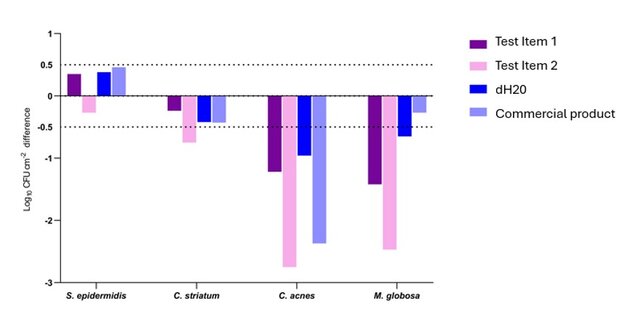
Figure 2. Log10 CFU cm-2 difference between all test item groups and the dPBS control. “Untreated” has been removed from the graph for clarity. The dotted line indicates the ±0.5 Log10 CFU cm-2 difference.
Test item effect on Labskin immune response - analysis explanation
Undernatant for Labskin constructs colonised with the scalp microbiome consortium was collected 24 hours post treatment and 5 replicates were analysed using the R&D systems ELISA kits in order to quantify the concentration of IL-1α, IL-6 and IL-8.
This assessment aimed to provide insight into the epidermal response to the colonisation and investigate the host-microbe interactions.
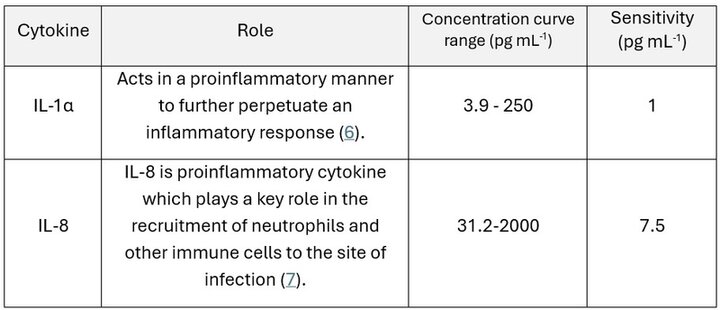
Table 1. List of cytokines, their roles and the ELISA parameters used for quantification of cytokines in the undernatant of Labskin colonised with scalp microbiome.
IL-1α
One outlier was removed from the “Test Item 2” treatment group, following Grubbs outlier analysis.
All datapoints for “Negative” and one data point from “Untreated” were below the lower limit of quantification indicating negligible quantities of the cytokine present.
One-way ANOVA indicated statistically significant difference between the treatment groups (p=<0.0001).
The post-hoc test showed no statistical significance (p>0.05) between:
“Negative” control vs. “Untreated” or “Test Item 2”.
“Untreated” control vs. “Test Item 1”,” Test Item 2” or ”dH2O”.
The post-hoc test showed a statistically significant increase between:
“Negative” control vs “Test Item 1” (p=0.0114), “dH2O” (p=0.0055) and “Commercial product” (p=<0.0001).
“Untreated” control vs. “Commercial product” (p=<0.0001).
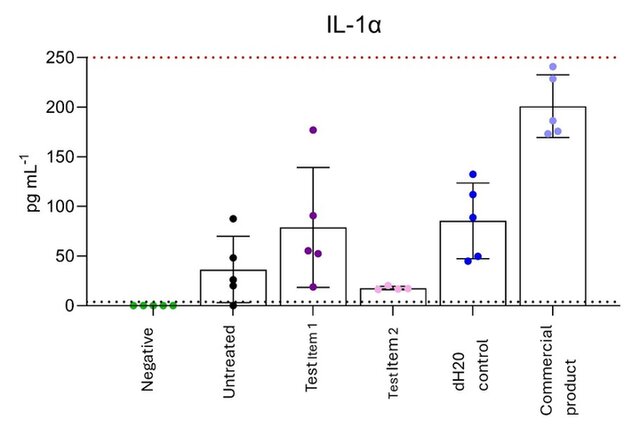
Figure 3. IL-1α ELISA results for Labskin colonised with Scalp mix after removing outliers. Data points represent individual Labskin units (n=4/5). Graph displays mean + SD. Red dotted line represents the peak of the concentration curve (250 pg mL-1) and black dotted line represents the lower limit of quantification (3.9 pg mL-1). Negative values are displayed as “0” for graphical representation. Statistical significance is not displayed on the graph for clarity.
Conclusion
The future of cosmetics lies in the continued evolution of holistic approaches which represents a transformative shift in the industry, merging scientific advancements, natural ingredients, and wellness principles. By understanding and embracing the interconnectedness of these elements, the cosmetics industry can cultivate products that not only enhance external beauty but also contribute to the overall well-being of individuals and the planet.
The interplay between beauty from within and topical cosmetics is the key for future products. The integration of biotechnology and green chemistry is revolutionizing cosmetic formulations, offering sustainable and biocompatible alternatives.
Developers can implement blockchain to trace the journey of ingredients from source to product. Nevertheless, the efficacy of the natural products should be scientifically proven. Marketers can communicate transparency as a brand value, and parallelly educate consumers by highlighting how specific ingredients contribute to radiant and healthy skin.
By embracing the synergy between these approaches and leveraging scientific advancements, the cosmetics industry can provide consumers with comprehensive beauty solutions that cater to both internal and external dimensions of beauty.
IL-8
In accordance with the ELISA kit’s manufacturers instruction, a 1 in 100 dilution of the undernatant was performed to bring the levels of this cytokine within the limits of the standard curve. This allowed for a more accurate quantification.
All data points of the diluted undernatant were below the peak concentration curve. Once the dilution factor was taken into account, the true values were raised above the top of the concentration curve, however they are still accurate.
Three data points for “Negative” were below the lower limit of quantification, indicating negligible expression of this cytokine.
One-way ANOVA indicated statistically significant difference between the treatment groups (p=<0.0001).
The post-hoc test showed no statistical significance (p>0.05) between:
“Untreated” control vs. “Test Item 1”,” Test Item 2” or ”dH2O”.
The post-hoc test showed a statistically significant increase between:
“Negative” control vs all treatment groups (p=<0.0001).
“Untreated” control vs. “Commercial Product” (p=<0.0001).
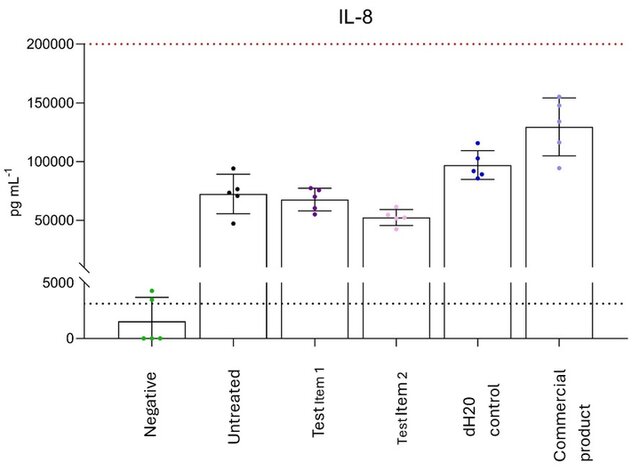
Figure 4. IL-8 ELISA results for Labskin colonised with Scalp mix. Data points represent individual Labskin units (n=5). Graph displays mean + SD. Red dotted line represents the peak of the concentration curve and black dotted line represents the lower limit of quantification. Both dotted lines have been marked after taking the dilution factor into account (1 in 100). Negative values are displayed as “0” for graphical representation. Statistical significance is not displayed on the graph for clarity.
Conclusions
The use of the 3Din vitro human skin model populated with a simplified scalp microbiome consortium allowed clear distinctions to be made between ingredients used in the manufacture of shampoo.
For Test Item 1, an ingredient designed to target Malassezia spp., the analysis showed that, when compared with the untreated control (colonised with scalp mix), it had no negative effect on the population of S. epidermidis or C. striatum. However, it did induce a biologically significant reduction in population of C. acnes and M. globosa. Test Item 1 also showed no statistically significant effect on the increased release of IL-1α or IL-8 when compared to the “Untreated” control.
These results suggest that including Test item 1 in a shampoo format could result in a product able to reduce the amount of C.acnes and Malassezia spp. without inducing inflammatory responses.
For Test item 2, an ingredient designed to maintain the microbiome composition, the analysis showed that, when compared with the untreated control (colonized with scalp mix), it has a reductive effect on all 4 microbes used in the scalp consortia. It induced a biologically significant reduction in C.acnes, C.striatum and M.globosa. Test Item 2 also showed no statistically significant effect on the increased release of IL-1α or IL-8 when compared to “Untreated” control.
These results could suggest that including Test item 2 in a shampoo could have an non-selective reductive effect in key microbes in the scalp microbiome without inducing inflammatory responses.
For the Commercial product (shampoo not specifically designed to be anti-microbial), the analysis showed that, when compared with the untreated control (colonised with scalp mix), it had no reduction on the populations of S. epidermidis,C. striatum or M. globosa. It did, however, induce a biologically significant reduction in population of C. acnes. The reduction observed was higher than the one observed in Labskin treated with the respective vehicle control (dH2O) which takes the rinse step of the procedure into account. It has a statistically significant increased in the release of IL-1α and IL-8.
The results could suggest that the commercial product targeted C.acnes in the consortium used but is more likely to induce inflammation due to a significant increase in IL-1α and IL-8.
Discussion
When investigating novel active ingredients and final formulations of products designed to target specific microorganisms, for example, reducing Malassezia on dandruff prone scalps, it is important to take a holistic approach. Using a scalp microbiome consortium, and not just Malasezzia spp., indicates if an active ingredient or formulation effects other microbes present which could cause a dysbiosis in the scalp microbiome. Using a 3D in vitro human skin equivalent populated with a simplified scalp microbiome, allows a more thorough investigation into an active ingredient or formulation effects by 1) investigating a broader range of microbes rather than Malassezia spp. individually on selective agar, 2) allowing the mimicking of the end user experience with application and wash-off, or even repeated applications, and 3) assessment of the products effects on the skin inflammatory responses to either application of the test item or via dysbiosis of the microbiome.
The use of non-animal models such as these 3D human skin equivalents that have a comparable morphology to human skin (figure 5) with the ability to be populated with the human skin and scalp microbiome (figure 6), allows formulators and product developers the opportunity to perform more thorough investigations and gain scientifically valid data to derisk clinical trials and consumer trials with human volunteers.
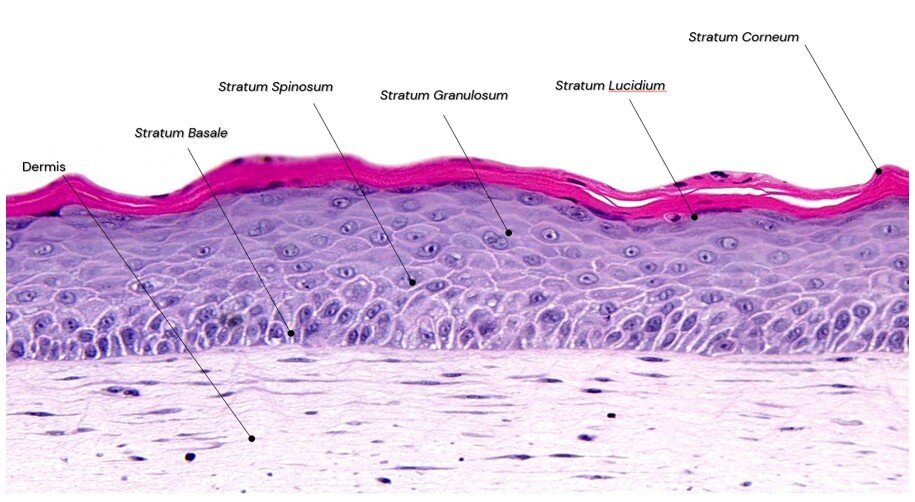
Figure 5. H&E stained transverse section through Labskin-S showing the dermal layers and the stratified epidermis, and full thickness Stratum Corneum.
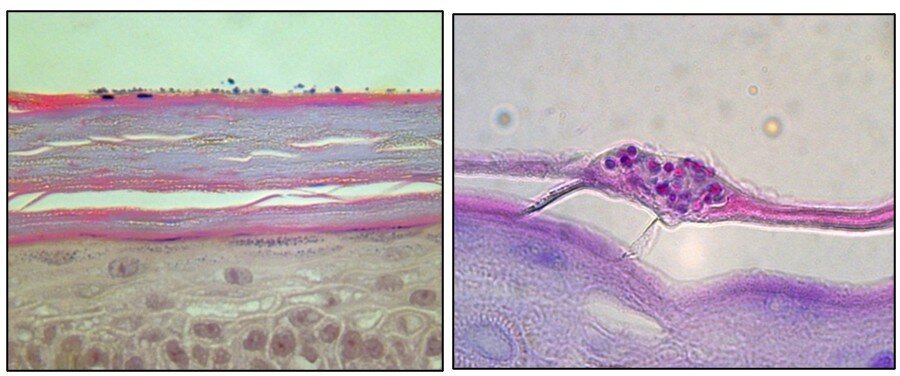
Figure 6. Images of microbes on the Stratum Corneum of Labskin-S. Left hand panel shows a mix of C.acnes, C.striatum and S.epidermidis. Right hand panel shows a Malasezzia globosa.
Surfactant Applications
The application area lends itself particularly well to the use of AI. Active today in this area is the US company Potion AI (6). The company provides AI-powered formulation tools for beauty and personal care R&D. Their offerings include Potion GPT, next generation ingredient and formula databases and AI document processing. Potion’s work could have a significant impact on the entire surfactant value chain, from raw material suppliers to end consumers. By using their GPT technology, they can help target work toward novel surfactant molecules that have optimal properties for specific applications. By using their ingredient and formula databases, they can access and analyze a vast amount of data on surfactant performance, safety, and sustainability. By using their AI document processing, they can extract and organize relevant information from patents, scientific papers, and regulatory documents. These capabilities could enable Potion AI's customers to design and optimize surfactant formulations that are more effective, eco-friendly, and cost-efficient. A particularly interesting application for this type of capability is deformulation.
Deformulation is the process of reverse engineering a product's formulation by identifying and quantifying its ingredients. Deformulation can be used for various purposes, such as quality control, competitive analysis, patent infringement, or product improvement. However, deformulation can be challenging, time-consuming, and costly, as it requires sophisticated analytical techniques, expert knowledge, and access to large databases of ingredients and formulas.
AI can potentially enhance and simplify the deformulation process by using data-driven methods to infer the composition and structure of a product from its properties and performance. For example, AI can use machine learning to learn the relationships between ingredients and their effects on the product's characteristics, such as color, texture, fragrance, stability, or efficacy. AI can also use natural language processing to extract and analyze information from various sources, such as labels, patents, literature, or online reviews, to identify the possible ingredients and their concentrations in a product.
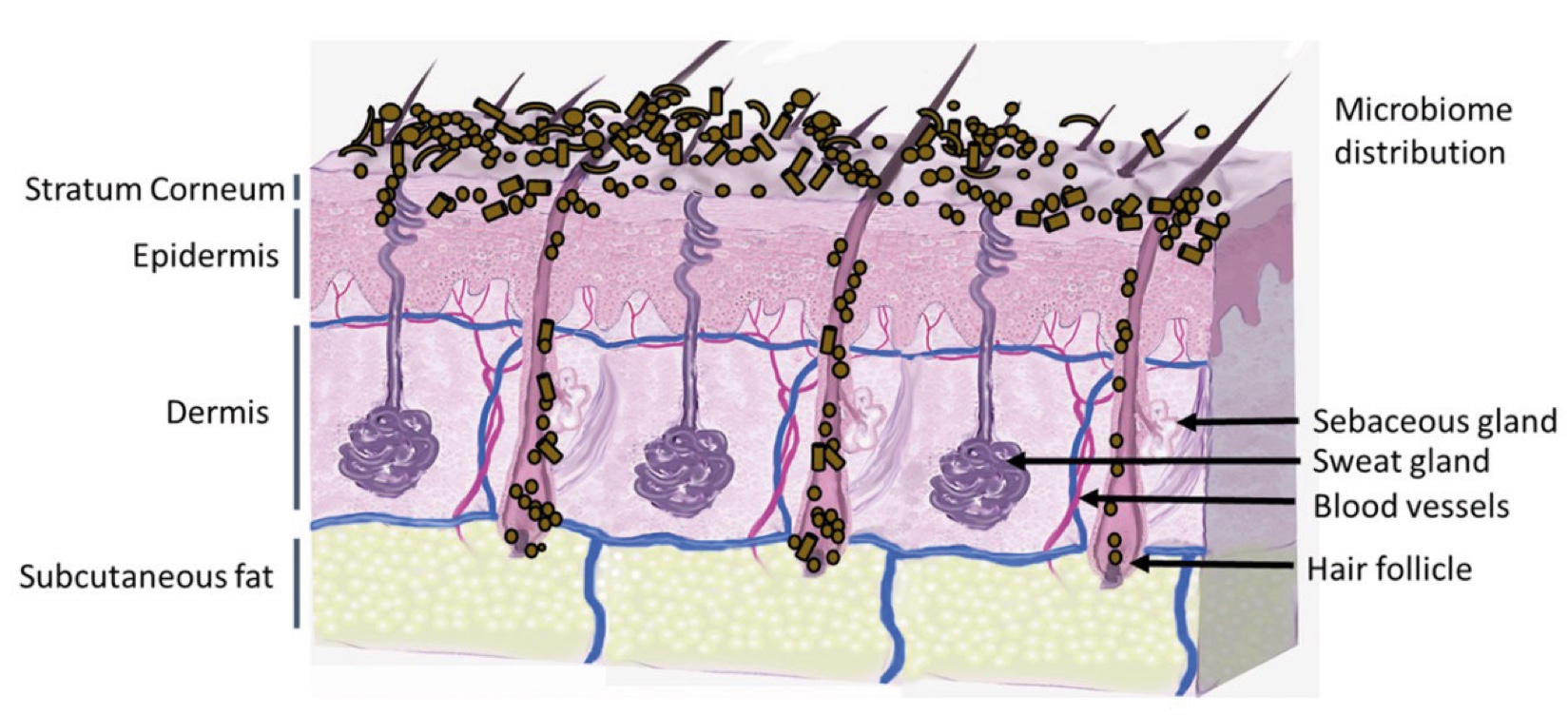
Figure 2. Skin Section with Microbiome. Most microorganisms live in the superficial layers of the stratum corneum and in the upper parts of the hair follicles. Some reside in the deeper areas of the hair follicles and are beyond the reach of ordinary disinfection procedures. There bacteria are a reservoir for recolonization after the surface bacteria are removed.
About the Author
Nicola Kingswell is the scientific director and co-owner of Labskin Limited, where she manages the strategic direction of the company, as well as day to day operations. Nicola is responsible for leading R&D activities to drive innovation in the company, in line with client requirements. She oversees all client activities including technical sales, project scoping, project management and delivery. and
Nicola is an experienced protein biochemist and cell biologist. She has held positions at some of the world's largest companies (Intertek, Labcorp, Eurofins) and some of the world's smallest companies (start-ups and spin outs).

Dr Nicola Kingswell
Scientific Director, Labskin Limited, York, United Kingdom

References and notes
- Mayser, P.; Genrich, F.; Meunier, L.; Nordzieke, S. Scalp Microbiome and Dandruff—Exploring Novel Biobased Esters. Cosmetics 2024, 11, 174. https://doi.org/10.3390/cosmetics11050174
- Rudramurthy, S.M.; Honnavar, P.; Dogra, S.; Yegneswaran, P.P.; Handa, S.; Chakrabarti, A. Association of Malassezia species with dandruff. Indian J. Med. Res. 2014, 139, 431–437. https://pubmed.ncbi.nlm.nih.gov/24820838/
- Malassez, L.C. Note sur le champignon de la pelade. Arch. Physiol. 1874, 11, 203–212. https://www.mdpi.com/2079-9284/11/5/174
- Gaitanis, G.; Magiatis, P.; Hantschke, M.; Bassukas, I.D.; Velegraki, A. The Malassezia genus in skin and systemic diseases. Clin. Microbiol. Rev. 2012, 25, 106–141. https://journals.asm.org/doi/10.1128/cmr.00021-11
- Schmidt-Rose, T. et al. Efficacy of a piroctone olamine/climbazol shampoo in comparison with a zinc pyrithione shampoo in subjects with moderate to severe dandruff. Int. J. Cosmet. Sci. 2011, 33, 276–282. https://onlinelibrary.wiley.com/doi/10.1111/j.1468-2494.2010.00623.x
- Giulio Cavalli, et al. Interleukin 1α: a comprehensive review on the role of IL-1α in the pathogenesis and treatment of autoimmune and inflammatory diseases, Autoimmunity Reviews, Volume 20, Issue 3, 2021, 102763 https://linkinghub.elsevier.com/retrieve/pii/S1568997221000227
- Kouji Matsushima, De Yang, Joost J. Oppenheim, Interleukin-8: An evolving chemokine, Cytokine, Volume 153, 2022, 155828 https://www.sciencedirect.com/science/article/abs/pii/S1043466622000370
- Locker KCS, et al. Understanding the dandruff flare-up: A cascade of measurable and perceptible changes to scalp health. Int J Cosmet Sci. 2025 Aug;47(4):703-717. https://onlinelibrary.wiley.com/doi/10.1111/ics.13067
- Yoshio Ishibashi, Takashi Sugita, Akemi Nishikawa, Cytokine secretion profile of human keratinocytes exposed to Malassezia yeasts, FEMS Immunology & Medical Microbiology, Volume 48, Issue 3, December 2006, Pages 400–409 https://academic.oup.com/femspd/article/48/3/400/506749?login=false
- Clavaud C, et al. Dandruff is associated with disequilibrium in the proportion of the major bacterial and fungal populations colonizing the scalp. PLoS One. 2013;8(3):e58203 https://journals.plos.org/plosone/article?id=10.1371/journal.pone.0058203