
Exosomes and Skin Delivery
Skin care
KEYWORDS
Exosomes; Plant-derived extracellular vesicles
Organic plant-derived vesicles; Cosmetic delivery systems.
peer-reviewed
Plant-derived Extracellular Vesicles as emerging biological delivery vehicles: Advantages over animal-derived extracellular vesicles
Paul Slavashevich1, Marie-Anne Letellier2
1. Global Technical Competence Hub Director, Symrise
2. Senior Global Business Marketing Manager, Advanced Actives Business Unit, Symrise
ABSTRACT: Plant-derived extracellular vesicles (PDEVs) are emerging as promising biological delivery systems for cosmetics and dermaceuticals, combining natural origin, low immunogenicity, scalable sourcing, and intrinsic bioactive cargo. Compared with animal-derived extracellular vesicles (ADEVs), PDEVs offer practical advantages in availability, manufacturing cost, sustainability, and regulatory feasibility, while still delivering lipids, proteins, RNAs, and plant secondary metabolites relevant to skin homeostasis. Mammalian vesicles retain strengths in homologous targeting and regenerative signaling but face limitations related to donor variability, biosafety, yield, and standardization. This article reviews the rationale for PDEVs as cosmetic delivery vehicles, compares them with ADEVs, and outlines the requirements needed to support credible and responsible cosmetic innovation (1, 2, 3, 4, 5).
Introduction
The cosmetic industry has long searched for delivery systems that do more than merely encapsulate actives. A truly advanced carrier should protect fragile molecules, improve bioavailability, assist transport to relevant skin targets, and ideally contribute biological value of its own. Extracellular vesicles are increasingly attractive in this context because they are not inert particles designed only in the laboratory; they are submicron-scale lipid bilayer structures naturally assembled by living cells to transfer molecular information. This gives them a distinct conceptual advantage over conventional systems such as liposomes or polymeric nanoparticles. Extracellular vesicles can serve as transport platforms, but they also carry endogenous proteins, lipids, metabolites, and nucleic acids that may directly influence recipient-cell behavior. In cosmetic science, this combination of delivery function and biological signaling potential has generated substantial interest (1, 2, 6, 7).
For several years, the exosome conversation in dermatology was dominated by mammalian systems, especially mesenchymal stem cell-derived vesicles, platelet-derived vesicles, and other animal-based extracellular particles. These materials drew attention because of their apparent regenerative relevance: mammalian vesicles can support wound healing, extracellular matrix remodeling, anti-inflammatory signaling, and tissue-repair pathways that are directly meaningful for skin biology. Reviews of cosmetic dermatology consistently describe promising applications in photodamage, scar prevention, hydration, elasticity, pigmentation control, and hair-related indications. However, while mammalian vesicles remain biologically attractive, they are difficult to translate into broadly usable cosmetic ingredients. Donor variability, low manufacturing yield, complex cell-culture dependency, challenging purification, potential contamination with non-vesicular material, and the need for stronger safety standardization all limit their scalability and regulatory comfort (4, 5, 6, 7).
This is why plant-derived vesicles have emerged so quickly as an alternative. PDEVs possess a range of characteristics that align exceptionally well with current approaches to cosmetic product development. First, they can be sourced from abundant and renewable botanical raw materials, including fruits, roots, leaves, seeds, and plant cell cultures. Second, reviews repeatedly describe them as cost-effective relative to mammalian vesicles, with clearer potential for scale-up and stronger alignment with sustainability-driven innovation. Third, because many PDEVs are isolated from edible or medicinal plants, they are widely discussed as low-toxicity and low-immunogenicity systems with favorable consumer perception. This is particularly relevant in cosmetics, where ingredient image, ethical sourcing, vegan positioning, and natural-origin storytelling often influence commercial success as strongly as technical performance (1, 2, 3, 4, 5). A 2025 study of an apple-derived extracellular vesicle formulation evaluated a 2% ADV-based topical product using standardized safety assays including Ames genotoxicity testing, corneal hazard assessment, skin irritation, corrosion and sensitization models. The study reported no genotoxic, cytotoxic, corrosive or sensitizing effects under the test conditions, and a 60-day topical evaluation showed a statistically significant reduction in skin redness (p < 0.05) together with improvements in wrinkle length, volume and roughness parameters (20).
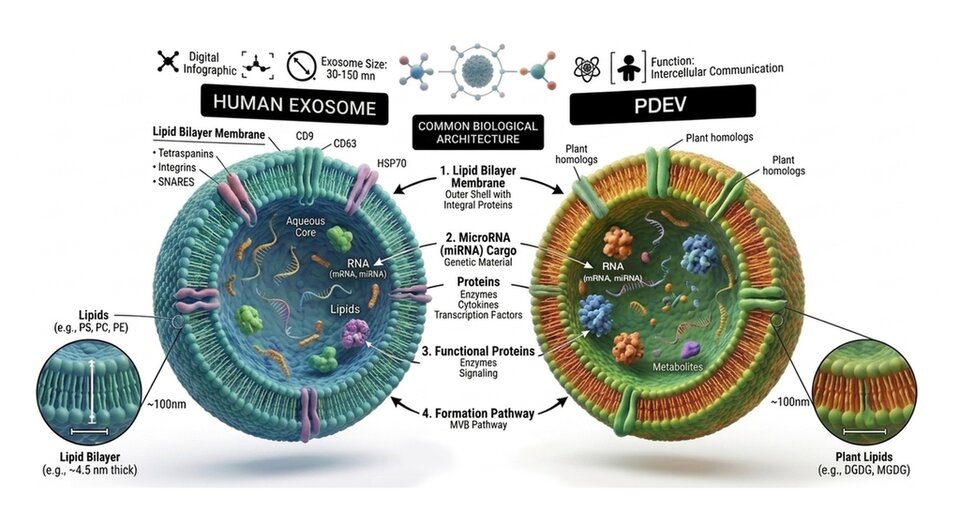
Figure 1. Human exosome and Plant-derived EV shown in the image share several key similarities: membrane-bound vesicles surrounded by a lipid bilayer, biological cargo such as RNAs, proteins, lipids, metabolites, intercellular communication.
Another factor increasingly recognized for its impact on the quality and functional properties of PDEVs is the cultivation method of the parent plant materials. Organic farming, compared to conventional practices, has been shown not only to increase yields but also to enhance the bioactivity of these vesicles.
In a controlled study of Malus domestica apples, organically cultivated fruits yielded more extracellular vesicles, which were comparable in size and morphology to those from conventionally farmed counterparts. Crucially, these organic vesicles contained higher levels of lysophospholipids, antioxidant proteins, and stress-response molecules—attributes likely influenced by reduced agrochemical use and healthier soil microbiomes. Functionally, the vesicles derived from organic apples demonstrated stronger antioxidant and anti-inflammatory effects in human cell models, while those from conventional sources showed weaker activity. In a separate in vitro study, a mixed PDEV preparation from five organically sourced fruits (grape, red orange, papaya, pomegranate and tangerine) contained measurable antioxidant components including citric acid, ascorbic acid, glutathione, catalase and superoxide dismutase (19). This evidence suggests that organic farming not only supports sustainability but also directly enhances both the yield and biological efficacy of PDEVs (8).
Another major advantage of PDEVs is that they are not simply passive carriers. Their biological cargo frequently includes proteins, phospholipids, small RNAs, and plant secondary metabolites such as flavonoids, carotenoids, polyphenols, and other antioxidant or anti-inflammatory compounds. In practical terms, that means PDEVs may provide two forms of value simultaneously. They may function as delivery vehicles, protecting and transporting endogenous or added actives, while also acting as intrinsically bioactive ingredients. This combination of delivery and signaling functions is particularly appealing in skin care, since achieving benefits such as defending against oxidative damage, diminishing visible irritation, enhancing resilience, promoting barrier repair, and supporting balanced pigmentation relies on activating several interconnected pathways rather than focusing on a single mechanism—an approach that also aligns with emerging concepts of skin longevity (1, 3, 4, 9).
These benefits align with several recognized hallmarks of skin aging described in Fig. 2, including mitochondrial dysfunction, cellular damage accumulation, chronic inflammation (inflamm’aging), impaired tissue homeostasis, and altered intercellular communication (1, 2, 3, 4, 5).
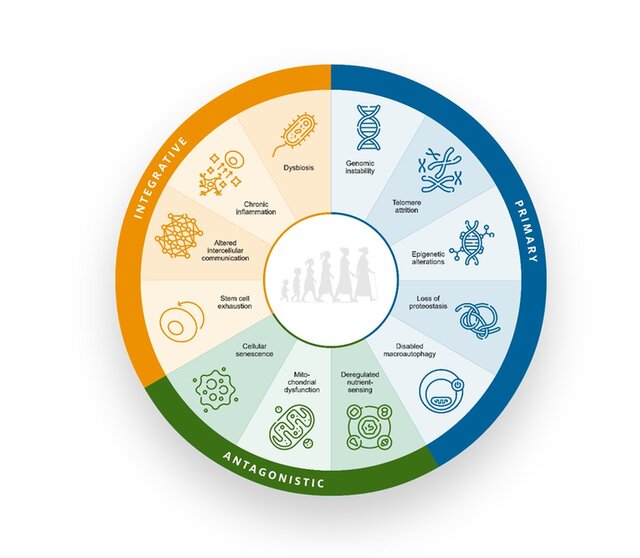
Figure 2. Image adapted from López-Otín C, et al. “Hallmarks of aging: An expanding universe”, Cell. 2023. (10)
Protection against oxidative damage is especially relevant because oxidative imbalance is a major driver of senescence-associated skin decline and photoaging, including pigmentary irregularities (2, 5). Support for barrier repair and resilience is also highly relevant to aging skin, in which epidermal dysfunction, reduced barrier recovery, and chronic low-grade inflammation contribute to fragility and functional deterioration (3, 4).
More recent papers discussing facial aesthetics and skin diseases also position these vesicles in areas such as anti-pigmentation, anti-scarring, alopecia-related support, and recovery of environmentally stressed skin. Although much of this literature remains preclinical, it is already closely aligned with the language of contemporary cosmetic benefit platforms: skin longevity, visible soothing, even tone, post-stress recovery, resilience, and healthier-looking skin under chronic exposome pressure (2, 7, 9, 12).
From a formulation strategy perspective, one of the most important features of PDEVs is their promise as advanced delivery vehicles. Reviews on plant vesicles as active-delivery systems describe their ability to protect labile molecules, improve bioavailability, facilitate uptake by recipient cells, and in some cases transport exogenous molecules together with their endogenous bioactive content. This “carrier-plus-cargo” model is particularly attractive for advanced cosmetics. Rather than adding one delivery system and a separate long list of actives, formulators may be able to design more elegant systems in which the vehicle itself contributes to the final performance. In theory, this could support more efficient combinations with peptides, antioxidants, soothing agents, barrier lipids, or post-procedure recovery technologies (1, 3, 4).
Compared with classical liposomes, PDEVs also offer a more compelling biological narrative. Liposomes remain useful and familiar in formulation science, but they are essentially synthetic vesicles that must be actively loaded and optimized to gain function. PDEVs are naturally assembled by living cells and already contain structurally integrated cargo selected by the biology of the parent plant. Recent reviews highlight that their membranes may enhance stability and uptake, while their native metabolites and nucleic acids may contribute additional activity. This does not make liposomes obsolete, but it does position plant-derived vesicles as a next-generation class of “living-inspired” carriers with greater intrinsic complexity and potentially broader functional reach. For cosmetic marketers and formulators alike, that is a highly attractive proposition: a delivery system that also tells a credible story of natural intelligence and multifunctionality (1, 2, 3).
That said, mammalian vesicles should not be dismissed. Their strongest advantage remains biological specificity. Because ADEVs originate from mammalian cells, they may engage more naturally with mammalian signaling pathways and can show superior homologous regenerative effects, especially in wound-healing or tissue-repair settings. Clinical and translational dermatology reviews continue to identify mammalian exosomes as promising for photodamage repair, wrinkle reduction, hydration, pigmentation control, and hair growth support. In premium aesthetic medicine or medically adjacent dermaceuticals, these strengths may remain highly valuable. However, the cosmetic industry operates under different constraints. Across the EU, China, Taiwan, Canada, and the US, human tissue- and cell-derived materials, including exosomes, are either explicitly prohibited or regulated as drugs, driven by concerns around donor traceability, biosafety, and ambiguity at the cosmetic-drug boundary. This fragmented and changing regulatory landscape creates significant compliance challenges for brands, particularly around ingredient classification, INCI registration, safety substantiation, and permissible claims. In this context, plant-derived extracellular vesicles benefit from a clearer and more adaptable regulatory pathway, provided they are non-human in origin, well characterized, and supported by cosmetic‑appropriate claims—an advantage that strongly reinforces their commercial relevance compared with mammalian systems (2, 13, 14, 15, 16, 17, 18).
Ultimately, challenges in cost, standardization, donor dependency, and safety perception often limit the mainstream deployment of otherwise biologically impressive technologies. It is in surmounting these practical hurdles that PDEVs demonstrate a clear long-term advantage (4, 6, 7, 11).
The largest barrier facing PDEVs today is not lack of excitement, but lack of uniformity. Recent cosmetics-focused reviews warn that plant vesicle products are already entering the marketplace under multiple names—plant exosomes, phyto-exosomes, botanical nanocarriers—without consistent evidence that the material has been fully characterized or that vesicular identity has been confirmed.
This matters because product credibility depends on rigorous control of particle size (measured by nanoparticle tracking analysis), morphology (TEM or cryo-EM), surface charge (Zeta potential), composition, purity, source traceability, cargo profile (protein/lipid/RNA), formulation stability and batch-to-batch reproducibility. Without such standards, it becomes difficult to compare studies, build reliable claims, or distinguish well-characterized vesicles from loosely defined botanical micro-fractions.
For cosmetic science to benefit fully from PDEVs, the field must now move from fascination to discipline (2, 3, 7). This need for rigor is particularly important because plant-derived materials are inherently variable. Vesicles can differ depending on species, cultivar, plant organ, growing conditions, harvest timing, stress exposure, extraction method, and storage history. Such variability is not necessarily a weakness—indeed, some of the most interesting bioactivities of plant vesicles may derive from the adaptive biology of their plant source—but it does mean that cosmetic development cannot rely on generic language alone. If two preparations both claim to contain “plant exosomes” but originate from entirely different botanical systems, isolation processes and can’t experimentally demonstrate its exact endosomal biogenesis pathway, they should neither be expected to perform equivalently nor be called exosomes. This is why recent authors have called for minimal characterization frameworks that include physical analysis, molecular cargo profiling, stability studies and biologically relevant functional assays for cosmetic applications (2, 3).
Conclusion
Looking ahead, the most realistic future for PDEVs in cosmetics is not as miracle ingredients, but as a versatile and biologically credible technology platform. Their best fit may be in categories where broad supportive activity matters more than highly specific medical regeneration: anti-aging skin care, skin longevity, sensitive-skin recovery, urban-stress defense, post-exposure protection, barrier-support products, and scalp wellness. In these areas, the value of PDEVs lies in the combination of natural-origin appeal, delivery potential, phytochemical richness, and compatibility with modern sustainability narratives. If supported by better standardization and realistic efficacy substantiation, PDEVs could become one of the most commercially relevant natural delivery technologies in next-generation cosmetic science (1, 2, 3, 7, 9).
About the Authors
Paul Slavashevich is the Global Technical Competence Hub Director for the Advanced Actives Business Unit at Symrise, where he leads the Technical Competence Center and oversees scientific training and communication, intellectual property, and regulatory activities for cosmetic skin and hair active ingredients. With over 20 years of product development experience in the cosmetics industry, he has held roles at Avon Products, Zotos International, Artec Systems, and Alzo International.
Marie-Anne Letellier holds the position of Senior Global Business Marketing Manager for the Advanced Actives Business Unit at Symrise. She holds a PhD in Organic Chemistry and has built her career at the intersection of science, marketing, and innovation in the cosmetics industry. Having worked across finished cosmetic products, she now focuses on the global marketing of skincare active ingredients, adapting advanced scientific concepts into clear, market-relevant value propositions.

Paul Slavashevich
Global Technical Competence Hub Director, Symrise
Marie-Anne Letellier
Senior Global Business Marketing Manager, Advanced Actives Business Unit, Symrise


References and notes
- Langellotto MD, Rassu G, Serri C, Demartis S, Giunchedi P, Gavini E. Plant-derived extracellular vesicles: a synergetic combination of a drug delivery system and a source of natural bioactive compounds. Drug Deliv Transl Res. 2025;15:831-845. https://pmc.ncbi.nlm.nih.gov/articles/PMC11782344/
- Ferroni L, Zavan B. Plant-derived extracellular vesicles in cosmetics: building a framework for safety, efficacy, and quality. Cosmetics. 2025;12(6):252. https://www.mdpi.com/2079-9284/12/6/252
- Calzoni E, Bertoldi A, Cusumano G, Buratta S, Urbanelli L, Emiliani C. Plant-derived extracellular vesicles: natural nanocarriers for biotechnological drugs. Processes. 2024;12(12):2938. https://www.mdpi.com/2227-9717/12/12/2938
- Xu Z, Xu Y, Zhang K, Liu Y, Liang Q, Thakur A, et al. Plant-derived extracellular vesicles (PDEVs) in nanomedicine for human disease and therapeutic modalities. J Nanobiotechnology. 2023;21:114. https://pubmed.ncbi.nlm.nih.gov/36978093/
- Nemati M, Singh B, Mir RA, Nemati M, Babaei A, Ahmadi M, et al. Plant-derived extracellular vesicles: a novel nanomedicine approach with advantages and challenges. Cell Commun Signal. 2022;20:69. https://pubmed.ncbi.nlm.nih.gov/35606749/
- Bai G, Truong TM, Pathak GN, Benoit L, Rao B. Clinical applications of exosomes in cosmetic dermatology. Skin Health Dis. 2024;4(6):ski2.348. https://pubmed.ncbi.nlm.nih.gov/39624733/
- Dal Col V, Ribas FF, Araldi RP. The transformative impact of extracellular vesicles on the cosmetics industry: a comprehensive review. Cosmetics. 2025;12(5):191. https://www.mdpi.com/2079-9284/12/5/191
- Trentini M, Zanolla I, Tiengo E, Zanotti F, Sommella E, Merciai F, et al. Link between organic nanovesicles from the vegetable kingdom and human cell physiology: intracellular calcium signalling. J Nanobiotechnol. 2024;22:68. doi:10.1186/s12951-024-02340-8. https://pubmed.ncbi.nlm.nih.gov/38369472/
- Liu H, Dong T, Dong C, Yang F, Zhou Q, Guan C, et al. Plant-derived exosome-like nanovesicles: a novel therapeutic perspective for skin diseases. J Nanobiotechnology. 2025;23:640. https://link.springer.com/article/10.1186/s12951-025-03715-1
- López-Otín C, et al. “Hallmarks of aging: An expanding universe”, Cell. 2023 https://www.cell.com/cell/fulltext/S0092-8674(22)01377-0
- Wang OJE, Bajwa B, Rivers JK. Exosome-based therapies in dermatology: a scoping review. J Drugs Dermatol. 2026;25(4):368. https://pubmed.ncbi.nlm.nih.gov/41931695/
- Villarreal-Gómez LJ, Origel-Lucio S, Hernández-Hernández DA, Pérez-González GL. Use of exosomes for cosmetics applications. Cosmetics. 2025;12(1):9. https://www.mdpi.com/2079-9284/12/1/9
- CIRS Group. Panoramic analysis: current regulatory status and compliance challenges of exosome cosmetics worldwide. Hangzhou (CN): CIRS Group; 2026. https://www.cirs-group.com/en/cosmetics/panoramic-analysis-current-regulatory-status-and-compliance-challenges-of-exosome-cosmetics-worldwide
- REACH24H. INCI registration for exosome ingredients: a global compliance guide. Shenzhen (CN): REACH24H; 2025. https://en.reach24h.com/news/industry-news/cosmetic/inci-registration-for-exosome-ingredients-global-compliance-guide
- Health Canada. Classification of topical products containing human-derived exosomes. Ottawa (ON): Health Canada; 2025. https://www.canada.ca/en/health-canada/programs/consultation-classification-topical-products-containing-human-derived-exosomes-extracellular-vesicles-cell-conditioned-media/notice.html
- US Food and Drug Administration (FDA). Warning letters and enforcement summaries related to exosome products. Silver Spring (MD): FDA; 2026. https://bioregenex.com/fda-regulations-exosome-products-2026-physician-guide/
- Taiwan Food and Drug Administration (TFDA). Updates on exosome cosmetic review requirements. Taipei (TW): TFDA; 2024–2026. https://www.cirs-group.com/en/cosmetics/taiwan-updates-documentation-requirements-for-the-use-of-exosomes-derived-from-human-cells-in-cosmetics
- Exosome Edit. Exosome-based cosmetic regulatory status: global overview. London (UK): Exosome Edit; 2026. https://academic.oup.com/asj/article/46/Supplement_1/S1/8512048
- Di Raimo, R., Mizzoni, D., Aloi, A., Pietrangelo, G., Dolo, V., Poppa, G., Fais, S., & Logozzi, M. (2024). Antioxidant Effect of a Plant-Derived Extracellular Vesicles’ Mix on Human Skin Fibroblasts: Induction of a Reparative Process. Antioxidants, 13(11), 1373. https://doi.org/10.3390/antiox13111373.
- Sileo L, Cavaleri MP, Lovatti L, Pezzotti G, Ferroni L, Zavan B. Dermatologically tested apple-derived extracellular vesicles: safety, anti-aging, and soothing benefits for skin health. J Cosmet Dermatol. 2025. doi:10.1111/jocd.70254. https://pmc.ncbi.nlm.nih.gov/articles/PMC12278024/