Hair Care
Skin care
KEYWORDS
Hair repair; lipid–protein structure;
cell membrane complex; claims substantiation;
mechanical performance; scanning electron microscopy
peer-reviewed
Rethinking Hair Repair Claims Through Lipid–Protein Structure
Nam Hai Lai
Department of Research and Innovation, Moonshot Biotech PTE. LTD., Singapore
ABSTRACT: Over the past decade, bond-building technologies have shaped how hair damage is interpreted, treated, and communicated within the personal care industry. While these approaches have delivered meaningful advances, emerging scientific evidence suggests that chemical bond breakage alone does not fully explain long-term hair degradation. Increasingly, damage is understood as a structural phenomenon driven by disruption of the lipid–protein architecture that underpins mechanical performance and fiber integrity. This article examines the limitations of bond-centric repair claims, reviews the growing relevance of lipid-focused analytical endpoints, and discusses how structural biology is reshaping claim substantiation frameworks. An industry case example illustrates how lipid–protein restoration can complement existing repair strategies.
Hair as a lipid–protein composite system
Human hair is a hierarchical biological material composed not only of keratin proteins and covalent crosslinks, but also of a continuous internal lipid system commonly referred to as the cell membrane complex (CMC). This lipid phase plays a central role in organizing cortical cells, maintaining cohesion between structural elements, regulating moisture transport, and distributing mechanical stress throughout the fiber (1, 2, 3).
Despite this well-established structural understanding, commercial hair repair narratives have historically emphasized protein reinforcement and chemical bond restoration. While chemically intuitive, this framing simplifies hair damage into a single dimension and underrepresents the contribution of lipids to long-term fiber stability.
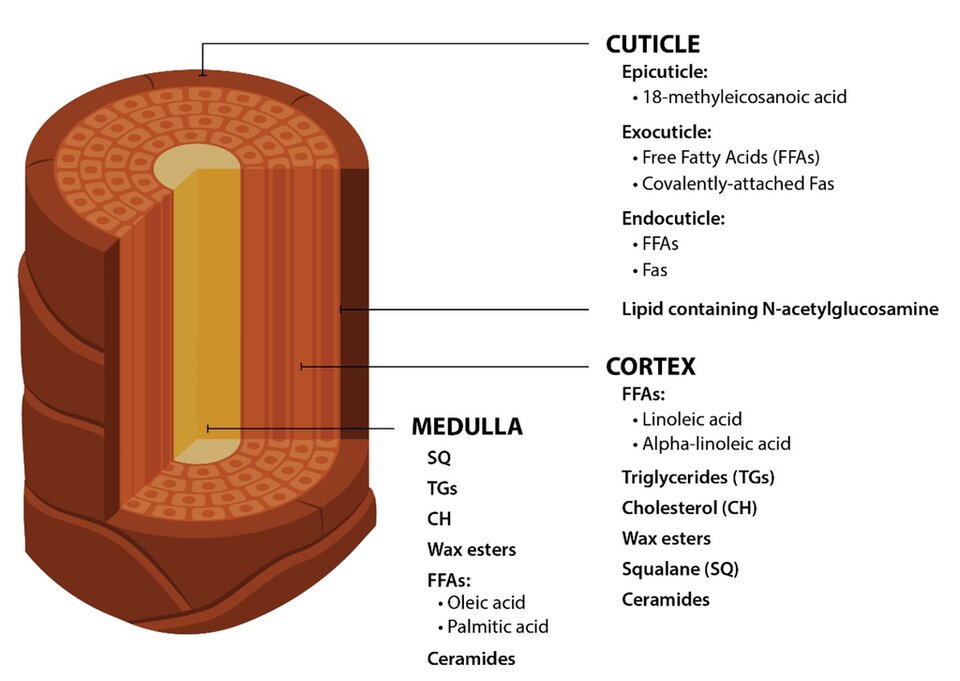
Figure 1. Hair transverse layers and lipid composition.
Fiber science literature consistently demonstrates that hair behaves as a composite material, in which lipid integrity and protein organization are interdependent. When the lipid phase is compromised, keratin structures become more susceptible to mechanical fatigue, fracture propagation, and cumulative damage—even if covalent bonds remain partially intact (1, 2, 4).
Lipid depletion as an early and critical damage mechanism
Chemical and thermal treatments such as bleaching, coloring, perming, and repeated heat styling are known to rapidly disrupt the hair’s endogenous lipid content. Oxidative processes and solvent exposure extract or degrade lipids within the CMC, weakening intercellular cohesion and altering internal stress distribution (5, 6, 7, 8).
Peer-reviewed research published in Dermatology Research and Practice provided direct experimental evidence that lipid depletion is closely associated with structural degradation in chemically damaged hair fibers (9). Using quantitative lipid analysis alongside scanning electron microscopy (SEM), the study demonstrated that damaged fibers exhibited pronounced internal disorganization and surface disruption correlated with reduced mechanical performance (9, 10, 11) .
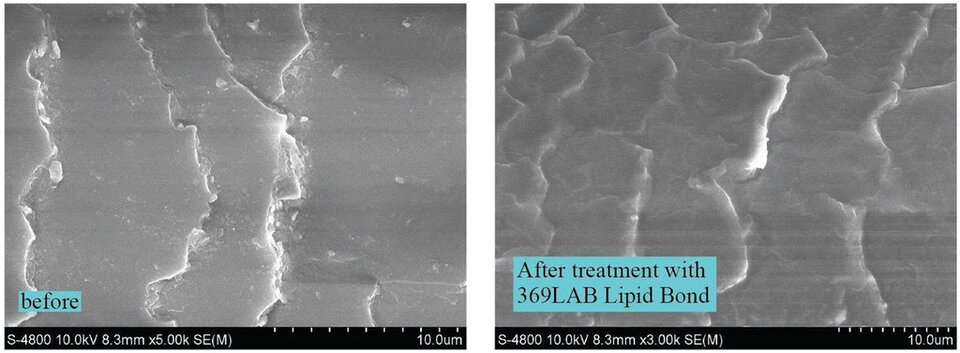
Figure. 2. SEM images of the bleached hair surface: left is before, and right is after treatment with 369LAB Lipid Bond (7).
Notably, these changes were observed even when keratin structures were not fully degraded, indicating that lipid loss can precede and amplify protein-level damage. This finding challenges the assumption that restoring chemical bonds alone is sufficient to re-establish structural integrity.
Lipid integrity and mechanical performance
Mechanical testing has long served as a functional indicator of hair health. Properties such as tensile strength, elasticity, and resistance to fatigue reflect the combined contribution of protein architecture and lipid-mediated cohesion (2, 4).
In a peer-reviewed study by Lai et al. (9) published in Dermatology Research and Practice, lipid-depleted hair fibers showed significant reductions in breaking force and elongation at break compared with untreated controls (9). Following targeted lipid restoration, statistically meaningful recovery of these mechanical parameters was observed, suggesting re-stabilization of internal architecture rather than superficial conditioning.
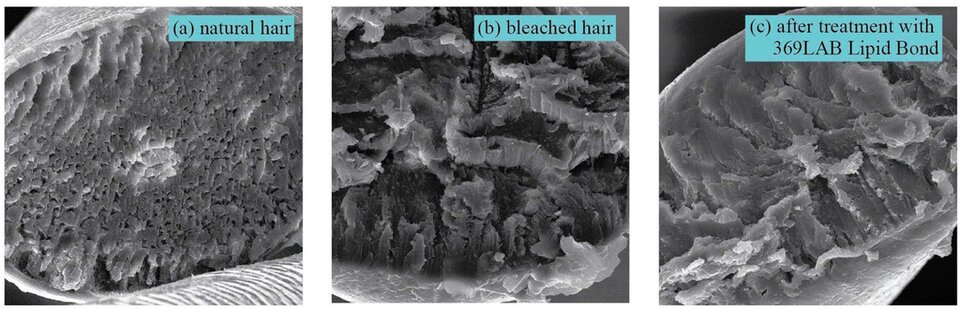
Figure 3. SEM images of the cross-sections of hair fiber;(a) Natural hair; (b) Bleached hair; (c) bleached hair after treatment with 369LAB Lipid Bond
SEM imaging further supported these findings by revealing improved cuticle cohesion and internal alignment in treated fibers (9, 10, 11). Together, these results reinforce the concept that lipids contribute directly to load distribution and fracture resistance, acting as a structural mediator rather than a passive component.
Re-evaluating bond-centric repair claims
Bond-building technologies have undeniably advanced professional haircare and remain an important part of modern repair toolkits. However, an exclusive focus on chemical bond restoration risks overlooking other structural determinants of durability and performance.
Evidence increasingly suggests that repairing disulfide or peptide bonds without addressing lipid depletion may result in partial or short-lived improvements. Fibers may exhibit temporary strength gains while remaining vulnerable to cumulative stress, protein loss, and mechanical fatigue.
From a claims substantiation perspective, this raises important questions: What does “repair” truly mean? Is it the temporary restoration of measurable strength, or the re-establishment of structural systems that govern long-term resilience?
Answering these questions requires broader analytical frameworks that reflect the composite nature of hair.
Analytical endpoints gaining relevance in substantiation
As regulatory expectations and professional performance standards increase, the industry is moving toward more mechanistically grounded evaluation methods.
Several analytical endpoints are becoming increasingly relevant for substantiating hair repair claims:
- Spectroscopic analysis of chemical bonds, particularly using IR or RAMAN spectroscopy, to assess bond-related structural changes within the fiber
- Quantitative lipid analysis, enabling direct measurement of lipid depletion and restoration within the fiber (3, 9, 12)
- Microscopy techniques, particularly SEM, to visualize cuticle condition and internal organization (10, 11)
- Mechanical testing, including tensile strength and elasticity, to assess functional performance (2, 4)
- Protein-loss measurements, which provide insight into long-term fiber protection under repeated stress (2)
Together, these methods support a multidimensional understanding of repair efficacy that extends beyond sensory or surface-level effects.
Industry illustration: a lipid–protein restoration approach
Within this evolving technical landscape, some industry players are exploring lipid-focused repair strategies as a complement to existing bond-centric systems.
One illustrative example is LABORIE derma, which has developed a platform referred to as Lipid Bond Technology. Rather than positioning the approach as a single-product solution, the platform is designed to restore lipid content and reinforce lipid–protein organization within the hair fiber.
Peer-reviewed findings published in Dermatology Research and Practice demonstrated measurable recovery of lipid levels, mechanical strength, and structural organization following treatment (9). Importantly, validation relied on lipid quantification, SEM imaging, and tensile testing rather than sensory evaluation alone.
This example highlights how lipid–protein restoration can be framed as a structural strategy aligned with emerging expectations around substantiation and durability, rather than as a replacement for existing repair technologies.
Implications for innovation and communication
The growing emphasis on structural biology has implications across formulation, testing, and claims communication.
For formulators, it underscores the importance of designing systems capable of interacting with the internal fiber architecture and complementing existing bond-repair approaches.
For claims and regulatory teams, it highlights the value of endpoints that reflect long-term mechanical performance and structural recovery.
For the industry as a whole, it suggests that future differentiation in hair repair may increasingly depend on biologically grounded platforms supported by transparent and reproducible data.
Conclusion
Hair repair is entering a phase in which biological structure, rather than isolated chemical bonds, is becoming central to how damage is understood and addressed.
The growing body of evidence linking lipid integrity to mechanical performance challenges simplified repair narratives and opens the door to more robust substantiation frameworks. By integrating lipid analysis, microscopy, and mechanical testing, the industry can move toward claims that better reflect real-world performance and long-term fiber health.
As illustrated by emerging lipid–protein restoration approaches, the next generation of haircare innovation may be defined less by marketing language and more by structural understanding.
About the Author
Nam Hai Lai is a biotechnology entrepreneur and inventor with over 15 years of experience. He is the CEO and Director of Research & Innovation at Moonshot Biotech Pte. Ltd. He is the inventor and owner of more than 40 patents worldwide related to nano-biotechnology and molecular technologies.
Nam Hai Lai is the lead scientist behind the development of Lipid Bond Technology, a molecular approach to hair repair that focuses on restoring the lipid–protein matrix of the hair fiber. His research on this technology has been published in peer-reviewed scientific journals, contributing to the emerging field of molecular hair science. His work primarily focuses on advancing scientific understanding and innovation in the field of molecular hair science.

Nam Hai Lai
Department of Research and Innovation, Moonshot Biotech PTE. LTD., Singapore
References and notes
- Jones LN, Rivett DE. The role of 18-methyleicosanoic acid in the structure and formation of mammalian hair fibres. Micron. 1997;28(6):469-85. https://doi.org/10.1016/S0968-4328(97)00039-5
- Robbins CR. The physical properties of hair fibers. 5th ed. New York: Springers; 2012. https://link.springer.com/chapter/10.1007/978-3-642-25611-0_9
- Masukawa Y, Narita H, Shimizu E, Kondo N, Sugai Y, Oba T, et al. Characterization of overall ceramide species in human stratum corneum. Journal of lipid research. 2008;49(7):1466–76. https://doi.org/10.1194/jlr.M800014-JLR200
- Yu Y, Yang W, Wang B, Meyers MA. Structure and mechanical behavior of human hair. Materials science & engineering C, Materials for biological applications. 2017;73:152–63. https://doi.org/10.1016/j.msec.2016.12.008
- Naito A, Midorikawa T, Yoshino T, Ohdera M. Lipid peroxides induce early onset of catagen phase in murine hair cycles. International journal of molecular medicine. 2008;22(6):725–9. https://www.spandidos-publications.com/10.3892/ijmm_00000078
- Pomi FL, Gammeri L, Borgia F, Gioacchino MD, Gangemi S. Oxidative Stress and Skin Diseases: The Role of Lipid Peroxidation. Antioxidants. 2025;14(5):555. https://pubmed.ncbi.nlm.nih.gov/40427437/
- Coderch L, Alonso C, García MT, Pérez L, Martí M. Hair Lipid Structure: Effect of Surfactants. Cosmetics. 2023;10(4):107.https://www.researchgate.net/publication/372514098_Hair_Lipid_Structure_Effect_of_Surfactants
- Trüeb RM. Oxidative stress and its impact on skin, scalp and hair. International journal of cosmetic science. 2021;43(Suppl 1):S9–S13. https://doi.org/10.1111/ics.12736
- Lai NH, Dang THN, Nguyen TT, Phan DTQ. Utilizing Lipid Bond Technology With Molecular Lipid Complex to Provide Lipid Treatment for Damaged Hair. Dermatology Research and Practice. 2025;2025(1):5385312.https://doi.org/10.1155/drp/5385312
- Kaliyadan F, Gosai BB, Melhim WNA, Feroze K, Qureshi HA, Ibrahim S, et al. Scanning Electron Microscopy Study of Hair Shaft Damage Secondary to Cosmetic Treatments of the Hair. International journal of trichology. 2016;8(2):94–8.https://journals.lww.com/ijot/toc/2016/08020
- Kim Y-D, Jeon S-Y, Ji JH, Lee W-S. Development of a classification system for extrinsic hair damage: standard grading of electron microscopic findings of damaged hairs. The American Journal of dermatopathology. 2010;32(5):432–8. https://journals.lww.com/amjdermatopathology/toc/2010/07000
- Borges EN, Neto DdS, Alonso A. Characterization of hair lipid and protein dynamics using EPR spectroscopy and treatment effects. Journal of Molecular Structure. 2023;1300(3):137225. https://doi.org/10.1016/j.molstruc.2023.137225