
Sun Care
Skin care
KEYWORDS
skin microbiome; UV radiation; sunscreen; photoprotection; zinc oxide;
microbiome-friendly
peer-reviewed
Beyond the SPF Number:
Why Microbiome Compatibility Must Become the New Standard in Sun Care
Dr. Kristin Neumann
Independent Consultant, Microbiome Science, Bamberg, Germany
ABSTRACT: Photoprotection has long been evaluated on two axes: ultraviolet (UV) efficacy and consumer acceptability. A third, equally critical dimension has been largely overlooked: compatibility with the skin microbiome. Ultraviolet radiation disrupts microbial community composition, metabolome, and barrier function — and the microbiome, in turn, modulates how skin responds to UV-induced damage. Conventional sunscreen formulations add a further layer of complexity: many UV filter systems, including those marketed as natural or organic, exert measurable antimicrobial effects on commensal skin bacteria. Zinc oxide (ZnO), the cornerstone of mineral and “clean beauty” sunscreens, is a potent antibacterial agent at the concentrations required for SPF efficacy. This opinion article argues that true photoprotection must be redefined to encompass microbiome preservation, and that the cosmetics industry requires validated, standardised testing to distinguish microbiome-compatible formulations from those that merely carry a natural or organic positioning.
Introduction
Skin science has entered a new era. The recognition that several hundred microbial species colonise the skin surface — forming a dynamic ecosystem tightly coupled to barrier integrity, immune education, and inflammatory tone — has fundamentally changed how we should assess topical product safety (1, 2). Yet sunscreen development, arguably the most consequential category of daily-use cosmetics from a dermatological standpoint, has remained largely microbiome-agnostic.
The standard framework for evaluating a sunscreen is straightforward: does it achieve the labelled SPF? Is it photostable? Is it cosmetically acceptable? These are necessary criteria, but they are no longer sufficient. If a sunscreen product simultaneously disrupts the commensal microbiome that governs barrier defence and cutaneous immune responses, it is missing one dimension.
This article presents the case for a new evaluation paradigm in photoprotection, grounded in three pillars of emerging evidence: the bidirectional skin–UV–microbiome axis; the microbiome impact of current filter systems; and a specific, underappreciated contradiction in the “natural” sunscreen space — the antibacterial properties of zinc oxide at cosmetically relevant concentrations.
The Skin–UV–Microbiome Axis: A Bidirectional Relationship
UV Radiation Disrupts Microbial Community Structure
The evidence that UV radiation reshapes the skin microbiome is now robust across multiple study designs. Acute erythemal doses of both UVA and UVB in human volunteers induce rapid, phylum-level shifts: increases in Cyanobacteria alongside decreases in Lactobacillaceae and Pseudomonadaceae have been documented within hours of a single exposure (3, 4). In holidaymakers with sustained high sun exposure, beta-diversity shifts and transient reductions in Proteobacteria were observed, with only partial recovery over weeks — suggesting that microbial communities are plastic but not resilient under repeated UV challenge (5).
Chronic, photoaging-type exposure adds further mechanistic depth. Long-term unilateral UV exposure, as studied in bus drivers, is associated with reduced abundance of antioxidant-producing taxa — including Georgenia and Lactobacillus — and decreased levels of microbe-derived ectoin, paralleled by elevated MMP-1/2 and pro-inflammatory cytokines (IL-1β, IL-6) in photoaged skin (6). The collective picture is one of progressive dysbiosis: UV erodes the commensal communities whose metabolic outputs normally buffer skin against oxidative and inflammatory insults.
The Microbiome Shapes the UV Response
The relationship is not unidirectional. Germ-free versus conventional mouse models demonstrate that the presence of a microbiome fundamentally alters the immunological outcome of UV exposure: a resident microbiome abrogates UV-induced systemic immune suppression and shifts the cytokine milieu toward a more pro-inflammatory profile (7). Critically, UV-induced alterations in the skin metabolome and lipidome — including phosphatidylcholines, phosphatidylethanolamines, and sphingomyelin, all of which are intimately linked to barrier and immune function — are strongly microbiome-dependent (8).
Beyond immune modulation, certain commensal species appear to provide indirect photoprotection through antioxidant and anti-inflammatory metabolite production (9, 10). The loss of these taxa under UV exposure may constitute a self-amplifying cycle: UV reduces protective commensals, which in turn reduces endogenous photoprotection, which increases UV damage. This cycle has implications that extend to photocarcinogenesis: microbiome composition has been linked to melanoma biology, with species such as Staphylococcus epidermidis showing protective anti-tumour effects, while Cutibacterium acnes may promote melanocyte apoptosis after irradiation (11).
Sunscreens and the Microbiome: A Missing Dimension
If UV exposure alone is capable of driving dysbiosis, the question of whether sunscreen formulations compound or mitigate this effect becomes critical. The answer, based on current evidence, is: it depends significantly on the formulation.
A human pilot study examining SPF20 sunscreen versus placebo under erythemal UV exposure found that the type of treatment — not UV exposure per se — was the primary driver of alpha-diversity change. The SPF20 formulation selectively protected Lactobacillus crispatus and modulated C. acnes populations, while UV plus placebo was associated with a loss of this commensal (12). In an in vitro reconstructed epidermis model colonised with human microbiota, a broad-spectrum SPF50+ sunscreen largely prevented UV-induced metabolomic and microbial alterations, preserving physiological skin–microbiota interactions across oxidative stress pathways and amino acid metabolism (13). A 2024 expert review concluded that microbiome-preserving sunscreens may offer superior long-term protection against solar-radiation-mediated skin conditions compared to formulations designed solely for photon-blocking efficacy (4).
However, not all filter systems are equal in this regard. Grant et al. reviewed evidence that multiple UV filters and formulation excipients can exert bactericidal or growth-modulating effects on cutaneous commensals — with effects varying by filter chemistry, vehicle composition, and the specific bacterial strains assessed (14, 15). This heterogeneity is precisely why a category-level claim — mineral is safe, chemical is not — is scientifically untenable.
The Organic Sunscreen Paradox: Zinc Oxide and the Microbiome
This is where a significant and underappreciated contradiction emerges in the market narrative around “natural” or “organic” photoprotection.
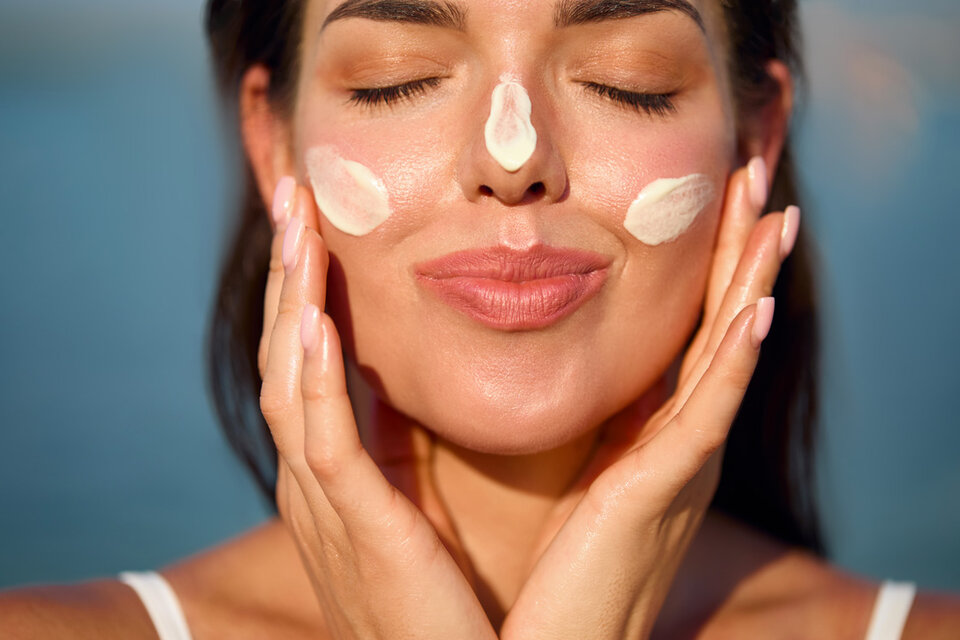
Zinc oxide (ZnO) is the filter of choice for mineral, organic-certified, and “clean beauty” sunscreens. It is positioned as the safe, reef-friendly, baby-compatible alternative to chemical UV filters. Its broad-spectrum UV-blocking efficacy is well established, and it is typically used at concentrations of 15–25% (wt/wt) to achieve SPF 30 and above. What is frequently omitted from this narrative is that zinc oxide — in its nano and non-nano forms — is a potent antibacterial agent, exploited as such for millennia in wound care precisely because of its antimicrobial properties (16).
The antibacterial mechanisms of ZnO are multiple and well characterised: generation of reactive oxygen species (ROS) that damage bacterial membranes and DNA; release of zinc ions (Zn²⁺) that disrupt essential bacterial enzymes and transport systems; and direct membrane interaction leading to depolarisation and cell death (16, 17, 18). Critically, these effects are concentration-dependent and are potentiated under UV illumination — exactly the conditions under which sunscreen is applied and activated (18).
What makes this particularly relevant for skin health is that the affected targets are not abstract pathogens but the very commensals that constitute a healthy cutaneous ecosystem. ZnO nanoparticles have demonstrated strong killing of Staphylococcus epidermidis — a core skin commensal and key contributor to barrier defence — via ROS generation and membrane damage, while remaining non-toxic to keratinocytes in co-culture (19). Mineral sunscreen formulations containing ZnO and TiO₂ inhibited C. acnes, S. aureus, and S. epidermidis in time-kill assays simulating topical application, and were associated with a rise in skin surface pH from approximately 4 to 6 (20) — a shift of functional significance, since the mildly acidic skin surface pH is a key ecological driver that maintains commensal dominance and suppresses pathogenic colonisation.
This creates a paradox that the natural beauty industry has not yet confronted directly: a product marketed as organic, reef-safe, and skin-friendly may be systematically disrupting the commensal ecosystem that underpins barrier health, immune competence, and long-term skin resilience. The organic certification of an ingredient does not confer microbiome compatibility. These are orthogonal axes of evaluation that require separate and specific testing.
It should be noted that one recent short-term human study found no measurable change in skin microbiome composition after 24 hours of ZnO sunscreen application under controlled conditions (21). This finding is informative but not reassuring: a single-day observation does not capture the cumulative effect of daily reapplication over weeks of summer sun exposure, nor the additive insult of UV-driven dysbiosis and filter-mediated antimicrobial pressure occurring simultaneously. Systematic reviews confirm that the chronic, microbiome-level impact of repeated ZnO exposure on healthy skin commensals remains largely unknown and understudied (22). This is precisely the knowledge gap the industry must close.
Towards Microbiome-Positive Photoprotection
The path forward is not to abandon mineral filters or to dismiss organic formulation principles, but to integrate microbiome compatibility as a non-negotiable evaluation criterion alongside SPF performance.
Several strategies are emerging. At the filter selection level, the goal should be identifying filter combinations — mineral or chemical — that achieve broad-spectrum efficacy without imposing significant selective pressure on commensal communities. This requires in vitro screening of relevant skin microbiome strains, followed by ex vivo and in vivo validation under conditions that reflect actual use patterns.
At the formulation level, the vehicle matters as much as the active. Excipients with known antimicrobial properties, including certain preservatives, emulsifiers, and fragrance components, compound the microbiome risk beyond the filter itself. Microbiome-friendly formulation requires a holistic audit of the entire ingredient list, not just the UV active.
Beyond protective reformulation, the most promising long-term opportunity lies in microbiome-inspired actives that contribute to photoprotection by supporting the skin’s own biological defences. Microorganism-derived UV-absorbing molecules — mycosporines, mycosporine-like amino acids, and ectoin — are photostable, biocompatible, and non-toxic candidates for next-generation photoprotective actives (9, 10). Topical and oral probiotics, prebiotics, and postbiotics have demonstrated anti-oxidative, anti-inflammatory, and barrier-supportive effects relevant to UV-induced skin damage (23, 24). These approaches do not replace conventional SPF, but they expand the concept of photoprotection from photon-blocking to ecosystem-level defence.
Conclusion
The cosmetics industry has invested decades in optimising SPF performance and sensory aesthetics in sun care. The science of the skin microbiome now demands a third dimension of evaluation: microbiome compatibility. A sunscreen that effectively blocks UV radiation but simultaneously disrupts the commensal ecosystem governing barrier function, oxidative defence, and immune homeostasis is not offering complete protection.
The organic and mineral sunscreen category is particularly in need of this reassessment. The well-documented antibacterial properties of zinc oxide at the concentrations required for SPF efficacy represent a direct contradiction of the “natural is safer” positioning. Microbiome safety cannot be assumed from ingredient origin or organic certification status — it must be tested and demonstrated.
The industry needs standardised, validated microbiome-compatibility testing frameworks — methodologies that can be incorporated into product development pipelines with the same rigour currently applied to SPF testing. Encouragingly, such frameworks are beginning to emerge: the market provides certification which is specifically designed to assess whether cosmetic formulations preserve or disrupt the skin microbiome in and independent, standardised way. Wider adoption of such approaches across the sun care category would allow the market to finally offer consumers what they deserve: photoprotection that is not only effective and pleasant to use, but genuinely safe for the living ecosystem of their skin.
About the Author
Dr. Kristin Neumann is an independent consultant and microbiome scientist specializing in the skin and cosmetic microbiome. Drawing on her PhD in Microbiology and her work as co-founder and Chief Scientific Officer of MyMicrobiome AG, she advises cosmetic and personal care companies on microbiome-related claim substantiation, regulatory-relevant study design, and scientific product validation.
At MyMicrobiome, she developed the world's first independent certification standard for microbiome-friendly cosmetics — a science-based benchmark now recognized globally by manufacturers, retailers, and ingredient suppliers. This hands-on experience at the intersection of microbiome science, certification, and commercial application is the foundation of her consulting practice.
Today, Dr. Neumann works with brands and investors seeking rigorous, credible microbiome science as a basis for product development, claims, and market positioning.

Dr. Kristin Neumann
Independent Consultant, Microbiome Science, Bamberg, Germany

References and notes
(1) Lee H, Kim M. Skin Barrier Function and the Microbiome. Int J Mol Sci. 2022;23(21):13071.
(2) Mercer S, McBain A, O’Neill C. The Skin Microbiome, Microbial Metabolites and the Epidermal Response to Ultraviolet Radiation—Towards Next Generation Suncare. Exp Dermatol. 2025;34.
(3) Burns E, Ahmed H, Isedeh P, et al. Ultraviolet radiation, both UVA and UVB, influences the composition of the skin microbiome. Exp Dermatol. 2019;28:136–141.
(4) Gilaberte Y, Piquero-Casals J, Schalka S, et al. Exploring the impact of solar radiation on skin microbiome to develop improved photoprotection strategies. Photochem Photobiol. 2024;101:38–52.
(5) Willmott T, Campbell P, Griffiths C, et al. Behaviour and sun exposure in holidaymakers alters skin microbiota composition and diversity. Front Aging. 2023;4.
(6) Li Y, Chen H, Xie X, et al. Skin microbiome profiling reveals the crucial role of microbial metabolites in anti-photoaging. Photodermatology. 2024;40.
(7) Patra V, Wagner K, Arulampalam V, Wolf P. Skin Microbiome Modulates the Effect of Ultraviolet Radiation on Cellular Response and Immune Function. iScience. 2019;15:211–222.
(8) Patra V, Bordag N, Clément Y, et al. Ultraviolet exposure regulates skin metabolome based on the microbiome. Sci Rep. 2023;13.
(9) Rai S, Rai G, Kumar A. Eco-evolutionary impact of ultraviolet radiation (UVR) exposure on microorganisms, with special focus on our skin microbiome. Microbiol Res. 2022;260:127044.
(10) Souak D, Barreau M, Courtois A, et al. Challenging Cosmetic Innovation: The Skin Microbiota and Probiotics Protect the Skin from UV-Induced Damage. Microorganisms. 2021;9.
(11) L’Orphelin J, Dompmartin A, Dréno B. The Skin Microbiome: A New Key Player in Melanoma, From Onset to Metastatic Stage. Pigment Cell Melanoma Res. 2025;38.
(12) Schuetz R, Claypool J, Sfrisco R, Vollhardt JH. Sunscreens can preserve human skin microbiome upon erythemal UV exposure. Int J Cosmet Sci. 2023;46:71–84.
(13) Jacques C, Bacqueville D, Jamin E, et al. Multi-omics approach to understand the impact of sun exposure on an in vitro skin ecosystem and evaluate a new broad-spectrum sunscreen. Photochem Photobiol. 2023;100:477–490.
(14) Grant G, Kohli I, Mohammad T. A narrative review of the impact of ultraviolet radiation and sunscreen on the skin microbiome. Photodermatology. 2023;40.
(15) Smith M, O’Neill C, Dickinson M, et al. Exploring associations between skin, the dermal microbiome, and ultraviolet radiation. Front Microbiomes. 2023;2.
(16) Siddiqi KS, ur Rahman A, Tajuddin, Husen A. Properties of Zinc Oxide Nanoparticles and Their Activity Against Microbes. Nanoscale Res Lett. 2018;13:141.
(17) Sirelkhatim A, Mahmud S, Seeni A, et al. Review on Zinc Oxide Nanoparticles: Antibacterial Activity and Toxicity Mechanism. Nano-Micro Lett. 2015;7:219–242.
(18) Gudkov SV, Burmistrov DE, Serov DA, et al. A Mini Review of Antibacterial Properties of ZnO Nanoparticles. Front Phys. 2021;9.
(19) Aditya A, Chattopadhyay S, Jha D, et al. Zinc Oxide Nanoparticles Dispersed in Ionic Liquids Show High Antimicrobial Efficacy to Skin-Specific Bacteria. ACS Appl Mater Interfaces. 2018;10(18):15401–15411.
(20) Gomes M, Lima F, Rosado C, Pezzini B. Potential Beneficial Effects of Mineral Sunscreens on Acne-Prone Skin. Curr Cosmet Sci. 2024.
(21) Smith M, Makin S, Davies C, et al. The human skin microbiome remains unchanged after 24 h of sunscreen application. J Invest Dermatol. 2025.
(22) Pîrvulescu LC, Popescu S, Popescu R, et al. Skin Microbiome, Nanotoxicology, and Regulatory Gaps: Chronic Cosmetic Exposure and Skin Barrier Dysfunction—A Systematic Review. Pharmaceutics. 2025;17.
(23) Prajapati S, Lekkala L, Yadav D, et al. Microbiome and Postbiotics in Skin Health. Biomedicines. 2025;13.
(24) Patra V, Sérézal I, Wolf P. Potential of Skin Microbiome, Pro- and/or Pre-Biotics to Affect Local Cutaneous Responses to UV Exposure. Nutrients. 2020;12.