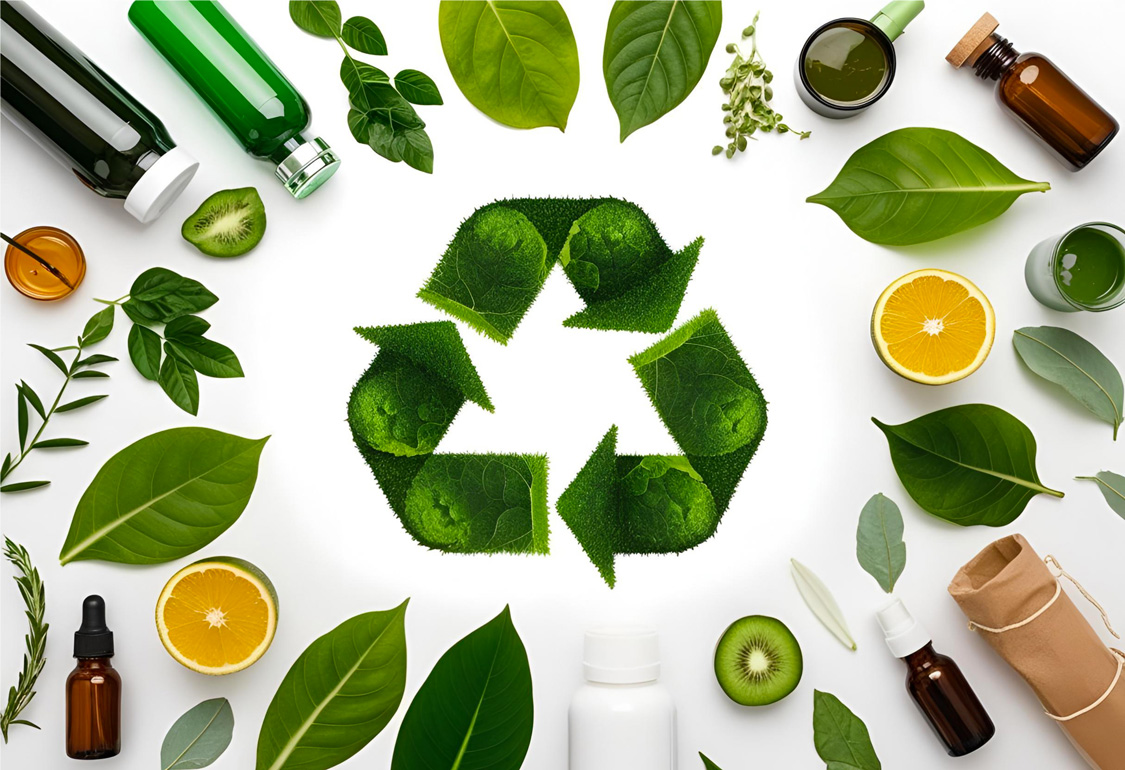
The Role of Upcycled Ingredients in a Changing Beauty Landscape
Noomi Mikkelsen
Marketing and Branding Coordinator, Kaffe Bueno, Copenhagen, Denmark
ABSTRACT: Upcycled ingredients are gaining prominence in the personal care industry as sustainability shifts from aspiration to baseline expectation. Derived from food and agricultural by-products, these multifunctional materials retain valuable nutrients and support circular economy principles by reducing waste and reliance on virgin resources. Their use is reinforced by regulatory frameworks such as the CSRD and ESPR, which demand greater transparency and accountability across supply chains. Benefits include environmental impact reduction, localised sourcing, cost efficiency, and enhanced formulation performance. Challenges remain around traceability and stability, yet upcycled ingredients are redefining product aesthetics and functionality, fostering innovation, authenticity, and resilience within a changing beauty landscape. In summary, this article explores the multifaceted value of upcycled ingredients in personal care, environmentally, economically, and strategically, while also addressing the challenges they present across sourcing, formulation, and regulation.
??????????????????
“
“A study in healthy women providing probiotic yogurt for four weeks showed an improvement in emotional responses as measured by brain scans”
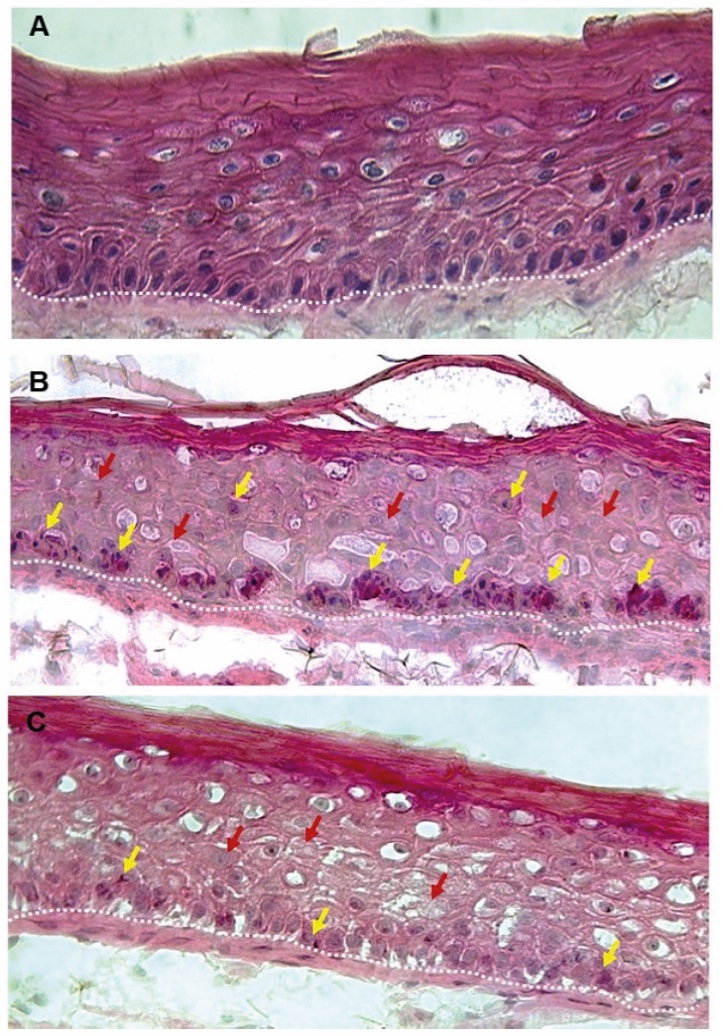
Figure 1. Skin Section with Microbiome. Most microorganisms live in the superficial layers of the stratum corneum and in the upper parts of the hair follicles. Some reside in the deeper areas of the hair follicles and are beyond the reach of ordinary disinfection procedures. There bacteria are a reservoir for recolonization after the surface bacteria are removed.
Materials and methods
Studies of major depressive disorder have been correlated with reduced Lactobacillus and Bifidobacteria and symptom severity has been correlated to changes in Firmicutes, Actinobacteria, and Bacteriodes. Gut microbiota that contain more butyrate producers have been correlated with improved quality of life (1).
A study in healthy women providing probiotic yogurt for four weeks showed an improvement in emotional responses as measured by brain scans (2). A subsequent study by Mohammadi et al. (3) investigated the impacts of probiotic yogurt and probiotic capsules over 6 weeks and found a significant improvement in depression-anxiety-stress scores in subjects taking the specific strains of probiotics contained in the yogurt or capsules. Other studies with probiotics have indicated improvements in depression scores, anxiety, postpartum depression and mood rating in an elderly population (4-7).
Other studies have indicated a benefit of probiotic supplementation in alleviating symptoms of stress. In particular, researchers have looked at stress in students as they prepared for exams, while also evaluating other health indicators such as flu and cold symptoms (1). In healthy people, there is an indication that probiotic supplementation may help to maintain memory function under conditions of acute stress.
In the evolving landscape of the personal care industry, sustainability has shifted from aspiration to expectation. Consumers are increasingly demanding transparency and purpose from brands, with sustainability now regarded as a baseline expectation (1). Regulators and formulators are also rethinking the building blocks of beauty, scrutinising not only what goes into products but where those ingredients come from and where they end up. Within this context, upcycled ingredients have emerged as a vital response to the urgent need for resource optimisation and circularity.
Rather than relying on virgin resources, many manufacturers are now incorporating ingredients recovered from by-products or waste, particularly from food and agricultural production, into new formulations. These materials often retain valuable nutrients such as antioxidants, proteins, and dietary fibres that would otherwise go unused (2). Their use reflects a broader shift in sourcing strategies and a commitment to lifecycle thinking, from early design choices through to end-of-life considerations (2).
Market Momentum: From Niche to Necessity
Once seen as an innovation on the fringes of green beauty, upcycled ingredients are now carving out a mainstream position within the personal care market. The global market for upcycled cosmetic ingredients was valued at USD 243.30 million in 2023 and is projected to grow to USD 400.12 million by 2032 (3), reflecting rising demand across beauty and personal care sectors. This growth is not only driven by consumer interest but also by changing regulatory and commercial conditions.
Regulatory change is no longer a distant pressure, it is reshaping ingredient selection today. The Corporate Sustainability Reporting Directive (CSRD) (4) mandates that companies report comprehensively on emissions, resource use, and circularity, reinforcing transparency and accountability across supply chains. In parallel, the Ecodesign for Sustainable Products Regulation (ESPR) (5) is now being applied to set product-level sustainability requirements through delegated acts. These frameworks are transforming sustainability from a voluntary ambition into a measurable obligation.
Upcycled ingredients fit naturally into this shift (2). Their circular origin, multifunctionality, and traceability help brands meet rising disclosure expectations while streamlining formulation. By embedding sustainability at the ingredient level, companies can reduce exposure to virgin resource volatility, demonstrate regulatory alignment, and offer products with real environmental substance, turning compliance into a platform for innovation and long-term brand trust.
Environmental and Economic Value: Reframing Waste as Resource
As brands look to align environmental goals with operational strategy, upcycled ingredients offer a dual advantage: they help reduce waste while supporting cost-efficient, localised supply chains. According to the UN, 1.05 billion tonnes of food were wasted in 2022, mainly from households, food service, and retail (6). In addition, approximately 13% of food is lost before it even reaches the retail stage (7). Together, this suggests that roughly 32% of all food, almost one-third, is either lost or wasted globally. Redirecting such surplus into cosmetic formulations reduces environmental impact while reinforcing circular sourcing (8).
Spent coffee grounds (SCG) are a compelling example of how a common waste stream holds untapped potential. Approximately 9 million tonnes of ground coffee are brewed globally each year, generating around 18 million tonnes of wet SCG (8). If sent to landfill, these residues can emit significant volumes of methane (8). Yet SCG retain high-value lipids, polyphenols, tocopherols, and insoluble fibres, all increasingly utilised by ingredient suppliers (8). Kaffe Bueno, for instance, has built the world’s first coffee biorefinery to upcycle SCG through a multi-step process that extracts bioactive compounds (9). Founded on the belief that coffee’s by-products could replace unsustainable raw materials, the company exemplifies how waste valorisation can drive both environmental and functional innovation (9). Meanwhile, the coffee industry also discards nearly 60% of the coffee cherry, the fruit surrounding the bean, despite its antioxidant richness (8). Colombian company Flora Reserve has addressed this by developing Naox® Derma, an extract derived from coffee pulp with anti-ageing, anti-inflammatory, and antioxidant properties (8).
These examples reflect a wider trend, the ability of upcycled ingredients to displace virgin inputs while delivering functional performance. Their reuse reduces demand for land, water, and primary processing, contributing to a lower carbon footprint across the supply chain (2, 8). When regionally sourced, such as wine grape pomace in France or olive leaves in the Mediterranean, they also reduce transport emissions and support local economies.
Crucially, many of these ingredients are multifunctional. Their complex composition allows them to act as emollients, antioxidants, or actives, streamlining formulations and reducing the number of ingredients required (8). This creates opportunities for brands to enhance sustainability and formulation efficiency at once.
By reframing waste as a source of high-performance ingredients, the industry is not only reducing its environmental burden but also unlocking economic and strategic value within the supply chain. As the adoption of upcycled ingredients scales, so too must the industry’s ability to track and manage these circular inputs, challenging existing traceability models and redefining how supply chain resilience is built.
Rethinking Traceability: Circular Inputs Need Circular Systems
Linear supply chains and traditional traceability systems were designed for single-source virgin materials, not decentralised inputs from circular sourcing. Yet most upcycled ingredients are recovered from regionally aggregated waste, which rarely follow a single origin path. While this model improves resource efficiency and supports local resilience, it also complicates traceability under current frameworks.
Applying linear standards to circular inputs can limit their scalability and environmental value. Requiring single-origin identification for regionally collected materials may increase operational burdens without improving sustainability outcomes (10).
To enable the full potential of upcycled ingredients, traceability models must evolve. Rather than penalising decentralised inputs, updated frameworks should recognise the systemic benefits they offer, waste valorisation, emissions reduction, and local economic support. Cross-industry collaboration, particularly between food and cosmetic sectors, can enhance access to consistent side streams and drive innovation in ingredient recovery and standardisation (10).
At the same time, diversified, decentralised sourcing supports supply chain resilience. Global disruptions have shown that networks optimised solely for cost are inherently vulnerable. Sourcing regionally recovered by-products reduces transportation emissions and builds buffers against global shocks, supporting both operational continuity and environmental performance.
Performance Redefined: From Uniformity to Natural Expression
The cosmetics industry has long prioritised formulations that are colourless, odourless, and highly refined, an aesthetic shaped over decades by ideals of purity, stability, and shelf appeal (11, 12). While often presented as hallmarks of quality, these characteristics have also conditioned consumers to associate visual neutrality with safety and luxury. Yet in stripping away the natural pigments, scents, and textures of ingredients, many products lose the very compounds that give botanicals their unique sensorial and functional richness (11).
Today, this uniformity is being re-evaluated. A growing movement within the beauty industry is embracing colour as a signal of authenticity and efficacy (11, 12). Instead of masking or refining away a material’s native characteristics, brands are highlighting them, whether it's the golden hue of a cold-pressed oil or the earthy scent of a fermented extract. These sensorial elements, once viewed as aesthetic liabilities, are increasingly recognised as evidence of a product’s natural origins and multifunctionality (11).
Upcycled ingredients embody this shift. Their natural colour, scent, and texture often reflect the full spectrum of beneficial compounds they contain, from antioxidants to emollients and stabilisers (8). Embracing this visible variation allows brands to create products that feel more alive and connected to nature. It also enables simpler, more transparent formulations that resonate with consumers prioritising integrity over artificial perfection (12).
Of course, this evolution is not without challenge. Stability, regulatory constraints, and microbial control still demand rigour. But advances in green processing technologies are steadily addressing these concerns. And as consumer expectations move away from uniformity and toward realism and diversity, the future of product innovation lies not in neutralising nature, but in expressing it (11, 12).
Conclusion: A Material Transition with Long-Term Payoff
Upcycled ingredients offer more than a sustainable alternative, they signal a shift in how beauty is defined, formulated, and valued. By transforming surplus into functionally rich, sensorially expressive materials, they align environmental responsibility with innovation. But their deeper potential lies in challenging the industry's long-standing preferences for uniformity and excess. As performance and authenticity take precedence over sterile perfection, the beauty industry moves closer to systems grounded in diversity, circularity, and transparency. This shift is not only about ingredients, but also about embracing a new material logic that reflects the world we live in and the values we want to uphold.
Conclusion
The future of cosmetics lies in the continued evolution of holistic approaches which represents a transformative shift in the industry, merging scientific advancements, natural ingredients, and wellness principles. By understanding and embracing the interconnectedness of these elements, the cosmetics industry can cultivate products that not only enhance external beauty but also contribute to the overall well-being of individuals and the planet.
The interplay between beauty from within and topical cosmetics is the key for future products. The integration of biotechnology and green chemistry is revolutionizing cosmetic formulations, offering sustainable and biocompatible alternatives.
Developers can implement blockchain to trace the journey of ingredients from source to product. Nevertheless, the efficacy of the natural products should be scientifically proven. Marketers can communicate transparency as a brand value, and parallelly educate consumers by highlighting how specific ingredients contribute to radiant and healthy skin.
By embracing the synergy between these approaches and leveraging scientific advancements, the cosmetics industry can provide consumers with comprehensive beauty solutions that cater to both internal and external dimensions of beauty.
Surfactant Applications
The application area lends itself particularly well to the use of AI. Active today in this area is the US company Potion AI (6). The company provides AI-powered formulation tools for beauty and personal care R&D. Their offerings include Potion GPT, next generation ingredient and formula databases and AI document processing. Potion’s work could have a significant impact on the entire surfactant value chain, from raw material suppliers to end consumers. By using their GPT technology, they can help target work toward novel surfactant molecules that have optimal properties for specific applications. By using their ingredient and formula databases, they can access and analyze a vast amount of data on surfactant performance, safety, and sustainability. By using their AI document processing, they can extract and organize relevant information from patents, scientific papers, and regulatory documents. These capabilities could enable Potion AI's customers to design and optimize surfactant formulations that are more effective, eco-friendly, and cost-efficient. A particularly interesting application for this type of capability is deformulation.
Deformulation is the process of reverse engineering a product's formulation by identifying and quantifying its ingredients. Deformulation can be used for various purposes, such as quality control, competitive analysis, patent infringement, or product improvement. However, deformulation can be challenging, time-consuming, and costly, as it requires sophisticated analytical techniques, expert knowledge, and access to large databases of ingredients and formulas.
AI can potentially enhance and simplify the deformulation process by using data-driven methods to infer the composition and structure of a product from its properties and performance. For example, AI can use machine learning to learn the relationships between ingredients and their effects on the product's characteristics, such as color, texture, fragrance, stability, or efficacy. AI can also use natural language processing to extract and analyze information from various sources, such as labels, patents, literature, or online reviews, to identify the possible ingredients and their concentrations in a product.
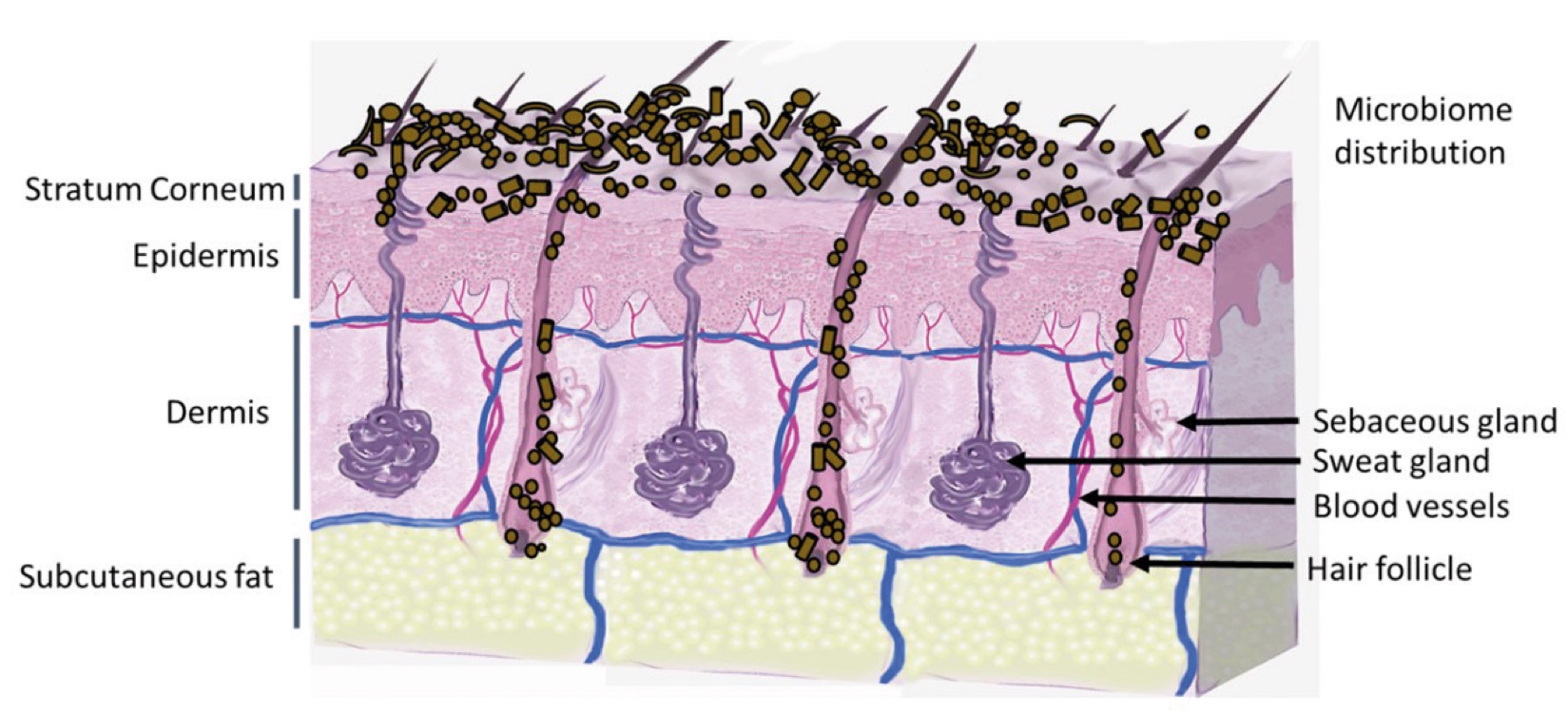
Figure 2. Skin Section with Microbiome. Most microorganisms live in the superficial layers of the stratum corneum and in the upper parts of the hair follicles. Some reside in the deeper areas of the hair follicles and are beyond the reach of ordinary disinfection procedures. There bacteria are a reservoir for recolonization after the surface bacteria are removed.
About the Author
Noomi Mikkelsen is the Marketing and Branding Coordinator at Kaffe Bueno. She bridges scientific insight with market relevance through a holistic approach to communicating sustainable innovation. Her work ensures that brand activation aligns with the company’s values and vision, while also supporting Kaffe Bueno’s core circular economy initiatives.

Noomi Mikkelsen
Marketing and Branding Coordinator, Kaffe Bueno, Copenhagen, Denmark

References and notes
1. Mintel (2024). Global Beauty and Personal Care Trends 2025 – Sustainability as a baseline expectation. https://www.mintel.com/insights/beauty-and-personal-care/beauty-trends/
2. Martins, A.M., Silva, A.T. and Marto, J.M. (2025). Advancing Cosmetic Sustainability: Upcycling for a Circular Product Life Cycle. Sustainability, 17(13), 5738. https://www.mdpi.com/2071-1050/17/13/5738
3. Fortune Business Insights (2023). Upcycled Cosmetic Ingredients Market Size, Share & COVID-19 Impact Analysis, 2024–2032. https://www.fortunebusinessinsights.com/upcycled cosmetic-ingredients-market-110448
4. European Commission (2022). Corporate Sustainability Reporting Directive (CSRD). https://eur-lex.europa.eu/legal-content/EN/TXT/?uri=CELEX:32022L2464
5. European Union (2024). Ecodesign for Sustainable Products Regulation (ESPR). https://eur-lex.europa.eu/legal-content/EN/TXT/?uri=LEGISSUM%3A4761760
6. United Nations (2023). Goal 12: Ensure Sustainable Consumption and Production Patterns. https://sdgs.un.org/goals/goal12
7. United Nations Environment Programme (2024). Food Waste Index Report 2024. https://www.unep.org/resources/publication/food-waste-index-report-2024
8. Martins, A.M. and Marto, J.M. (2023). A sustainable life cycle for cosmetics: From design and development to post-use phase. Sustainable Chemistry for Climate Action, 2, 100056. https://www.sciencedirect.com/science/article/pii/S2352554123002127
9. Markovic, S., Lindgreen, A., Maon, F., & Sancha, C. (Eds.). (2025). The Routledge Companion to Responsible Business (1st ed., pp. 253–254). Routledge. https://doi.org/10.4324/9781003271084
10. Franco, A. (2025). Panel: Supply Chain Challenges in Formulation. HPC Today, Issue 4, July 2025. https://tks-hpc.h5mag.com/hpc_today_4_2025/panel_discussion_on_supply_chain_challenges_in_formulation_-_kaffe_bueno
11. Formula Botanica (n.d.). A Manifesto for Ditching Boring White Skincare. Retrieved August 2025, from https://formulabotanica.com/manifesto-ditching-boring-white-skincare/
12. Callaghan, T. (2024). White Formulations – Do They Have a Future? EuroCosmetics Magazine. Retrieved August 2025, from https://www.eurocosmetics-mag.com/white formulations-do-they-have-a-future/