Formulation
Skin care
peer-reviewed
Natural Oriented Formulations: A More Sustainable Approach to Modern Products?
JAANA AILUS
Head of R&D, Laponie Ltd, Helsinki, Finland
ABSTRACT:In the current eco-conscious milieu, there’s a marked shift towards Natural Oriented Formulations (NOF) within the cosmetics industry, driven by the demand for eco-friendly, sustainable products. This overview delves into NOFs, based on natural, plant, mineral, and fermentation-derived ingredients, spotlighting their sustainability benefits and role in cosmetic formulations. It discusses the imperative of ISO standards and certifications like Ecocert for product integrity while addressing the challenges of natural ingredient variability and sourcing. Additionally, it examines consumer trends towards NOFs driven by environmental and health consciousness, challenging the assumption that natural equates to more sustainable. The paper looks forward to evolving EU legislative frameworks, suggesting a shift towards broader sustainability and environmental stewardship criteria in cosmetics. It advocates for a nuanced approach to NOFs, considering the complex interplay of sustainability, safety, and performance for a future-proof cosmetic industry.
??????????????????
“
“A study in healthy women providing probiotic yogurt for four weeks showed an improvement in emotional responses as measured by brain scans”
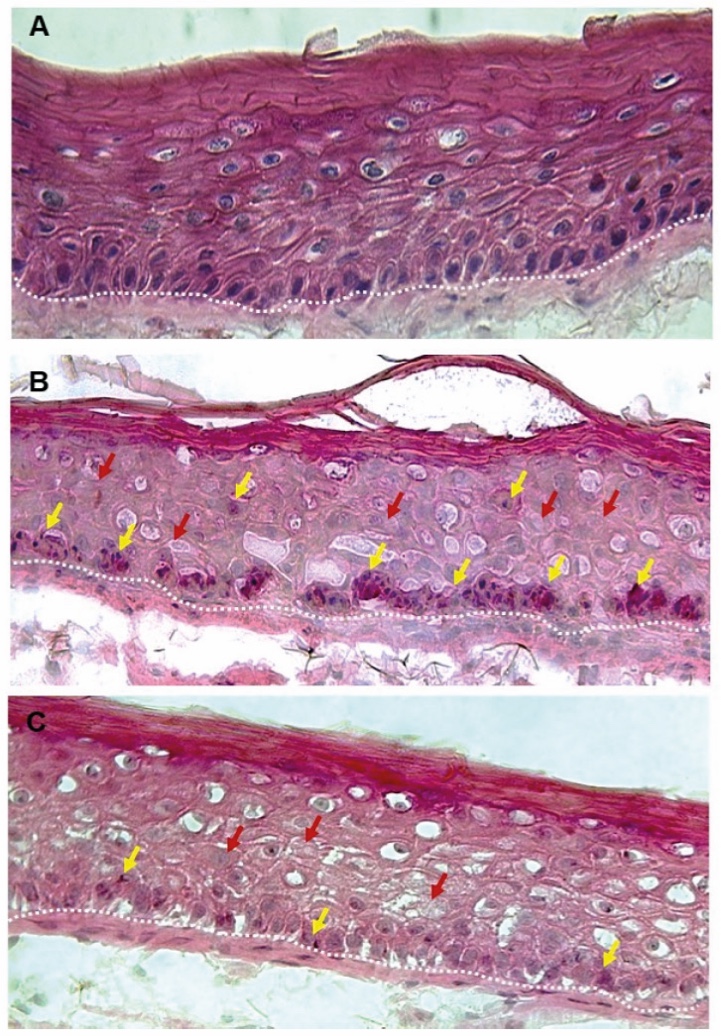
Figure 1. Skin Section with Microbiome. Most microorganisms live in the superficial layers of the stratum corneum and in the upper parts of the hair follicles. Some reside in the deeper areas of the hair follicles and are beyond the reach of ordinary disinfection procedures. There bacteria are a reservoir for recolonization after the surface bacteria are removed.
Materials and methods
Studies of major depressive disorder have been correlated with reduced Lactobacillus and Bifidobacteria and symptom severity has been correlated to changes in Firmicutes, Actinobacteria, and Bacteriodes. Gut microbiota that contain more butyrate producers have been correlated with improved quality of life (1).
A study in healthy women providing probiotic yogurt for four weeks showed an improvement in emotional responses as measured by brain scans (2). A subsequent study by Mohammadi et al. (3) investigated the impacts of probiotic yogurt and probiotic capsules over 6 weeks and found a significant improvement in depression-anxiety-stress scores in subjects taking the specific strains of probiotics contained in the yogurt or capsules. Other studies with probiotics have indicated improvements in depression scores, anxiety, postpartum depression and mood rating in an elderly population (4-7).
Other studies have indicated a benefit of probiotic supplementation in alleviating symptoms of stress. In particular, researchers have looked at stress in students as they prepared for exams, while also evaluating other health indicators such as flu and cold symptoms (1). In healthy people, there is an indication that probiotic supplementation may help to maintain memory function under conditions of acute stress.
Introduction
In an era where environmental consciousness is increasingly at the forefront of consumers' minds, the demand for sustainable, eco-friendly products has never been higher (1). This shift in consumer behaviour has led many companies to rethink their product formulations, steering away from synthetic chemicals towards more natural, potentially earth-friendly ingredients (2). Among these evolving industries, the concept of Natural Oriented Formulations (NOF) in cosmetics is gaining significant traction, promising a greener future without compromising quality or efficacy (3, 4).
This article explores the complex field of NOFs and their varying definitions. It will also look at the pros and cons of NOFs and what the future might hold for the natural cosmetics industry and the industry as a whole.

The Essence of Natural Oriented Formulations
Natural formulations refer to the process and principles behind creating products using ingredients that are derived from natural sources, such as plants, minerals, and occasional microbial fermentation products. These products are designed to focus on sustainability, minimising environmental impact, and promoting the health of consumers and the planet. The shift towards natural formulations is evident in various industries, including cosmetics, healthcare, and food, reflecting a growing consumer demand for eco-friendly and safe products (5).
ISO Standard for Natural Formulations
The International Organization for Standardization (ISO) has established guidelines to help standardise what can be considered natural or organic cosmetics. The ISO 16128 standard provides a framework for defining natural and organic ingredients and products. It introduces criteria for calculating the natural, natural-origin, organic, and organic-origin content of products. Although it does not certify products as natural or organic, it serves as a reference point for manufacturers to substantiate their "naturalness" or "organic" claims (6).
Natural Certifications
Natural certifications are third-party attestations that a product meets specific criteria related to its natural composition and environmentally friendly production process. These certifications often require that a certain percentage of ingredients are natural or of natural origin and that harmful synthetic chemicals are not used. Well-known certifications include Ecocert, USDA Organic, and NATRUE. Each certification has its own set of standards and requirements for natural content, sustainable sourcing, and manufacturing practices, helping consumers identify genuinely natural and eco-friendly products (7).
12 Principles of Green Chemistry and Their Relevance
The basis of the different certification criteria comes from the rather more difficult concept of the 12 Principles of Green Chemistry, developed by Paul Anastas and John Warner, which provide a framework for minimising the environmental impact of chemical processes and products (8, 9). These principles encourage the use of less hazardous substances, the design of energy-efficient processes, and the reduction of waste. When applied to natural formulations, they promote the development of eco-friendly, biodegradable, and non-toxic products (10).
Here's how some of these principles directly relate to natural formulations:
Prevention: Minimizing waste by avoiding the use of hazardous substances.
Design for Degradation: Creating products that naturally degrade into benign substances after use.
Use of Renewable Feedstocks: Favouring ingredients derived from renewable sources, such as plants.
Reduce Derivatives: Limiting the use of derivative chemicals by using simpler, natural ingredients.
Catalysis: Utilizing naturally occurring catalysts to increase the efficiency of chemical reactions.
Design for Energy Efficiency: Promoting processes that require less energy, which is aligned with the sustainability aspect of natural formulations.
Use of Safer Solvents and Reactions: Selecting safer, natural solvents and reaction conditions to protect human health and the environment.
Navigating Regulatory Compliance and Ingredient Challenges
Creating NOFs requires strict adherence to existing regulations, regardless of the shift towards more natural and sustainable ingredients. Products labelled as “natural” or “organic” must meet the same rigorous standards as traditional products regarding consumer safety, efficacy, and quality (11). This includes unwavering compliance with regulatory frameworks governing good manufacturing practice, product stability and microbial quality. It is imperative to highlight that natural formulations are not exempt from these expectations, emphasising the critical need for comprehensive testing and validation to ensure their safety for consumer use.
Additionally, formulators working with natural ingredients face the challenge of a considerably smaller selection of ingredients. This constraint demands not only creativity but also a profound understanding of natural ingredient properties and interactions to develop products that are both effective and appealing. Despite these challenges, the move towards natural formulations reflects a broader commitment to sustainability and health, necessitating innovative approaches to meet both regulatory requirements and consumer expectations.
Challenges of Integrating Natural Ingredients into Cosmetics
Embracing natural ingredients in cosmetics and personal care products might be advantageous from a consumer point of view, but it also presents its own set of challenges and limitations. Firstly, using natural ingredients restricts the variety of available components and limits many processes commonly used in creating cosmetic products.
Substances such as silicones, microplastics, and chemical UV filters, which are often integral to the performance of traditional cosmetics, are not permitted in natural formulations (5).
Despite these limitations, recent advancements in natural ingredients have made significant strides in bridging the functionality and sensory experiences offered by synthetic products. New launches of natural ingredients are proving effective in replicating the skin feel and overall performance of non-natural alternatives, making natural products increasingly appealing to a wider audience.
However, it's important to acknowledge the challenges natural ingredients pose. The variability in quality from batch to batch is a significant concern, as natural ingredients are influenced by environmental factors, leading to inconsistencies in the final products. Due to the variability of natural ingredients, and faster oxidation of natural oils, many NOFs have shorter shelf-lives than traditional products. Additionally, there are limitations in sourcing natural styling polymers, waterproofing agents, and pigments, which are crucial components in various cosmetic products (12).
Informed Consumerism
Customers' increasing preference for NOFs is driven by several compelling reasons that resonate deeply with personal values, informed choices, and the growing emphasis on ecological sustainability. Let’s explore why the allure of "natural" resonates so strongly with today’s consumers.
Personal Preference
At the heart of consumer choices, personal preference plays a pivotal role. Natural products, from cosmetics to food, appeal to those who seek simplicity and purity in their lifestyle (13). This desire often stems from the inclination towards ingredients and products that are perceived to be closer to their natural state, free from synthetic chemicals and additives. The appeal of natural ingredients is not just about their efficacy but also the comfort and peace of mind that comes with using products believed to be gentle on the skin, body, and overall health (14).
Informed Choice
In an era marked by easy access to information, consumers are more informed than ever about the products they choose to bring into their lives. This awareness goes beyond just understanding the benefits of natural products; it extends to recognizing the potential health implications associated with prolonged exposure to synthetic chemicals and artificial components found in many conventional products. Making a choice to select natural products is often the result of diligent research, a desire to avoid certain ingredients due to allergies or sensitivities, and a commitment to making lifestyle choices that reflect an individual’s values and health priorities (15).
Perceived as More Ecological
Parallel to personal health concerns, the ecological impact of products is a significant factor steering consumer preferences towards natural alternatives. Much like the organic food movement, which emphasises minimal use of synthetic pesticides and fertilisers to promote a healthier ecosystem, natural products are often associated with environmentally friendly practices. This perception includes the sustainable sourcing of raw materials, reduced reliance on petrochemicals, and biodegradable ingredients that are considered kinder to the planet. Consumers who prioritise ecological sustainability see choosing natural products as a way to contribute to environmental protection, support ethical practices, and lessen their carbon footprint (16).
"Natural is not always the most sustainable choice."
When discussing the transition to more natural-oriented formulations in various industries, it's easy to conflate the term "natural" with "more sustainable." However, this assumption doesn't always hold true (17). A closer look at factors such as ecological footprint, shipping costs, and yield values reveals a more nuanced picture.
Firstly, the ecological footprint of natural ingredients can vary significantly and may not necessarily be lower than that of their synthetic counterparts. Natural ingredients often require large amounts of land and water to grow. For example, cultivating certain plant-based ingredients can lead to deforestation, loss of biodiversity, and increased water usage, which are significant environmental concerns. Additionally, using natural fertilisers and pesticides, although less harmful than synthetic ones, can still contribute to soil and water pollution if not managed properly (18).
Shipping costs are another critical factor to consider. Natural ingredients sourced from specific regions around the world need to be transported to manufacturing facilities, which can be located on different continents. The carbon footprint associated with shipping these materials can be substantial, negating some of the sustainability benefits of using natural ingredients. For instance, the transportation of essential oils, specialty plants, and minerals via air or sea freight involves significant emissions of greenhouse gases, contributing to the climate crisis.
Furthermore, yield values of natural products often differ from those of synthetic products. Natural ingredients might not be as consistently potent or effective as their synthetic counterparts, requiring larger quantities to achieve the same effect (19). This discrepancy can lead to the need for more extensive agricultural land use, increased consumption of water, and greater use of natural resources, further contributing to an increased ecological footprint.
Moreover, the cultivation of certain natural ingredients may not be sustainable due to the land's carrying capacity and local ecosystems' resilience. In some cases, the demand for specific natural ingredients outpaces the ability to grow them sustainably, leading to overexploitation and environmental degradation(17).
Safety Considerations
The use of natural ingredients in cosmetics dates back thousands of years, with civilisations utilising various plant, mineral, and animal products to enhance beauty and personal care. This long-standing tradition underscores a foundational belief in the safety and efficacy of natural substances. However, the historical use of certain ingredients also serves as a reminder that "natural" does not inherently guarantee safety, as some naturally derived substances can be harmful if misused (20).
In the contemporary era, the safety of cosmetics, including those formulated with natural ingredients, is significantly enhanced through stringent regulatory frameworks. These regulations, which vary by country, are designed to ensure that all cosmetics, regardless of their ingredient composition, meet specific safety standards before being made available to consumers. Key aspects of these regulations include rigorous safety assessments, quality control measures, and clear labelling requirements.
While all cosmetics placed on the market that adhere to most national regulations are deemed “safe”, some components in NOFs lend themselves to more irritation potential than others. Many ingredients, such as organic acids (often used as preservatives in NOFs) and essential oils are notorious when it comes to skin irritation and sensitisation (21). While these products might be completely safe for the regular consumer, people with sensitive skin or allergies are much more likely to have adverse reactions to them (22).
Future Considerations
The future of product manufacturing and formulation is undeniably shifting towards a more sustainable paradigm, where the distinction between "natural" and "non-natural" ingredients becomes less significant than their overall environmental and health impacts. This transformation is not merely a matter of preference or market trend but is swiftly becoming a legislative mandate, especially within the European Union, known for its leadership in environmental protection laws (23).
EU legislation is spearheading consequential change in how products are formulated, manufactured, and disposed of. A notable example is the firm stance against the use of microplastics, which are increasingly recognized for their extensive environmental harm, especially in marine ecosystems. The persistence of microplastics in nature and their ability to enter the food chain pose a serious threat to wildlife and human health. The EU's legislative measures aim to phase out these and other harmful substances, compelling industries to adopt safer, more sustainable alternatives (24).
This legislative trend extends beyond the prohibition of harmful substances and aims to promote innovativeness in sustainability. The EU frequently provides frameworks for enhancing product life cycles, from the sourcing of raw materials to manufacturing processes and, ultimately, product end-of-life (25). This comprehensive approach ensures that every aspect of a product's journey is optimised to minimise environmental impact.
Furthermore, the future is likely to witness an increased reliance on comprehensive product certifications and standards to validate claims of sustainability and environmental friendliness. These standards will evolve to encompass a wider array of concerns, including carbon footprints, water usage, and social responsibility in sourcing materials. The objective is not only to have products that are less detrimental to the environment but to contribute to its restoration and protection actively.
The future heralds a shift towards sustainability becoming the standard in product formulation and manufacturing, guided by advancing EU legislation and global environmental standards. This transformation will compel industries to innovate, not only in the realm of natural products but in all facets of sustainability—redefining what it means to be eco-friendly in a contemporary world. This transition towards sustainability, regardless of whether ingredients are labelled "natural" or "non-natural," signifies a crucial change in consumer goods production, prioritising health, safety, and environmental stewardship above all.
Conclusion
In conclusion, the transition to Natural Oriented Formulations (NOFs) represents a decisive stride towards a more sustainable and health-conscious future, particularly within the cosmetics industry. This shift goes beyond being just a passing trend, signalling a resolute commitment to environmental stewardship and consumer well-being. By adhering to stringent standards such as those established by the International Organization for Standardization (ISO) and meticulously selecting certifications, the industry is demonstrating its dedication to meeting the expectations of discerning and environmentally aware consumers.
Amidst the challenges posed by regulatory compliance, ingredient sourcing, and the relentless pursuit of innovation, the industry finds inspiration for greater creativity, pushing the boundaries of what is achievable in natural cosmetics. The priority placed on safety, accompanied by a conscientious consideration of the ecological and social impact of production, underscores the depth of complexity and magnitude of accountability associated with formulating products that authentically make a positive impact.
Looking ahead, the pivotal role of informed consumerism is unmistakable. The choices made by consumers today significantly shape the future market trends, steering the industry towards practices that prioritize not only the safety and efficacy of products but also their environmental footprint. In this era of sustainability, "natural" embodies more than a mere trend; it reflects a collective yearning for products embodying the principles of care, respect, and responsibility towards the planet and its inhabitants.
The discourse on natural ingredients and sustainability continues to evolve, transcending binary categorizations to embrace a more holistic perspective on true eco-friendliness. As this dialogue unfolds, it becomes increasingly clear that the future of cosmetics lies in harmonizing the richness of nature with the rigor of science, thereby ensuring that beauty and personal care products contribute to a healthier, more sustainable world for generations to come.
Conclusion
The future of cosmetics lies in the continued evolution of holistic approaches which represents a transformative shift in the industry, merging scientific advancements, natural ingredients, and wellness principles. By understanding and embracing the interconnectedness of these elements, the cosmetics industry can cultivate products that not only enhance external beauty but also contribute to the overall well-being of individuals and the planet.
The interplay between beauty from within and topical cosmetics is the key for future products. The integration of biotechnology and green chemistry is revolutionizing cosmetic formulations, offering sustainable and biocompatible alternatives.
Developers can implement blockchain to trace the journey of ingredients from source to product. Nevertheless, the efficacy of the natural products should be scientifically proven. Marketers can communicate transparency as a brand value, and parallelly educate consumers by highlighting how specific ingredients contribute to radiant and healthy skin.
By embracing the synergy between these approaches and leveraging scientific advancements, the cosmetics industry can provide consumers with comprehensive beauty solutions that cater to both internal and external dimensions of beauty.
Surfactant Applications
The application area lends itself particularly well to the use of AI. Active today in this area is the US company Potion AI (6). The company provides AI-powered formulation tools for beauty and personal care R&D. Their offerings include Potion GPT, next generation ingredient and formula databases and AI document processing. Potion’s work could have a significant impact on the entire surfactant value chain, from raw material suppliers to end consumers. By using their GPT technology, they can help target work toward novel surfactant molecules that have optimal properties for specific applications. By using their ingredient and formula databases, they can access and analyze a vast amount of data on surfactant performance, safety, and sustainability. By using their AI document processing, they can extract and organize relevant information from patents, scientific papers, and regulatory documents. These capabilities could enable Potion AI's customers to design and optimize surfactant formulations that are more effective, eco-friendly, and cost-efficient. A particularly interesting application for this type of capability is deformulation.
Deformulation is the process of reverse engineering a product's formulation by identifying and quantifying its ingredients. Deformulation can be used for various purposes, such as quality control, competitive analysis, patent infringement, or product improvement. However, deformulation can be challenging, time-consuming, and costly, as it requires sophisticated analytical techniques, expert knowledge, and access to large databases of ingredients and formulas.
AI can potentially enhance and simplify the deformulation process by using data-driven methods to infer the composition and structure of a product from its properties and performance. For example, AI can use machine learning to learn the relationships between ingredients and their effects on the product's characteristics, such as color, texture, fragrance, stability, or efficacy. AI can also use natural language processing to extract and analyze information from various sources, such as labels, patents, literature, or online reviews, to identify the possible ingredients and their concentrations in a product.
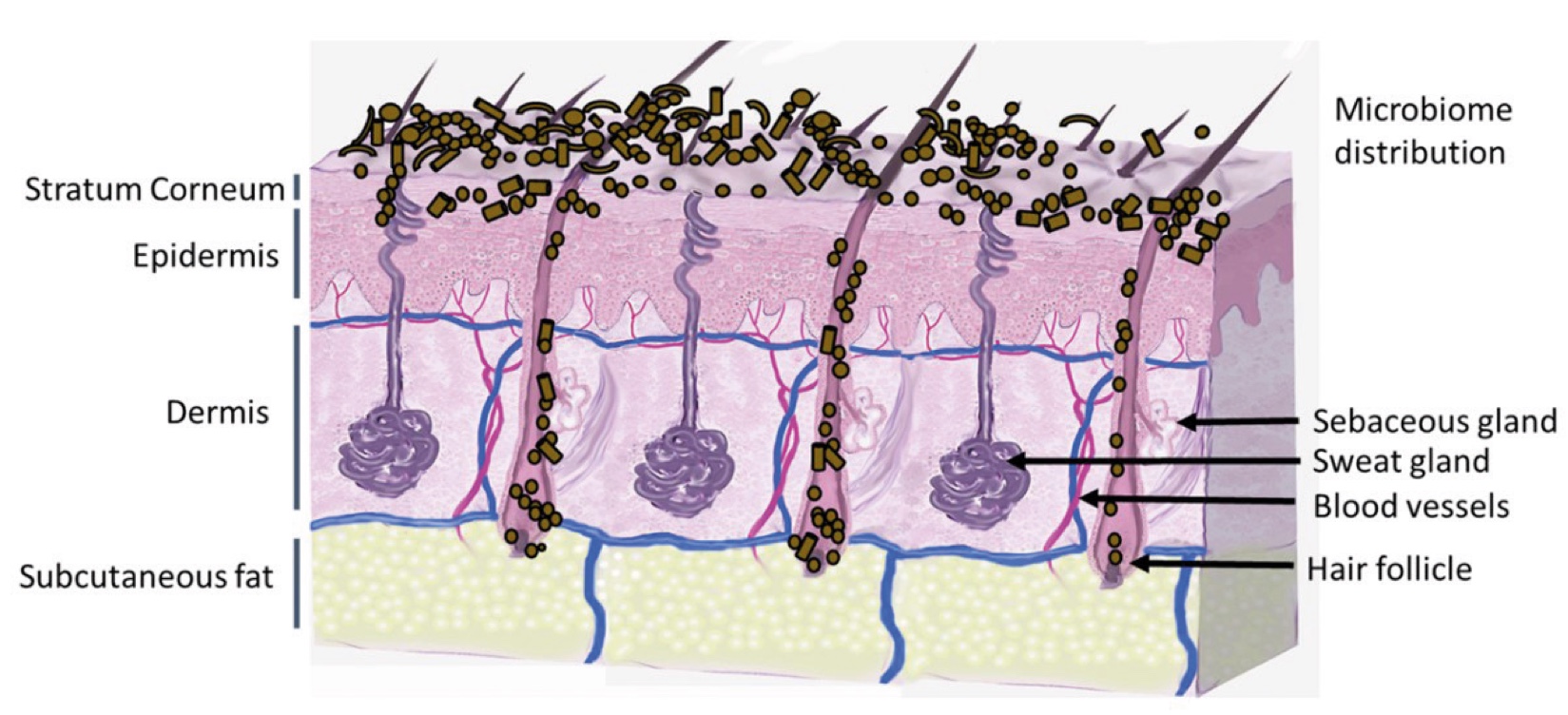
Figure 2. Skin Section with Microbiome. Most microorganisms live in the superficial layers of the stratum corneum and in the upper parts of the hair follicles. Some reside in the deeper areas of the hair follicles and are beyond the reach of ordinary disinfection procedures. There bacteria are a reservoir for recolonization after the surface bacteria are removed.
About the Author
JAANA AILUS
Jaana Ailus is a cosmetic scientist, currently the Head R&D and co-owner at Laponie Ltd and pursuing her PhD at Liverpool John Moores University. Educated in the UK but residing in Finland, she harbours a deep passion for cosmetics, with a special focus on natural formulations. Ailus's expertise has been instrumental in creating award-winning products for Laponie Skincare and formulation clients recognised across Europe, showcasing her commitment to blending scientific rigour with the artistry of cosmetic formulation.

Jaana Ailus
Head of R&D, Laponie Ltd, Helsinki, Finland

References and notes
- Ratajczak, P., Landowska, W., Kopciuch, D., Paczkowska, A., Zaprutko, T., & Kus, K. (2023). The Growing Market for Natural Cosmetics in Poland: Consumer Preferences and Industry Trends. Clinical, Cosmetic and Investigational Dermatology, 16, 1877–1892. https://doi.org/10.2147/CCID.S411032 https://www.dovepress.com/the-growing-market-for-natural-cosmetics-in-poland-consumer-preference-peer-reviewed-fulltext-article-CCID
- Business Research Insight report. (accessed on 05.07.2024) https://www.businessresearchinsights.com/market-reports/natural-and-organic-cosmetics-market-107884
- Amberg, N.; Fogarassy, C. Green Consumer Behavior in the Cosmetics Market. Resources, 2019, 8, pp. 137. https://www.mdpi.com/2079-9276/8/3/137
- Lee, J.; Hyun, C.-G. Natural Products for Cosmetic Applications. Molecules2023, 28, 534. https://doi.org/10.3390/molecules28020534 https://www.mdpi.com/1420-3049/28/2/534
- Barros, C.; Barros, R. B. G. Natural and Organic Cosmetics: Definition and Concepts. Preprints2020, 2020050374. https://doi.org/10.20944/preprints202005.0374.v2 https://www.preprints.org/manuscript/202005.0374/v2
- Lee, J. and Kwon, K. H. (2022). Future perspective safe cosmetics: focused on associated with iso natural organic index. Journal of Cosmetic Dermatology, 21(12), 6619-6627. https://doi.org/10.1111/jocd.1539 https://onlinelibrary.wiley.com/doi/10.1111/jocd.15398
- Sustainability: How the Cosmetics Industry is Greening Up, A. Sahota. Wiley. (2014) https://onlinelibrary.wiley.com/doi/book/10.1002/9781118676516
- Sowjanya, K., & Pharm, M. Principles of Green Chemistry. Research and Innovations in Chemical Sciences: An Approach towards, 117. https://www.researchgate.net/publication/383742032_EBook_ResearchandInnovationsinChemicalSciences
- Andraos, J., & Matlack, A. S. (2022). Introduction to green chemistry. CRC press. https://www.routledge.com/Introduction-to-Green-Chemistry/Andraos-Matlack/p/book/9780367470487?srsltid=AfmBOoqAHdkmKvl1MHon04pxfRnCeZQtHTlG6fArNIxQoEKA6dVsVQyI
- Abdussalam-Mohammed, W., Ali, A. Q., & Errayes, A. O. (2020). Green chemistry: principles, applications, and disadvantages. Chem. Methodol, 4(4), 408-423. https://www.chemmethod.com/article_101213.html
- Franca, C. C. V., & Ueno, H. M. (2020). Green cosmetics: perspectives and challenges in the context of green chemistry. Desenvolvimento e Meio Ambiente, 53, 133-150.https://www.researchgate.net/publication/340958580_Green_cosmetics_perspectives_and_challenges_in_the_context_of_green_chemistry
- Alves, T. F., Morsink, M., Batain, F., Chaud, M. V., Almeida, T., Fernandes, D. A., ... & Severino, P. (2020). Applications of natural, semi-synthetic, and synthetic polymers in cosmetic formulations. Cosmetics, 7(4), 75. https://www.mdpi.com/2079-9284/7/4/75
- Catarina Faria-Silva, Andreia Ascenso, Ana M. Costa, Joana Marto, Manuela Carvalheiro, Helena Margarida Ribeiro, Sandra Simões, Feeding the skin: A new trend in food and cosmetics convergence, Trends in Food Science & Technology, Volume 95, 2020,Pages 21-32,ISSN 0924-2244, https://doi.org/10.1016/j.tifs.2019.11.015. https://www.sciencedirect.com/science/article/abs/pii/S0924224419305035?via%3Dihub
- Mitterer-Daltoé, M.L.; Martins, V.B.; Parabocz, C.R.B.; da Cunha, M.A.A. Use of Cosmetic Creams and Perception of Natural and Eco-Friendly Products by Women: The Role of Sociodemographic Factors. Cosmetics2023, 10, 78. https://doi.org/10.3390/cosmetics10030078 https://www.mdpi.com/2079-9284/10/3/78
- Hinčica,V.,Řezanková,H.,Macias,K. & Schulzová,M.(2024).Perception of Natural Cosmetics Among Central European Consumers. Central European Economic Journal,11(58) 233-251. https://doi.org/10.2478/ceej-2024-0016https://sciendo.com/article/10.2478/ceej-2024-0016
- Tawalhathai Suphasomboon, Sujitra Vassanadumrongdee, Toward sustainable consumption of green cosmetics and personal care products: The role of perceived value and ethical concern, Sustainable Production and Consumption, Volume 33,2022, Pages 230-243, ISSN 2352-5509, https://doi.org/10.1016/j.spc.2022.07.004.https://www.researchgate.net/publication/361889396_Toward_sustainable_consumption_of_green_cosmetics_and_personal_care_products_The_role_of_perceived_value_and_ethical_concern
- Martins, A. M., & Marto, J. M. (2023). A sustainable life cycle for cosmetics: From design and development to post-use phase. Sustainable Chemistry and Pharmacy, 35, 101178. https://www.sciencedirect.com/science/article/pii/S2352554123002127
- Rashmi, I., Roy, T., Kartika, K. S., Pal, R., Coumar, V., Kala, S., & Shinoji, K. C. (2020). Organic and inorganic fertilizer contaminants in agriculture: Impact on soil and water resources. Contaminants in Agriculture: Sources, Impacts and Management, 3-41. https://link.springer.com/chapter/10.1007/978-3-030-41552-5_1
- Beyer, R. M., Durán, A. P., Rademacher, T. T., Martin, P., Tayleur, C., Brooks, S. E., ... & Sanderson, F. J. (2020). The environmental impacts of palm oil and its alternatives. Biorxiv, 2020-02.https://www.researchgate.net/publication/339308039_The_environmental_impacts_of_palm_oil_and_its_alternatives
- McMullen, R.L.; Dell’Acqua, G. History of Natural Ingredients in Cosmetics. Cosmetics2023, 10, 71. https://doi.org/10.3390/cosmetics10030071https://www.mdpi.com/2079-9284/10/3/71
- Türkmenoğlu, A., & Özmen, D. (2021). Allergenic components, biocides, and analysis techniques of some essential oils used in food products. Journal of Food Science, 86(6), 2225-2241. https://www.researchgate.net/publication/352183871_Allergenic_components_biocides_and_analysis_techniques_of_some_essential_oils_used_in_food_products
- Abelan, U. S., de Oliveira, A. C., Cacoci, É. S. P., Martins, T. E. A., Giacon, V. M., Velasco, M. V. R., & Lima, C. R. R. D. C. (2022). Potential use of essential oils in cosmetic and dermatological hair products: A review. Journal of Cosmetic Dermatology, 21(4), 1407-1418.https://www.researchgate.net/publication/352418728_Potential_use_of_essential_oils_in_cosmetic_and_dermatological_hair_products_A_review
- Ferreira, M., Matos, A., Couras, A., Marto, J., & Ribeiro, H. (2022). Overview of cosmetic regulatory frameworks around the world. Cosmetics, 9(4), 72. https://www.mdpi.com/2079-9284/9/4/72
- Limbu, Y.B.; Ahamed, A.F.M.J. What Influences Green Cosmetics Purchase Intention and Behavior? A Systematic Review and Future Research Agenda. Sustainability2023, 15, 11881. https://doi.org/10.3390/su151511881 https://www.mdpi.com/2071-1050/15/15/11881
- Wolf, S., Teitge, J., Mielke, J., Schütze, F., & Jaeger, C. (2021). The European Green Deal—more than climate neutrality. Intereconomics, 56, 99-107. https://www.researchgate.net/publication/350662010_The_European_Green_Deal_-_More_Than_Climate_Neutrality