
Biotechnology
Skin care
peer-reviewed
How Plant Cell Culture Can Revolutionise the Cosmetic Industry
YUAN LI
Research Lead, Green Bioactives, United Kingdom
ABSTRACT:Plant cell culture (PCC) provides a controllable and sustainable platform for manufacturing cosmetic actives that bypass geographic and environmental constraints. Owning advantages like sterile approach, reduction of energy consumption and yield improvement potential, PCC enable consistent, cost-effective and efficient production of valuable metabolites. Emerging tools (CRISPR-based editing, synthetic biology, and machine learning) further optimize metabolite biosynthesis and scale-up strategies. Notably, PCC-derived ingredients, demonstrate potent bioactivity with reduced environmental impact. Successful regulatory precedents, such as FDA-approved plant-based paclitaxel, signal a bright future for PCC in cosmetics. As adoption grows, PCC stands to redefine clean beauty with efficacy, transparency, and eco-responsibility. This article looks at the science behind PCC, explores its many benefits, and the exciting future it holds for the beauty industry. It’s time for a greener, more sustainable future, and PCC is key.
??????????????????
“
“A study in healthy women providing probiotic yogurt for four weeks showed an improvement in emotional responses as measured by brain scans”
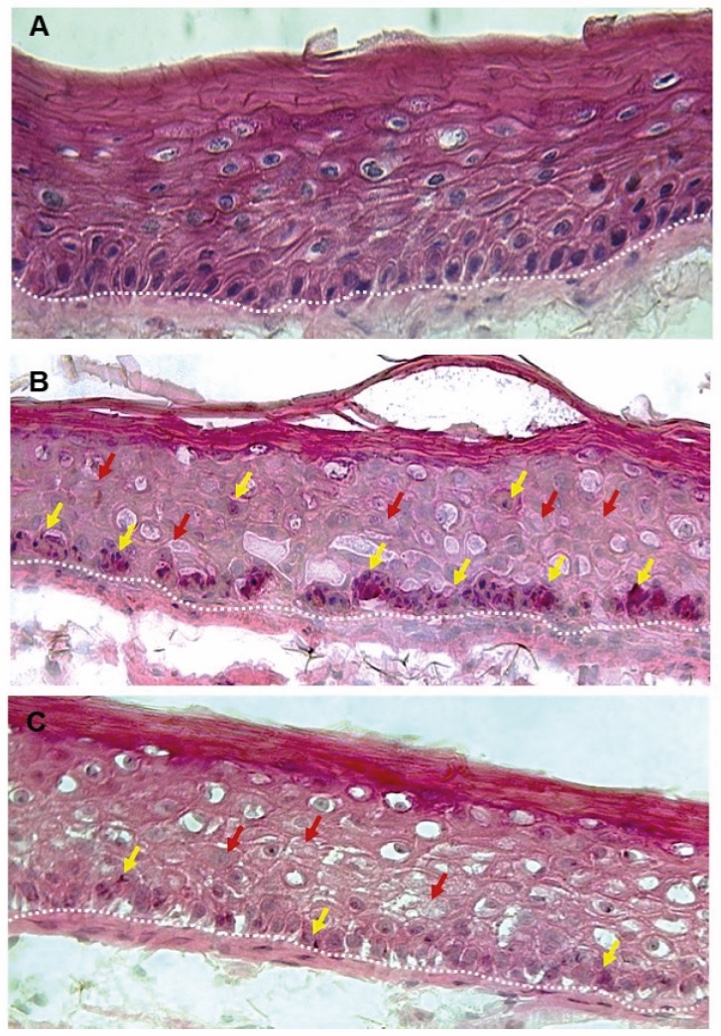
Figure 1. Skin Section with Microbiome. Most microorganisms live in the superficial layers of the stratum corneum and in the upper parts of the hair follicles. Some reside in the deeper areas of the hair follicles and are beyond the reach of ordinary disinfection procedures. There bacteria are a reservoir for recolonization after the surface bacteria are removed.
Materials and methods
Studies of major depressive disorder have been correlated with reduced Lactobacillus and Bifidobacteria and symptom severity has been correlated to changes in Firmicutes, Actinobacteria, and Bacteriodes. Gut microbiota that contain more butyrate producers have been correlated with improved quality of life (1).
A study in healthy women providing probiotic yogurt for four weeks showed an improvement in emotional responses as measured by brain scans (2). A subsequent study by Mohammadi et al. (3) investigated the impacts of probiotic yogurt and probiotic capsules over 6 weeks and found a significant improvement in depression-anxiety-stress scores in subjects taking the specific strains of probiotics contained in the yogurt or capsules. Other studies with probiotics have indicated improvements in depression scores, anxiety, postpartum depression and mood rating in an elderly population (4-7).
Other studies have indicated a benefit of probiotic supplementation in alleviating symptoms of stress. In particular, researchers have looked at stress in students as they prepared for exams, while also evaluating other health indicators such as flu and cold symptoms (1). In healthy people, there is an indication that probiotic supplementation may help to maintain memory function under conditions of acute stress.
Introduction
Plants have long served as a foundation of medicinal and cosmetic innovation, largely due to their remarkable capacity to synthesise a broad spectrum of secondary metabolites (1). Historically, botanical extracts have provided humans with therapeutic and beauty-enhancing solutions. Today, the growing world population and rising consumer interest in natural and sustainable products have increased the demand for plant-derived components in personal care, pharmaceuticals, and nutritional supplements (2). However, traditional sourcing methods often put undue pressure on wild ecosystems, risking over-harvesting of vulnerable species and threatening biodiversity.
Plant Cell Culture (PCC) has arisen as an alternative that bypasses geographical limitations, seasonal constraints, and environmental stressors. Utilising the totipotency of plant cell, excised plant tissues can be induced to form unorganised masses called callus and further be developed to suspension culture for large-scale production. Initially championed by the pharmaceutical sector for mass-producing compounds like paclitaxel (3) and shikonin (4), PCC has recently expanded into the cosmetic industry - a field particularly receptive to the technology’s promise of purity, sustainability, and precise control over product consistency.
In this review, we assess how PCC principles are employed to generate high-quality cosmetic actives, underscoring the advantages and limitations of these systems. We focus on the rationale for adopting PCC, the methodological steps needed to initiate and scale cultures, the cutting-edge elicitation and extraction techniques that enhance yield, and the market-driven impetus that continues to propel PCC to the forefront of “green beauty” innovation.
Rationale and Advantages of Plant Cell Culture
Compared to sourcing plant bioactive molecules through traditional harvesting, PCC provides a highly controlled, year-round production platform largely unaffected by geography and climate. Beyond these advantages, this approach also offers improved sustainability, consistent product quality, and enhanced metabolite yields.
Bypassing Conventional Constraints
One of the primary drivers for adopting PCC is the capacity to overcome limitations inherent to traditional agriculture, including geographical dependence, seasonal variations, and vulnerability to climatic or pest-related disturbances (5). Under in vitro conditions, plant cells can be grown throughout the year in highly controlled environments, ensuring a reliable supply of valuable secondary metabolites (6). In addition to temporal flexibility, PCC systems bypass arable land requirements. This is particularly relevant for species that thrive in narrow ecological niches; cells sourced from endangered or geographically restricted plants can be multiplied in flasks or bioreactors without further straining wild populations (7). For example, approximately 3 kg of dry bark from a slow growing yew (Taxus sp.) tree is required to supply a single dose (300 mg) of paclitaxel (8, 9). Alternatively, PCC based on Taxus chinensis cell is used by Phyton Biotech® to produce 100 kg of paclitaxel per year, with 20% of cost of goods compare to natural harvest (10).
Sustainable and Eco-Friendly Production
The ecological footprint of PCC is often lower than that of conventional cultivation, as it dispenses with large tracts of farmland and removes the need for pesticides. Additionally, harvesting chemicals from tree bark or heart wood requires an immense amount of energy and generates a high amount of global warming potential (GWP) (11). Indeed, a recent study suggested that compared to natural harvest, PCC based natural product production lead to 23% reduction in GWP (12), largely due to the drastic reduction (94.3%) of energy requirement during extraction stage. Another study has highlighted (13) electricity as a dominant factor in PCC’s environmental footprint, which can be reduced through optimisation bioreactor condition, including improvements in mixing efficiency, cultivation time, and the adoption of renewable energy sources including wind or photovoltaic systems.
Consistency and Quality Control
Because PCC is carried out in aseptic, closed environments, operators can enforce stringent sterility measures and standardised media formulations. It has been reported that tissue-cultured ginseng (Panax ginseng C.A. Meyer) is stable in quality, and is more effective at promoting gastrointestinal propulsion in animal models compared to filed cultivated ginseng with no mutagenic potential (14). Additionally, production costs of cultivated ginseng were comparable to field-cultivated ginseng, making the product commercially viable for health food markets. Another milestone that demonstrates PCC’s quality is the Food and Drug Administration’s (FDA) approval of plant cell-based paclitaxel in 2000 (15).
Potential for secondary metabolism yield enhancement
Another advantage of PCC is application of stimuli to enhance its secondary metabolite yield. Stimuli can be chemical, like elicitors and precursors feeding; or non-chemical, like mechanical force, light and temperature (16-18). For example, application of Botrytis cinerea homogenate, a fungal lysate, has been reported to enhance sanguinarine yield by 18 folds in Papaver somniferum cell culture (19). In Vitis vinifera suspension culture, addition of phenylalanine and methyl jasmonate combination, led to a 4.6-fold increase in anthocyanin content compared to control (20). Metabolic engineering has been explored in PCC to enhance secondary metabolite production and direct metabolism flow. It has been demonstrated that overexpression of Coptis (S)-scoulerine 9-O-methytransferase (SMT) in Coptis japonica cell led to approximately 15% increased accumulation in berberine and columbamine, and ectopic expression of SMT in Eschscholzia californica cultured cell led to production of columbamine in resulting cell line, which was not presence in non-transgenic cell (21).
Methodological Steps in Plant Cell Culture
PCC systems leverage diverse techniques to optimise the production of cosmetic actives. These methods, rooted in plant cell totipotency, enable scalable and controlled biosynthesis of secondary metabolites. Below, we outline key methodologies and their relevance to industrial applications, including callus induction, suspension culture and cell line selection.
Callus Culture and Maintenance
Callus formation serves as the foundation for most PCC workflows. Explants (e.g., leaf, stem, or root segments) are sterilised and cultured on solid media supplemented with auxins and cytokinins to induce dedifferentiation (22). Regular subculturing is performed to mitigate the genetic instability and maintain metabolic productivity (23). In practice, identifying optimum media and conditions to support plant cell growth and metabolite production can be difficult and often require full or fractional factorial screen (24).
Despite the difficulties, callus cultures have been demonstrated to produce secondary metabolites. These include phenolic (25), flavonoids (26), alkaloids (27) and terpenoid (28). Although plant cells are considered to be totipotent, callus can be induced from any plant tissue under the optimum callus induction condition through dedifferentiation process. Undifferentiated tissue, like meristematic cambium, has been used as an explant to initiate plant cell culture. This offers advantages compared to traditional dedifferentiated cells, including resistance to shear stress and secondary metabolite production (29).
Suspension Culture Systems
Suspension culture is the most practical approach to industrial-scale metabolite production (30) where friable callus is transferred into agitated liquid media under carefully defined parameters such as temperature, aeration and agitation (31). This environment facilitates uniform nutrient uptake, promotes consistent cell division, and can enhance secondary metabolite synthesis upon elicitation or induction. For instance, silver nanoparticle elicitation led to 9.54 mg/g dry weight (DW) of cichoric acid yield from Echinacea purpurea suspension culture (32). PCC in suspension can be upscaled for large-scale secondary metabolites production (33), with tailored bioreactor design to accommodate plant cell features such as slower growth and susceptibility to shear force. Successful examples include production of anthocyanins using Vitis vinitera suspension culture in stirred fermenter (34); and production of rosmarinic acid with Satureja khuzistanica suspension culture using a wave-mixed bioreactor (35).
Strain Improvement
Strain improvement is the cornerstone of optimising PCC for industrial-scale production of cosmetic actives. This process involves selecting high-performing cell lines and refining their metabolic pathways to maximise yield, consistency, and scalability. Heterogeneous cell populations derived from callus or suspension cultures are screened to isolate clones with elevated biosynthetic capacity. For example, selection of Coptis japonica cell line has led to isolation of several C. japonica cell lines with average berberine production titre at 0.9 g/L and highest berberine production titre at 1.39 g/L, while the unselected cell line’s productivity was 0.23 – 0.30 g/L (36). Advanced techniques such as fluorescence-activated cell sorting (FACS) enable rapid identification of high-yielding cells using metabolite-specific probes. In Ophiorrhiza mungos, this approach, combined with jasmonic acid elicitation, elevated camptothecin yields to 1.12 mg/g DW, compared to 0.06 mg/g DW in unoptimised lines (37).
Metabolic engineering leverages genetic tools like CRISPR-Cas9 to edit biosynthetic pathways precisely. The overexpression of rosmarinic acid synthase (RAS) in Coleus blumei hairy root cultures elevated rosmarinic acid accumulation by 40% compared to wild-type lines, enhancing antioxidant capacity for anti-aging formulations (38). Concurrently, heterologous expression of Hyoscyamus muticus hyoscyamine 6β-hydroxylase (H6H) in Atropa belladonna hairy roots enabled de novo biosynthesis of scopolamine, a compound absent in untransformed cultures, achieving yields of 4.2 mg/g DW (39).
Applications in Cosmetic Actives
PCC-derived metabolites are revolutionising skincare formulations due to their targeted bioactivity, purity, and alignment with sustainable consumer preferences. Rosmarinic acid, produced in Salvia viridis hairy roots, scavenges 85% of free radicals at 0.1% concentration, offering potent UV protection (40). Centella asiatica callus cultures yield madecassoside (1.3% - 2.8% DW) and asiatic acid (0.15 – 0.25 % DW) (41), which enhance collagen synthesis in human dermal fibroblasts (42). Vitis vinifera suspensions elicited with pectin achieve anthocyanin titers of 4.2 mg/g DW (43), providing stable pigments for anti-aging serums. Withaferin A, known to reducing NF-κB-driven inflammation in animal model (44), has been reported to be produced by Withania somnifera hariy root cultures produces at titre of 218 µg/g DW (45). Leading brands like Mibelle Biochemistry (RootBioTec™ HW) and Unhwa Corp. commercialise PCC extracts as “plant stem cells,” capitalising on their rejuvenating effects. These products align with the $8.7 billion 2023 ‘clean beauty’ market, which is projected to grow at 16.65% CAGR through to 2033 (46).
Future Directions
The convergence of biotechnology and computational tools is poised to unlock unprecedented precision and sustainability in PCC systems (47). Notably, overexpressing the Hyoscyamine 6β-Hydroxylase(H6H) gene in Scopolia parviflora hairy roots can elevate scopolamine production up to ~8 mg/g DW, three times more than wild-type root (48). Furthermore, CRISPR-Cas9 and base-editing technologies have demonstrated targeted pathway optimization in medicinal plants (49), for instance, knock-out H6H in Atropa belladonna result in diminished anisodamine and scopolamine production and higher hyosyamine production (50).
Synthetic biology platforms, including yeast-based prototyping of plant pathways, also accelerate strain development. For instance, high-titer production of artemisinic acid (25 g/L) in engineered Saccharomyces cerevisiae (51) guided subsequent improvements in Artemisia annua cultures. In parallel, machine learning models trained on multi-omics data increasingly predict optimal elicitor combinations and culture conditions with high accuracy, leading to gains in secondary metabolite yield (52). A recent study in Corylus avellana cell culture used general regression neural network (GRNN) and fly optimisation algorithm (FOA) to optimise elicitation regime and lead to improved paclitaxel yield (53).
On the bioprocess side, digital twin simulations help reduce scale-up risks and streamline process development (54), while closed-loop bioreactors with integrated nutrient recycling can significantly cut water usage (55). Solar-powered photo-bioreactors, often employed in microalgae systems, are now being considered for plant cell cultures, potentially lowering operational energy costs. Lastly, single-cell RNA sequencing (scRNA-seq) is emerging as a powerful tool to pinpoint and selectively propagate high-producing cellular subpopulations (56). Studies in Taxus mairei, for example, revealed cell specific for taxol biosynthesis, providing new knowledge for bioengineering taxol production (57).
Conclusion and Perspectives
PCC stands at the forefront of sustainable innovation in the cosmetics industry, offering an ecologically responsible alternative to conventional raw-material sourcing. Through precise control of growth conditions, PCC mitigates the risks posed by climatic fluctuations, over-harvesting, and ethical dilemmas tied to endangered species. In addition, the method significantly lowers global warming potential compared to wild-harvested plants, advancing the clean beauty movement.
Looking ahead, several key developments are poised to accelerate PCC adoption. First, AI-driven fermentation and bioprocessing optimisation will refine scale-up protocols and reduce production costs, thereby encouraging wider industrial uptake. Second, data- and modelling-driven gene editing will enable fine-tuned modifications that optimise secondary metabolite pathways for greater yields and tailored bioactivity. The regulatory precedent set by plant cell-derived pharmaceuticals (e.g., paclitaxel) can guide the harmonisation of global safety standards for novel cosmetic ingredients, ensuring both efficacy and consumer confidence.
In tandem, education and transparency will remain pivotal. Public awareness of PCC’s non-GMO scope and smaller ecological footprint can foster trust and acceptance. Finally, cross-sector collaborations including biotechnologists, policymakers, and industry leaders will be critical for developing renewable energy-powered bioreactors and fully circular nutrient systems. These interdisciplinary efforts promise to solidify PCC’s position as not just an alternative, but a cornerstone for a greener, scientifically advanced future in the cosmetic industry.
Conclusion
The future of cosmetics lies in the continued evolution of holistic approaches which represents a transformative shift in the industry, merging scientific advancements, natural ingredients, and wellness principles. By understanding and embracing the interconnectedness of these elements, the cosmetics industry can cultivate products that not only enhance external beauty but also contribute to the overall well-being of individuals and the planet.
The interplay between beauty from within and topical cosmetics is the key for future products. The integration of biotechnology and green chemistry is revolutionizing cosmetic formulations, offering sustainable and biocompatible alternatives.
Developers can implement blockchain to trace the journey of ingredients from source to product. Nevertheless, the efficacy of the natural products should be scientifically proven. Marketers can communicate transparency as a brand value, and parallelly educate consumers by highlighting how specific ingredients contribute to radiant and healthy skin.
By embracing the synergy between these approaches and leveraging scientific advancements, the cosmetics industry can provide consumers with comprehensive beauty solutions that cater to both internal and external dimensions of beauty.
Surfactant Applications
The application area lends itself particularly well to the use of AI. Active today in this area is the US company Potion AI (6). The company provides AI-powered formulation tools for beauty and personal care R&D. Their offerings include Potion GPT, next generation ingredient and formula databases and AI document processing. Potion’s work could have a significant impact on the entire surfactant value chain, from raw material suppliers to end consumers. By using their GPT technology, they can help target work toward novel surfactant molecules that have optimal properties for specific applications. By using their ingredient and formula databases, they can access and analyze a vast amount of data on surfactant performance, safety, and sustainability. By using their AI document processing, they can extract and organize relevant information from patents, scientific papers, and regulatory documents. These capabilities could enable Potion AI's customers to design and optimize surfactant formulations that are more effective, eco-friendly, and cost-efficient. A particularly interesting application for this type of capability is deformulation.
Deformulation is the process of reverse engineering a product's formulation by identifying and quantifying its ingredients. Deformulation can be used for various purposes, such as quality control, competitive analysis, patent infringement, or product improvement. However, deformulation can be challenging, time-consuming, and costly, as it requires sophisticated analytical techniques, expert knowledge, and access to large databases of ingredients and formulas.
AI can potentially enhance and simplify the deformulation process by using data-driven methods to infer the composition and structure of a product from its properties and performance. For example, AI can use machine learning to learn the relationships between ingredients and their effects on the product's characteristics, such as color, texture, fragrance, stability, or efficacy. AI can also use natural language processing to extract and analyze information from various sources, such as labels, patents, literature, or online reviews, to identify the possible ingredients and their concentrations in a product.

Figure 2. Skin Section with Microbiome. Most microorganisms live in the superficial layers of the stratum corneum and in the upper parts of the hair follicles. Some reside in the deeper areas of the hair follicles and are beyond the reach of ordinary disinfection procedures. There bacteria are a reservoir for recolonization after the surface bacteria are removed.
About the Author
Yuan Li is the Bioengineering Lead at Green Bioactives Ltd, bringing over a decade of expertise in plant cell culture and metabolic engineering. Holding a PhD in Plant Biology, Yuan is committed to leveraging innovative plant cell culture technology to produce valuable plant-derived molecules reliably and ethically

Yuan Li
Research Lead, Green Bioactives, United Kingdom

References and notes
- Fowler, M.W., Plant-cell culture: natural products and industrial application. Biotechnology and Genetic Engineering Reviews, 1984. 2(1): p. 41-67.
- Dorni, A.C., et al., Novel cosmeceuticals from plants—An industry guided review. Journal of applied research on medicinal and aromatic plants, 2017. 7: p. 1-26.
- Manz, C., et al., Switching cell fate by the actin-auxin oscillator in Taxus: cellular aspects of plant cell fermentation. Plant Cell Rep, 2022. 41(12): p. 2363-2378.
- Malik, S., et al., Biotechnological approaches to the production of shikonins: a critical review with recent updates. Critical Reviews in Biotechnology, 2016. 36(2): p. 327-340.
- Sehgal, D. and T. Khan, Plant Tissue Culture: Beyond Being a Tool for Genetic Engineering, in Environmental Microbiology and Biotechnology: Volume 1: Biovalorization of Solid Wastes and Wastewater Treatment, A. Singh, et al., Editors. 2020, Springer Singapore: Singapore. p. 175-200.
- Wilson, S.A. and S.C. Roberts, Recent advances towards development and commercialization of plant cell culture processes for the synthesis of biomolecules. Plant Biotechnology Journal, 2012. 10(3): p. 249-268.
- Vrancheva, R., et al., Food additives and bioactive substances from in vitro systems of edible plants from the Balkan peninsula. Engineering in Life Sciences, 2018. 18(11): p. 799-806.
- Kingston, D.G., Taxol: the chemistry and structure-activity relationships of a novel anticancer agent. Trends in biotechnology, 1994. 12(6): p. 222-227.
- Horwitz, S.B., How to make taxol from scratch. Nature, 1994. 367(6464): p. 593-594.
- Mountford, P.G., The taxol® story–development of a green synthesis via plant cell fermentation. Green chemistry in the pharmaceutical industry, 2010: p. 145-160.
- Ding, T., et al., Life cycle assessment of tannin extraction from spruce bark. iForest - Biogeosciences and Forestry, 2017. 10(5): p. 807-814.
- Oluyemi, G.F., et al., Environmental Impact Assessment of a Plant Cell-Based Bio-Manufacturing Process for Producing Plant Natural Product Ingredients. Sustainability, 2024. 16(19): p. 8515.
- Kobayashi, Y., et al., Life cycle assessment of plant cell cultures. Science of The Total Environment, 2022. 808: p. 151990.
- Hibino, K. and K. Ushiyama, Commercial Production of Ginseng by Plant Tissue Culture Technology, in Plant Cell and Tissue Culture for the Production of Food Ingredients, T.-J. Fu, G. Singh, and W.R. Curtis, Editors. 1999, Springer US: Boston, MA. p. 215-224.
- 15. Eibl, R., et al., Plant cell culture technology in the cosmetics and food industries: current state and future trends. Appl Microbiol Biotechnol, 2018. 102(20): p. 8661-8675.
- Yue, W., et al., Medicinal plant cell suspension cultures: pharmaceutical applications and high-yielding strategies for the desired secondary metabolites. Crit Rev Biotechnol, 2016. 36(2): p. 215-32.
- Fazili, M.A., et al., In vitro strategies for the enhancement of secondary metabolite production in plants: a review. Bulletin of the National Research Centre, 2022. 46(1): p. 35.
- Gaosheng, H. and J. Jingming, Production of useful secondary metabolites through regulation of biosynthetic pathway in cell and tissue suspension culture of medicinal plants. Recent advances in plant in vitro culture, 2012. 10: p. 53038.
- Holková, I., et al., Involvement of lipoxygenase in elicitor-stimulated sanguinarine accumulation in Papaver somniferum suspension cultures. Plant Physiol Biochem, 2010. 48(10-11): p. 887-92.
- Qu, J., W. Zhang, and X. Yu, A combination of elicitation and precursor feeding leads to increased anthocyanin synthesis in cell suspension cultures of Vitis vinifera. Plant Cell, Tissue and Organ Culture (PCTOC), 2011. 107: p. 261-269.
- Sato, F., et al., Metabolic engineering of plant alkaloid biosynthesis. Proceedings of the National Academy of Sciences, 2001. 98(1): p. 367-372.
- Robledo-Paz, A., et al., Callus and Suspension Culture Induction, Maintenance, and Characterization, in Plant Cell Culture Protocols, V.M. Loyola-Vargas and F. Vázquez-Flota, Editors. 2006, Humana Press: Totowa, NJ. p. 59-70.
- Patra, J.K., et al., Plant Tissue Culture Techniques and Nutrient Analysis, in A Practical Guide to Environmental Biotechnology. 2020, Springer Singapore: Singapore. p. 135-164.
- Vasilev, N., et al., Optimization of BY-2 cell suspension culture medium for the production of a human antibody using a combination of fractional factorial designs and the response surface method. Plant Biotechnology Journal, 2013. 11(7): p. 867-874.
- Karakas, F.P. and B.G. Bozat, Fluctuation in secondary metabolite production and antioxidant defense enzymes in in vitro callus cultures of goat’s rue (Galega officinalis) under different abiotic stress treatments. Plant Cell, Tissue and Organ Culture (PCTOC), 2020. 142(2): p. 401-414.
- Khan, T., et al., Effects of chitosan and salicylic acid on the production of pharmacologically attractive secondary metabolites in callus cultures of Fagonia indica. Industrial Crops and Products, 2019. 129: p. 525-535.
- Jeet, A., et al., Strategies for indole alkaloids enrichment through callus culture from Alstonia scholaris (L.) R. Br. Plant growth regulation, 2020. 90: p. 383-392.
- Sweetlin, P. and R.R. Daniel, Determination of bioactive copmounds in ethanolic extract of callus derived from mucuna pruriens using gas chromatography and mass spectroscopic technique. Journal of Natural Remedies, 2020. 21(7 (S2)): p. 11-16.
- Lee, E.K., et al., Cultured cambial meristematic cells as a source of plant natural products. Nat Biotechnol, 2010. 28(11): p. 1213-7.
- Ochoa-Villarreal, M., et al., Plant cell culture strategies for the production of natural products. BMB Rep, 2016. 49(3): p. 149-58.
- Hall, R.D., The initiation and maintenance of plant cell suspension cultures, in Plant Tissue Culture Manual: Supplement 7, K. Lindsey, Editor. 1997, Springer Netherlands: Dordrecht. p. 45-65.
- Ramezannezhad, R., M. Aghdasi, and M. Fatemi, Enhanced production of cichoric acid in cell suspension culture of Echinacea purpurea by silver nanoparticle elicitation. Plant Cell, Tissue and Organ Culture (PCTOC), 2019. 139(2): p. 261-273.
- Georgiev, M.I. and J. Weber, Bioreactors for plant cells: hardware configuration and internal environment optimization as tools for wider commercialization. Biotechnol Lett, 2014. 36(7): p. 1359-67.
- Decendit, A., et al., Anthocyanins, catechins, condensed tannins and piceid production in Vitis vinifera cell bioreactor cultures. Biotechnology Letters, 1996. 18(6): p. 659-662.
- Khojasteh, A., et al., Methyl jasmonate enhanced production of rosmarinic acid in cell cultures of Satureja khuzistanica in a bioreactor. Engineering in Life Sciences, 2016. 16(8): p. 740-749.
- Sato, F. and Y. Yamada, High berberine-producing cultures of coptis japonica cells. Phytochemistry, 1984. 23(2): p. 281-285.
- Deepthi, S. and K. Satheeshkumar, Cell line selection combined with jasmonic acid elicitation enhance camptothecin production in cell suspension cultures of Ophiorrhiza mungos L. Appl Microbiol Biotechnol, 2017. 101(2): p. 545-558.
- Hücherig, S. and M. Petersen, RNAi suppression and overexpression studies of hydroxyphenylpyruvate reductase (HPPR) and rosmarinic acid synthase (RAS) genes related to rosmarinic acid biosynthesis in hairy root cultures of Coleus blumei. Plant Cell, Tissue and Organ Culture (PCTOC), 2013. 113(3): p. 375-385.
- Banihashemi, O., et al., Raise up of Scopolamine in Hairy Roots Via Agrobacterium rhizogenes ATCC15834 as Compared with Untransformed Roots in Atropa komarovii. Iran J Pharm Res, 2020. 19(1): p. e126552.
- Grzegorczyk-Karolak, I., et al., Accumulation of phenolic compounds in different in vitro cultures of Salvia viridis L. and their antioxidant and antimicrobial potential. Phytochemistry Letters, 2019. 30: p. 324-332.
- James, J.T., R. Meyer, and I.A. Dubery, Characterisation of two phenotypes of Centella asiatica in Southern Africa through the composition of four triterpenoids in callus, cell suspensions and leaves. Plant Cell, Tissue and Organ Culture, 2008. 94(1): p. 91-99.
- Bylka, W., et al., Centella asiatica in cosmetology. Postepy Dermatol Alergol, 2013. 30(1): p. 46-9.
- Cai, Z., et al., Polysaccharide elicitors enhance anthocyanin and phenolic acid accumulation in cell suspension cultures of Vitis vinifera. Plant Cell, Tissue and Organ Culture (PCTOC), 2012. 108(3): p. 401-409.
- Alenazi, F., et al., Withaferin A alleviates inflammation in animal models of arthritis by inhibiting the NF-κB pathway and cytokine release. Chem Biol Interact, 2024. 398: p. 111114.
- Yousefian, Z., et al., Production of the Anticancer Compound Withaferin A from Genetically Transformed Hairy Root Cultures of Withania Somnifera. Natural Product Communications, 2018. 13(8): p. 1934578X1801300806.
- Clean Beauty Market Projected to Grow at 16.65% CAGR by 2033, North America to be the Dominant Region - Marketresearch.biz. Available from: https://finance.yahoo.com/news/clean-beauty-market-projected-grow-073500195.html.
- Arya, S.S., et al., Next-generation metabolic engineering approaches towards development of plant cell suspension cultures as specialized metabolite producing biofactories. Biotechnol Adv, 2020. 45: p. 107635.
- Young Min, K., et al., Overexpression of Hyoscyamine 6β-Hydroxylase (h6h) Gene and Enhanced Production of Tropane Alkaloids in Scopolia parviflora Hairy Root Lines. Journal of Microbiology and Biotechnology, 2005. 15(1): p. 91-98.
- Das, S., M. Kwon, and J.Y. Kim, Enhancement of specialized metabolites using CRISPR/Cas gene editing technology in medicinal plants. Front Plant Sci, 2024. 15: p. 1279738.
- Zeng, L., et al., Development of Atropa belladonna L. Plants with High-Yield Hyoscyamine and without Its Derivatives Using the CRISPR/Cas9 System. Int J Mol Sci, 2021. 22(4).
- Paddon, C.J., et al., High-level semi-synthetic production of the potent antimalarial artemisinin. Nature, 2013. 496(7446): p. 528-532.
- Hesami, M. and A.M.P. Jones, Application of artificial intelligence models and optimization algorithms in plant cell and tissue culture. Applied Microbiology and Biotechnology, 2020. 104: p. 9449+.
- Salehi, M., et al., A hybrid model based on general regression neural network and fruit fly optimization algorithm for forecasting and optimizing paclitaxel biosynthesis in Corylus avellana cell culture. Plant Methods, 2021. 17(1): p. 13.
- Attaran, M. and B.G. Celik, Digital Twin: Benefits, use cases, challenges, and opportunities. Decision Analytics Journal, 2023. 6: p. 100165.
- Ribul, M., et al., Mechanical, chemical, biological: Moving towards closed-loop bio-based recycling in a circular economy of sustainable textiles. Journal of Cleaner Production, 2021. 326: p. 129325.
- Sun, S., et al., Single-cell RNA sequencing provides a high-resolution roadmap for understanding the multicellular compartmentation of specialized metabolism. Nat Plants, 2023. 9(1): p. 179-190.
- Yu, C., et al., Integrated mass spectrometry imaging and single-cell transcriptome atlas strategies provide novel insights into taxoid biosynthesis and transport in Taxus mairei stems. Plant J, 2023. 115(5): p. 1243-1260.