
ADVERTORIAL

CLR Berlin:
unique for multiple reasons
CLR Berlin (CLR), celebrating its 100th anniversary this year, prides itself in its unique approach when it comes to the development of its active ingredients. For CLR, every NPD project starts with the following realization: cosmetic active ingredients are there for the benefit of the consumer. This implies understanding the consumers’ real needs and concerns in detail. Translating the consumers’ needs into scientific goals is the first step in the NPD processes. These scientific goals encompass cell biology and biochemistry of skin and the design of relevant in vitro and ex vivo studies. They ensure relevance for the consumer whom the active ingredient is developed for. The same goes for the in vivo studies which are performed.
A current example of a product based on CLR’s approach, is SkinCharge CLR™, which has been launched at in-cosmetics global this year. This product addresses skin aging in totally new ways. It meets an important consumer need which the cosmetics industry has not put serious emphasis on yet. Most people spend more time behind a screen, a computer screen, a tablet or mobile phone, than they spend sleeping.
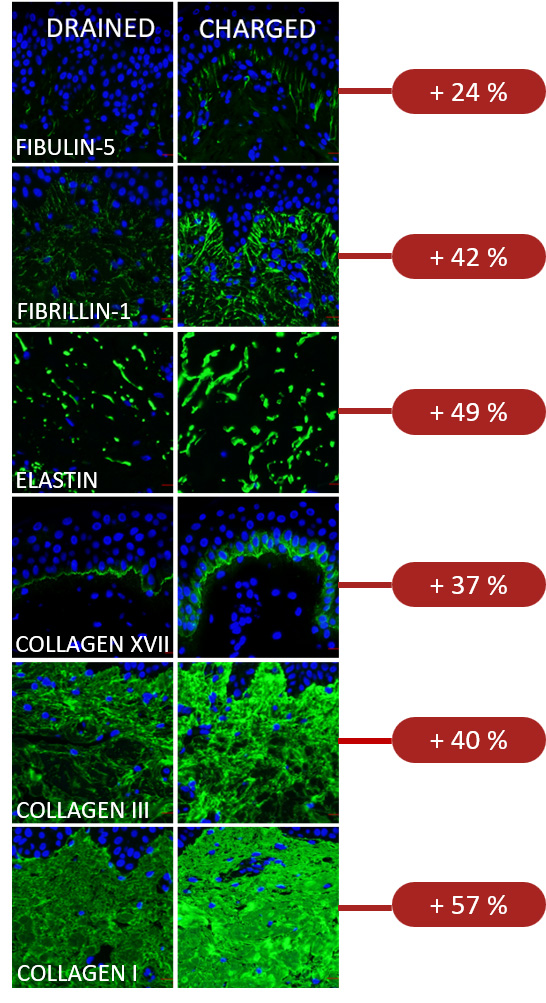
Figure 1. The treatment of human skin explants with SkinCharge CLR™ increases the presence of a large number of essential dermal compounds.
A relevant new way of looking at skin aging
Consumers understand that there are many negative aspects to the vast amount of screentime they have. They see this as concern, but a concern they are not able to do much about. Screentime is simply part of daily life. Everybody is aware of eyes drying out when looking at a screen for a long time (“digital eye strain”), or the impact it has on the quality of sleep. Consumers understand that their daily use of screens has negative impacts on their body and skin in a holistic way. They are beyond accepting that blue light from screens directly impacts their skin. At best, this is only part of the bigger picture.
The concerns of the consumer are real and relevant. There is a clear correlation between the amount of screentime people have and skin aging features. These can be linked through digital eye strain and the reduced quality of sleep, both of which are described to have an important negative impact on skin which leads to the acceleration of skin aging. In CLR’s studies, using AI, correlations between the hours of people spend on a screen and skin aging features could be identified. For example, the AI-generated parameter “Eye age” showed a clearly higher value for those people with a lot of screentime versus those with lower screentime. Other skin aging parameters, determined with cutometer or AEVA-HE also showed similar results.
SkinCharge CLR™: addressing a true consumer need
SkinCharge CLR™ (proposed INCI: Vicia Faba Oligopeptides) is obtained from a careful extraction and a subsequent hydrolysis of the proteins from the beans of Vicia faba. In vitro studies showed that “drained” skin cells were enabled to produce higher amounts of collagens, hyaluronic acid and elastin. At the same time, it was shown that SkinCharge CLR™ could reduce the expression of destructive proteases. Results from the in vitro studies were confirmed in ex vivo studies; it could clearly be shown that SkinCharge CLR™ virtually supports skin to recharge itself (see figure 1).
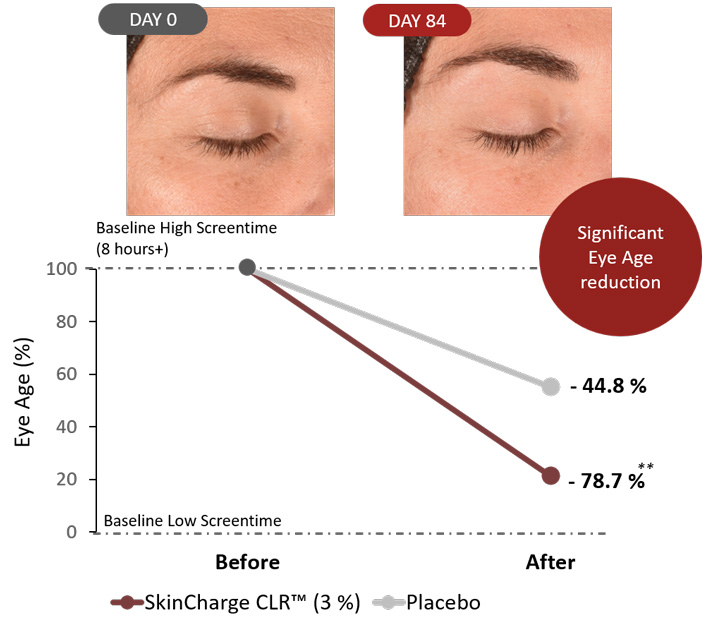
Figure 2. Treatment with SkinCharge CLR™ reduces eye age significantly and largely compensates for increased screentime.
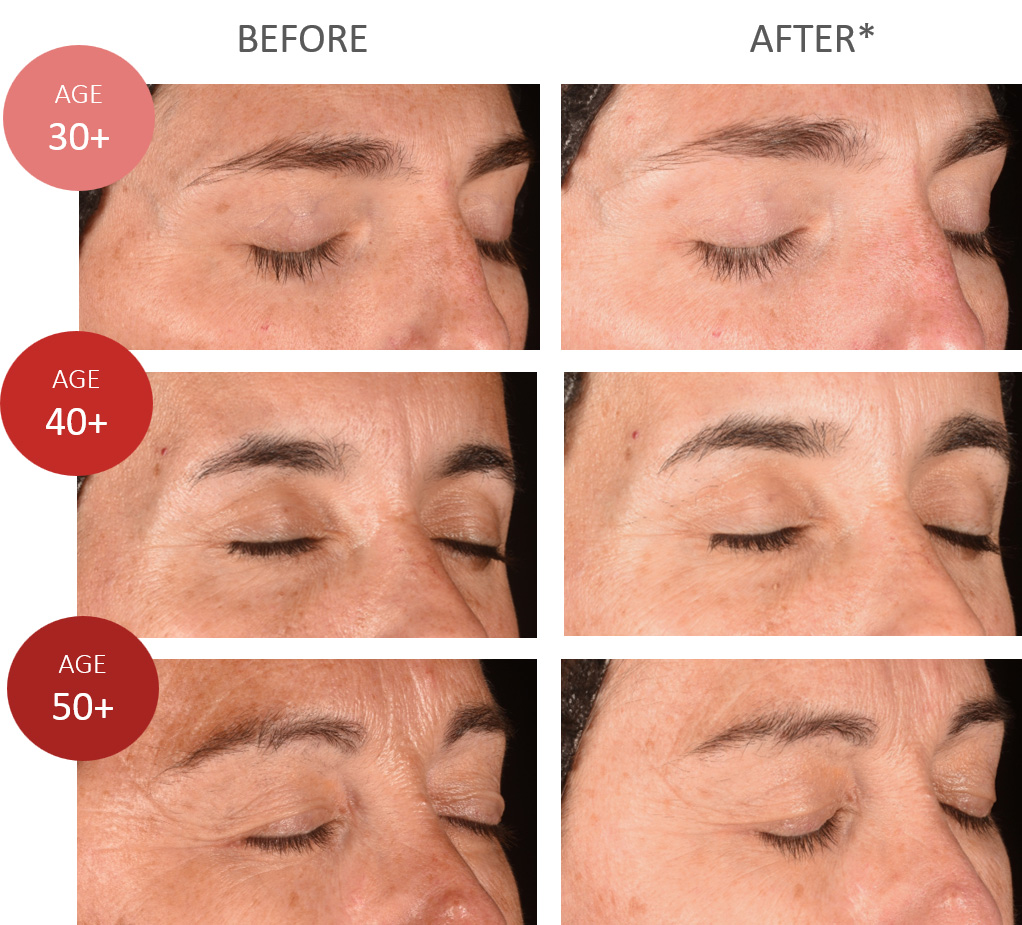
Figure 3. The treatment with SkinCharge CLR™ provides anti-aging benefits for high screentime users of all ages.
In in vivo studies, the treatment with SkinCharge CLR™ showed a plethora of anti-aging, pro-longevity benefits for people with a lot of screentime. Eye age was reduced, virtually to the level of the eye age of people with a low screentime (see figure 2). In addition, cheek fine lines, crow’s feet wrinkle and eye bags were also reduced significantly. Skin firmness and elasticity were increased (for illustrations, see fig. 3). All, for people with elevated screentime.
In addition, a placebo-controlled 14-day study with people who spend at least 7 hours per day in front of screens was conducted. Interestingly, at the start of the study, for both groups of volunteers, the average skin feel was described as “tense.” After 14 days of treatment with an emulsion containing SkinCharge CLR™, the skin feel had dramatically improved and was now comfortable. This was not the case for the volunteers who used the placebo (see figure 4). With this new approach of behavior tracking a link can be made to cosmetic properties and the kind of consumer that benefits from using and integrating this active in his or her personal lifestyle.
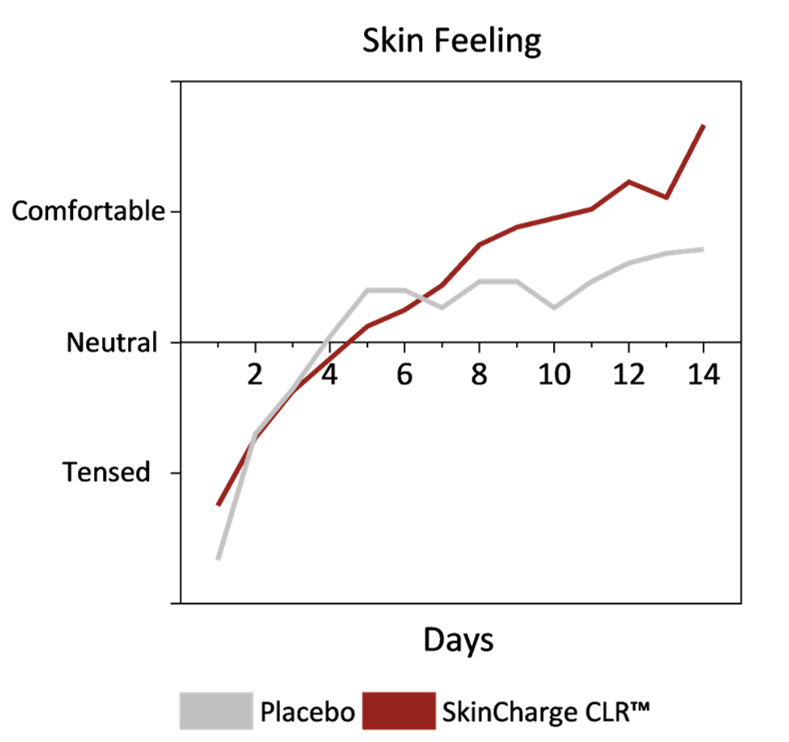
Figure 4. Treatment with SkinCharge CLR™ improves skin comfort over 14 days and outperforms placebo.
References and notes
- Punoševac M, Radović J, Leković A, Kundaković-Vasović T. A review of botanical characteristics, chemical composition, pharmacological activity and use of parsley. Arch Pharmacy. 2021;71, notebook 3. doi: https://doi.org/10.5937/arhfarm71-31544
- Liu, JK. Natural products in cosmetics. Nat Prod Bioprospect 2022;12,40. doi: https://doi.org/10.1007/s13659-022-00363-y
- Sarwar S, Ayyub MA, Rezgui M, Nisar S, Jilani MI. Parsley: A review of habitat, phytochemistry, ethnopharmacology and biological activities. Int J Che. Biochem Sci 1916;9 49-55.
- Nikolova K, Velikova M, Gentscheva G, Gerasimova A, Slavov P, Harbaliev N, Makedonski L, Buhalova D, Petkova N, Gavrilova A. Chemical Compositions, Pharmacological Properties and Medicinal Effects of Genus Passiflora L.: A Review. Plants 2024; 13;228.-248. doi; https://doi.org/10.3390/plants13020228
- Bendini, A., Cerretani, L., Pizzolante, L. et al. Phenol content related to antioxidant and antimicrobial activities of Passiflora spp. extracts. Eur Food Res Technol 2006;223, 102–109. doi: https://doi.org/10.1007/s00217-005-0150-7
- Smruthi R, Divya M, Archana K. The active compounds of Passiflora spp and their potential medicinal uses from both in vitro and in vivo evidences. J Adv Biom Pharm Sci 2021;4,45-55. doi: 10.21608/jabps.2020.44321.1105
- Sengupta S, Banerjee S, Nayek SN, Das P, et al. A brief comparative study of the natural sources (lemons) in the basis of protein, vitamin C, their antibacterial, anthelminthic and cell viability on immune cells. Int J Herbal Med 2023;11, 14-21. doi: https://doi.org/10.22271/flora.2023.v11.i5a.883
- Sanadi RM, Deshmukh RS. The effect of Vitamin C on melanin pigmentation - A systematic review. J Oral Maxillofac Pathol. 2020;24, 374-382. doi: 10.4103/jomfp.JOMFP_207_20.
- Jahan F, Happy AA. Revolutionizing plant-based extracts for skin care and therapeutics, Editor(s): Siti Hamidah Mohd Setapar, Akil Ahmad, Mohammad Jawaid, In Micro and Nano Technologies. Nanotechnology for the Preparation of Cosmetics Using Plant-Based Extracts. Elsevier, 2022,75-130. doi: https://doi.org/10.1016/B978-0-12-822967-5.00010-2
CLR
Contact details:
Chemisches Laboratorium Dr. Kurt Richter GmbH
Sperenberger Straße 3 · 12277 Berlin · Germany
Website:https://www.clr-berlin.com/products/skincharge-clr/
LinkedIn:https://www.linkedin.com/company/clr-berlin/


The CosmeticLAB in a nutshell
The CosmeticLAB of Mérieux NutriSciences, a pivotal branch of the global Mérieux NutriSciences Corporation, excels in the cosmetic sector with a commitment to ensuring product efficacy, safety and quality. Leveraging state-of-the-art technology and stringent testing methodologies, we offer comprehensive services, including chemical, microbiological, and efficacy evaluations. Our expertise also extends to sensory and consumer studies, ensuring that cosmetics meet both industry standards and end users expectations. As pioneers in cosmetic testing, we are dedicated to innovation, sustainability, and client-focused solutions. This commitment is encapsulated in “Our science, your beauty”, reflecting our dedication to enhancing beauty through scientific excellence.