
Panel discussion on...
How AI is Speeding
Up Beauty & Personal Care Innovation
About the Author
Boris Gaspar, PhD

Head of Market Development Personal Care EMEA, BASF Personal Care and Nutrition GmbH

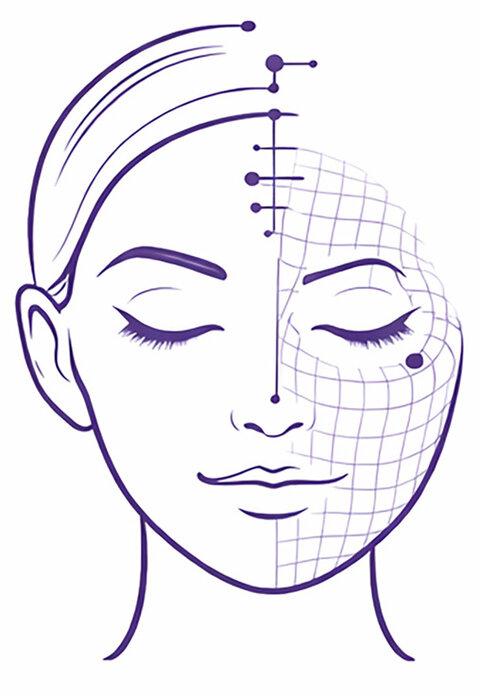
AI serves not as a replacement for scientific expertise but as an amplifier
Artificial intelligence has become an increasingly integral part of innovation in the personal care sector, quietly reshaping how ingredients are explored, formulations are designed and product claims are substantiated. Its relevance is fueled by structural pressures on the industry: accelerating consumer expectations, intensified competition and a growing demand for environmental responsibility. Against this backdrop, AI serves not as a replacement for scientific expertise but as an amplifier – supporting formulators, researchers and product developers with a depth and speed of insight that conventional methods alone cannot match.
One of the most immediate benefits of AI emerges in the prediction of ingredient interactions, stability and compatibility. The volume of available formulation data today far exceeds what experts can manually evaluate. Mathematical modelling and simulation, as offered in our digital service platform for the personal care industry, helps navigate the complexity of modern formulations by identifying relationships and compatibilities that are not always apparent from empirical testing alone.
Tools grounded in these capabilities can suggest optimized surfactant systems, predict physicochemical or sensorial behavior, or propose ingredient combinations more likely to remain stable under specific conditions. Instead of relying on exhaustive trial‑and‑error, developers can focus experimental validation on the most scientifically promising options. This approach shortens development cycles and reduces the material footprint of formulation work, contributing to both operational efficiency and sustainability.
Sustainability itself is another domain where AI has become a powerful driver of progress. The industry’s shift toward renewable, low‑impact ingredients is constrained by the inherent complexity of replacing established chemistries without sacrificing performance. We have developed AI‑enhanced predictive tools that help identify alternatives by screening large datasets of physicochemical characteristics, sensory profiles and environmental metrics. By combining computational modelling with structured experimental datasets, these systems can highlight biodegradable emollients or naturally derived surfactants capable of meeting formulation needs traditionally fulfilled by silicones, mineral oils or petrochemical‑based ingredients. This enables formulators to explore a much broader innovation space – particularly important as consumer expectations increasingly merge high performance with heightened sustainability criteria.
AI is also accelerating product development by exploring huge volumes of data to identify hidden connections faster and more accurately than traditional methods. For example, pattern recognition in large data pools can help researchers identify the most relevant biological targets or mechanism-of-action hypotheses before moving to the laboratory. This was demonstrated in the identification of bioactive peptide candidates, where machine-learning algorithms sifted through trillions of possible amino-acid sequences to pinpoint those with the highest potential for specific skin or scalp benefits (1). The ability to dramatically narrow down the candidate universe not only accelerates research but also enables innovation that would be infeasible through physical screening alone.
AI’s contribution, however, extends beyond formulation design and ingredient selection. It is beginning to transform efficacy testing and claims substantiation, which remain critical pillars of personal care product development. Traditional test methods – whether clinical, instrumental, or in vitro – are often resource‑intensive and time‑consuming. AI does not replace these gold‑standard evaluations; rather, it can enhance and reinforce them. This is especially evident in the realm of imaging technologies, where AI streamlines and accelerates image analysis. In the personal care sector, where visual effects are often pivotal, AI-driven tools enable more precise, efficient, and comprehensive interpretation of images, supporting scientific rigor and innovation.
Among all emerging applications, those with the most promise are those that blend AI with established scientific methodologies instead of attempting to substitute them. Digital twins of formulation systems, large‑scale in silico screening of novel actives, and sustainability‑focused ingredient recommendation engines all stand out as impactful pathways. Each helps shift personal care innovation from a predominantly empirical discipline toward one that strategically combines computation with experiment – ultimately enabling faster learning cycles, greater transparency and more future‑proof product concepts.
AI will not remove the need for rigorous formulation science, toxicological assessment or empirical validation. Instead, it strengthens the scientific foundation of personal care innovation by enabling teams to make better‑informed decisions earlier and with fewer resources. As the industry continues to adopt AI responsibly – ensuring data quality, mitigating algorithmic bias and upholding safety standards – it is poised to benefit from a more agile, more sustainable and more insight‑driven development ecosystem.
Panelists

Carina Dewar
Product Developer, Amka Products (Pty) Ltd

Ashlee Cannady
Director, Strategic Marketing, Amyris
Anastasiia Kharina
Senior Regulatory Affairs Expert, Angel Consulting Srl
Boris Gaspar
Head of Market Development Personal Care EMEA, BASF Personal Care and Nutrition GmbH

Clarisse BAVOUX
Toxicologist and Deputy Chief Executive Officer in charge of digital solutions, CEHTRA

Cécile GUYOT
Communication Manager, COPTIS

Rainer Kröpke
Cosmetic scientist, entrepreneur and founder of Cosmacon GmbH, Tojo Cosmetics GmbH, Cosactive GmbH and Innosicos GmbH

Yann Chilvers
Founder & Co-CEO, Covalo AG

Perry Romanowski
Cosmetic Chemist, Vice President Element 44 Inc

Elsa Jungman
Founder & CEO, HelloBiome

Olga V. Dueva-Koganov
VP and co-founder of Intellebio LLC

Eva Criado
Sr. Marketing & Communications Manager, Kensing

Carrie Mellage
Vice President, Beauty, Kline+Company
Sue Sender
Director of Marketing, Micro Powders

Dr. Mark Smith
NATRUE Director General

Francesco Ringressi
Business Development Manager, SEA Vision

Julie Rojas
AI Scientist, SMEY

Rania Ibrahim
Founder SkinScience Analytics, USA

Nele Ameloot
Head of BioMolecules Business Development Center, Ghent University, Belgium

Lorena Bellas Domínguez
In Vivo Efficacy Test Manager, Zurko Research
References and notes
- Moussou, Philippe et. al. Biopeptides protect skin and scalp against silent inflammation. HPC Today. Vol 16(4) 2021. p. 34-37. https://www.teknoscienze.com/tks_article/biopeptides-protect-skin-and-scalp-against-silent-inflammation/