Panel discussion on...
How AI is Speeding
Up Beauty & Personal Care Innovation
About the Author
Dr. Clarisse BAVOUX PhD, ERT

Toxicologist and Deputy Chief Executive Officer in charge of digital solutions, CEHTRA

AI in Cosmetic Safety: Maturity, Method and Accountability
AI in Cosmetics: Moving Beyond the Technological Effect
Artificial intelligence is now making its mark in the cosmetics industry with remarkable speed. It permeates innovation, personalization, consumer data management, as well as more technical and regulatory functions. In these domains, the accumulation of regulations, scientific opinions and publications creates an information environment of unprecedented density.
However, it is essential to distinguish consumer-facing generative AI, which receives extensive media coverage, from more specialized applications integrated into structured scientific environments. In the field of cosmetic safety assessment, AI is neither a substitute for expertise nor an autonomous decision-making mechanism. It constitutes a data analysis tool, capable of supporting reasoning and sometimes informing decisions, but never replacing them.
Safety assessment carries explicit regulatory responsibility. This responsibility cannot be transferred to an algorithm.
Practical Applications Supporting Scientific Rigor
In practice, AI demonstrates its relevance where documentary complexity becomes a risk factor. Analyzing REACH dossiers, expert opinions, scientific publications or regulatory annexes now requires substantial organizational capabilities. AI can help map these corpora, identify inconsistencies, detect gaps and facilitate access to relevant information. It improves navigation and data consolidation, while leaving interpretation to the expert.
It also serves as support for internal quality control. In an environment where terminological consistency, completeness of sections and homogeneity of reasoning are critical, an algorithmic tool can detect formal inconsistencies or flag omissions. It acts as a second pair of eyes—structured, but never as a scientific arbiter.
Integrating AI into a structured toxicological database and a digital risk assessment tool, such as COSMETICK, developed by our company, opens a third field of application. The tool then enables querying data in a more structured manner than simple keyword searches. It becomes possible to cross-reference multiple criteria, explore complex assessments and better understand referenced methodologies. AI can explain calculation logic, highlight adopted assumptions and alert users to limitations in available data. It thus becomes an educational support for both internal assessors and external users.
These applications only make sense because they rest on a prerequisite foundation: structured, qualified and traceable data.
Validation, Governance and Accountability: An Essential Framework
Integrating AI into a regulatory environment requires clear principles. The first is non-negotiable: an AI does not sign a Cosmetic Product Safety Report. Only a qualified safety assessor can assume professional and legal responsibility. Considering that an algorithmic tool could replace this responsibility would be incompatible with professional ethics.
AI can structure, suggest and flag issues. It cannot assume regulatory responsibility nor deliver contextualized toxicological judgment. Conflating algorithmic assistance with regulatory decision-making would represent a major deviation.
The second principle concerns documentation. Any use of an AI tool in a regulatory context must be traceable, documented and reproducible. It must be possible to identify the assisted task, the data used and the human validation performed. These requirements extend the culture of justification and archiving already inherent to cosmetic safety.
Governance ultimately constitutes a strategic challenge. Authorized uses must be clearly defined, as well as the types of data that may be processed. Protecting intellectual property requires particular vigilance: uncontrolled injection of sensitive or proprietary data into external models represents a significant risk. A prudent approach consists of limiting AI use to non-sensitive open-source data and integrating tools within controlled environments.
It should also be remembered that AI is never neutral. It reflects the quality and structure of the data that feeds it. Incomplete, outdated or poorly contextualized data can generate bias. The robustness of the tool therefore depends directly on the robustness of the underlying scientific foundations.
Between Strategic Opportunity and Maturity Requirements
One of the major risks consists of viewing safety assessment as a purely computational problem. Structuring data and automating certain steps does not oppose human expertise; on the contrary, it can consolidate ingredient-by-ingredient reasoning and improve analytical consistency. However, the overall evaluation of a cosmetic product remains a complex exercise that requires experience, contextualization and scientific judgment.
The temptation to industrialize regulatory decision-making exists. It must be approached with discernment. AI can strengthen scientific quality if properly governed; it can undermine it if used without a clear framework.
For executive management, the challenge is twofold. AI represents a lever for competitiveness and organizational efficiency. But it also constitutes a reputational risk if decisions made with its assistance are not solidly grounded. A regulatory decision remains attributable to the company, even if it was partially assisted by a tool.
Maturity is therefore not measured by speed of adoption, but by the strength of the governance framework put in place.
Three principles can guide this integration: AI must strengthen scientific quality, all algorithmic assistance must remain traceable and auditable, and human accountability must remain central and explicit.
In the field of cosmetic safety, artificial intelligence is a powerful tool. Its value will depend less on its technical performance than on how the industry chooses to govern it. It can structure, inform and consolidate. It will not decide.
Panelists

Carina Dewar
Product Developer, Amka Products (Pty) Ltd

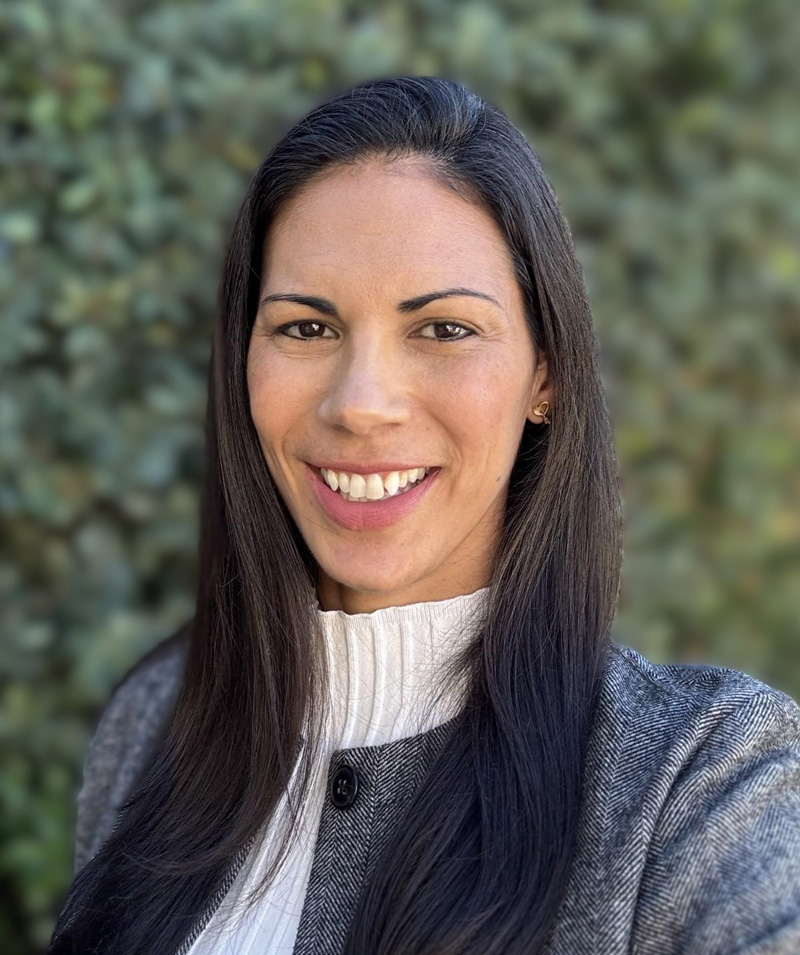
Ashlee Cannady
Director, Strategic Marketing, Amyris
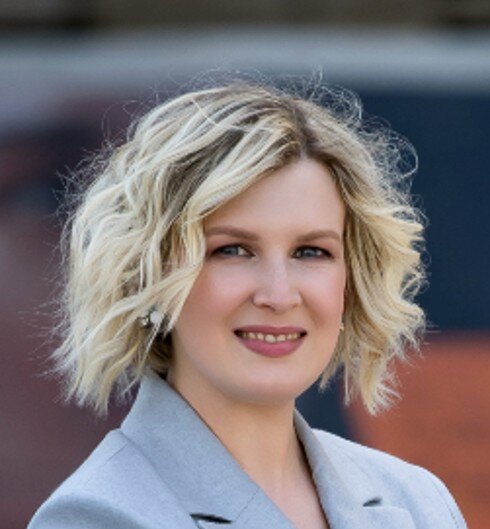
Anastasiia Kharina
Senior Regulatory Affairs Expert, Angel Consulting Srl

Boris Gaspar
Head of Market Development Personal Care EMEA, BASF Personal Care and Nutrition GmbH

Clarisse BAVOUX
Toxicologist and Deputy Chief Executive Officer in charge of digital solutions, CEHTRA

Cécile GUYOT
Communication Manager, COPTIS

Rainer Kröpke
Cosmetic scientist, entrepreneur and founder of Cosmacon GmbH, Tojo Cosmetics GmbH, Cosactive GmbH and Innosicos GmbH

Yann Chilvers
Founder & Co-CEO, Covalo AG

Perry Romanowski
Cosmetic Chemist, Vice President Element 44 Inc

Elsa Jungman
Founder & CEO, HelloBiome

Olga V. Dueva-Koganov
VP and co-founder of Intellebio LLC

Eva Criado
Sr. Marketing & Communications Manager, Kensing

Carrie Mellage
Vice President, Beauty, Kline+Company
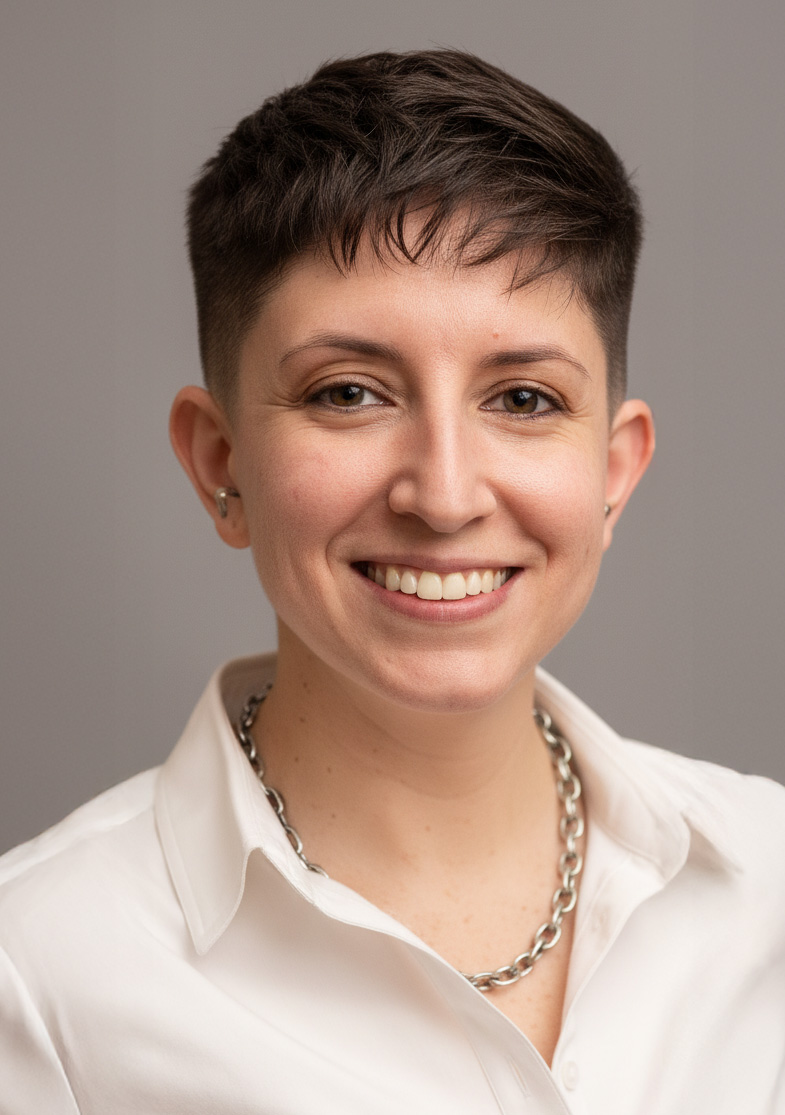
Sue Sender
Director of Marketing, Micro Powders

Dr. Mark Smith
NATRUE Director General

Francesco Ringressi
Business Development Manager, SEA Vision

Julie Rojas
AI Scientist, SMEY
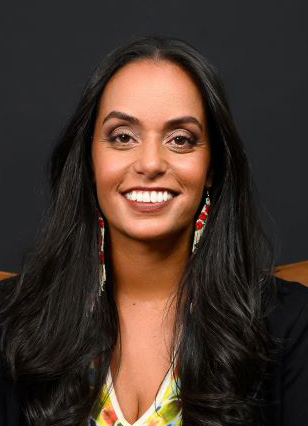
Rania Ibrahim
Founder SkinScience Analytics, USA

Nele Ameloot
Head of BioMolecules Business Development Center, Ghent University, Belgium

Lorena Bellas Domínguez
In Vivo Efficacy Test Manager, Zurko Research
References and notes
- Moussou, Philippe et. al. Biopeptides protect skin and scalp against silent inflammation. HPC Today. Vol 16(4) 2021. p. 34-37. https://www.teknoscienze.com/tks_article/biopeptides-protect-skin-and-scalp-against-silent-inflammation/