Pet Care
Skin care
KEYWORDS
Pet Care;
safety assessment;
Reconstructed Canine Epidermis (RCE);
skin tolerance
INDUSTRY PERSPECTIVE
The science of safety in the booming pet care market
Alicia Roso1, Marine Pasquier2
- Head of Scientific Communications, Seppic, La Garenne-Colombes, France
- Market & Digital Manager, Pet care, Seppic, La Garenne-Colombes, France
ABSTRACT: The evolution of companion animals and their role within households has revolutionized the global pet care market, driving an unprecedented demand for premium hygiene and topical care products. Unlike human cosmetics, which adhere to strict safety regulations, pet care products often exist in a regulatory grey area. This article explores the biological distinctiveness of canine skin, from pH levels to stratum corneum thickness and argues that human models are insufficient for predicting animal safety. In addition, a case study on the development and validation of a Reconstructed Canine Epidermis (RCE) model will be presented. By integrating multiparametric analysis (viability, barrier integrity and inflammatory response), this in vitro tool offers a robust, ethical and species-oriented solution for safety assessment.
A market transformed by “pet parenting”
The relationship between humans and their animals has undergone a paradigm shift in the 21st century. The traditional concept of "pet ownership" has evolved into "pet parenting" where companion animals are viewed as integral members of the family unit. This sociological trend is the primary driver behind the growth of the global pet care industry.
In France alone, since the 1970’s, the pet population has more than doubled with 75.1M of pets (1), with the market for pet care products valued at 8,07 billions of dollars in 2025 in Europe (2). This is not only an increase in volume but also transformation in value. Owners who read carefully the ingredient lists of their own skin care products are increasingly applying the same rigor to the products they buy for their pets. There is a surging demand for premium and natural products, ranging from shampoos and conditioners to specialized leave-on mousses, paw balms and ear cleansers.
However, this rapid market expansion exposes a gap between product innovation and safety regulation. Established cosmetic regulatory guidelines govern the safety evaluation of ingredients for human use. However, equivalent standardized guidelines for pet care are currently absent. This lack of a unified, rigorous framework creates a safety grey area. Manufacturers often face a dilemma: how to ensure product safety without standardized guidelines?
The biological imperative: why dogs are not "small humans"
While mammalian skin shares a common basic structure (epidermis, dermis, and hypodermis), canine physiological specificities require an approach that goes beyond standard human cosmetic benchmarks. While data from human toxicology remains an indispensable foundational reference, it must be supplemented by an analysis of canine-specific traits to ensure safety.
 Barrier function and the stratum corneum
The skin's primary defense resides in the stratum corneum, the outermost layer of the epidermis. In humans, this layer is robust, typically consisting of 10 to 15 layers of corneocytes, providing a strong shield against environmental stressors. In contrast, the canine stratum corneum is markedly thinner, comprising only 3 to 5 layers.
This structural difference implies that dogs have a lower "barrier reserve." Consequently, a substance deemed safe on human skin may prove more penetrable and therefore potentially more irritating on a dog's more permeable skin.
pH: a specific equilibrium
The "acid mantle" concept is central to human dermatology, with a pH typically ranging between 4.8 and 6.2. Conversely, canine skin leans toward neutrality or even alkalinity, with a pH ranging from 5.2 to 9.2 depending on the breed and body site.
Formulating a pet product based solely on human standards (e.g., pH 5.5) can be ill-suited for a dog. It risks disrupting the natural enzymatic activity of the canine epidermis and altering the microbiome, potentially favoring bacterial or fungal overgrowth. The challenge, therefore, is not to reject human standards, but to refine them to fit this narrower window of tolerance.
Anatomical and behavioral factors
Beyond the tissue itself, follicular structure changes the equation. Dogs possess compound follicles (multiple hairs sharing a single pore), resulting in a much higher density than in humans. This configuration mechanically increases the surface area for product entrapment and absorption.
Furthermore, safety assessments must account for animal behavior and physical diversity. Dogs and cats frequently lick their fur and skin, therefore, any topically applied product presents a risk of ingestion. A rigorous safety assessment for a pet leave-on must evaluate the potential toxicity of ingredients if swallowed, a dimension of safety that human cosmetic testing rarely needs to address to the same extent.
This challenge is compounded by the surface-area-to-body-weight ratio, which varies dramatically across breeds. For small dog breeds, this ratio is nearly the inverse of a human’s, meaning a standard application of the product results in a much higher systemic exposure. One of the greatest hurdles in pet safety analysis remains accurately estimating this exposure: unlike the relatively standardized human model (excluding infants), the veterinary field must account for a massive range of sizes and weights. Without official harmonized guidelines, this requires a level of expert scrutiny that goes beyond simply transposing human data.
Innovation in testing: the Reconstructed Canine Epidermis (RCE) model
Given the scientific inadequacy of human models, there is a need for species-oriented in vitro tools. To address this, a protocol for evaluating topical ingredients on a Reconstructed Canine Epidermis (RCE) model has been developed and validated a protocol to evaluate its range of topical ingredients on a Reconstructed Canine Epidermis (RCE) model (3).
Model construction and physiology: the RCE model is a 3D tissue culture generated from normal canine keratinocytes, cultured in a chemically defined medium. The RCE exhibited a well-defined histological structure comprising a basal layer, spinous layer, granular layer containing keratohyalin granules and stratum corneum.
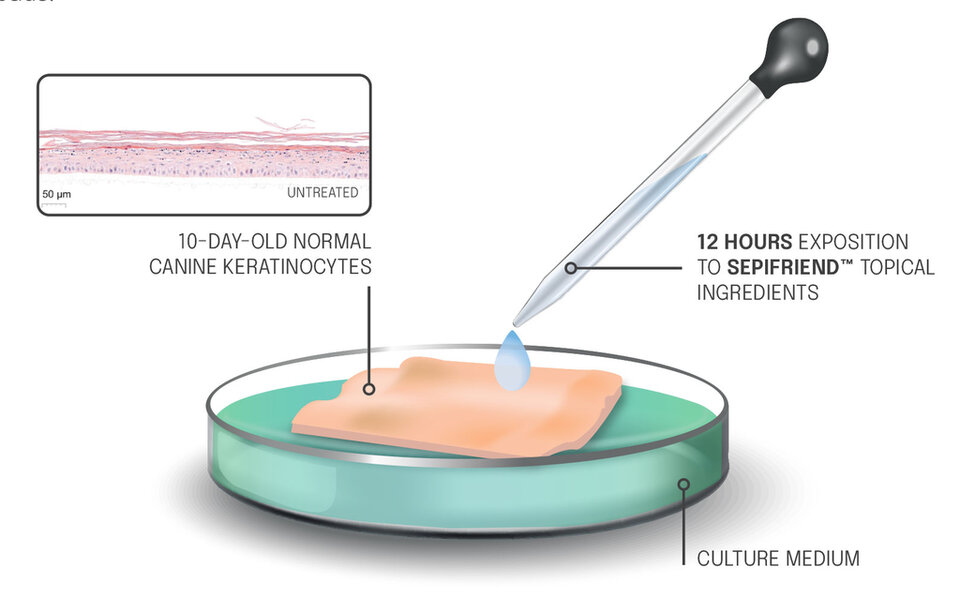
Figure 1. In vitro Reconstructed Canine Epidermis model
With a multiparametric approach to safety, several biological parameters indicative of skin tolerance were assessed, including:
- Cell viability (MTT Assay): the MTT (3-(4,5-dimethylthiazol-2-yl)-2,5-diphenyltetrazolium bromide) assay is a colorimetric assay for measuring cellular growth. A reduction in activity below 50% relative to the control indicates cytotoxicity (cell death).
- Barrier integrity (TEER): Trans-Epithelial Electrical Resistance (TEER) evaluates the integrity of the tight junctions that seal the space between cells. A drop in TEER indicates that the skin barrier has been compromised and is becoming "leaky," even if the cells are still alive. This is crucial for detecting mild irritants that might cause stinging or dryness.
- Inflammatory response (IL-8 Release): we quantify the release of Interleukin-8 (IL-8) in the culture medium. IL-8 is a pro-inflammatory cytokine and an early marker of immune activation. An increase in IL-8 suggests that the tissue is stressed and reacting to the ingredient, which in a clinical setting could manifest as redness (erythema) or itching (pruritus) (4).
Validation and results: proving the concept
Validation of the protocol: Sodium Dodecyl Sulfate (SDS), a commonly used positive control, was tested at various concentrations and exposure durations to assess the model's sensitivity and refine the experimental protocol. Formulation benchmarks, designed for canine care were also evaluated under conditions reflecting their intended use as either leave-on or rinse-off products. Benchmarks were employed to optimize the protocol, identify key parameters and calibrate the tolerance assessment.
Assessment of dedicated pet care ingredients: we then evaluated a dedicated range of ingredients developed by our company for pet care, which includes 10 ingredients among surfactants, polymers, emulsifiers, emollients and active ingredients. The test protocol involved applying the ingredients to the surface of the RCE tissues for a contact time of 12 hours.
The results demonstrated (5) that the ingredients show no impact on tissue viability, up to the tested concentrations, suggesting their safe use in leave-on or rinse-off applications.
Conclusion
The development of an in vitro model using reconstructed canine epidermis (RCE) to evaluate the local tolerance of ingredients intended for pet care formulations is a strategic necessity for the evolving needs of the pet care industry. Assessing multiple endpoints, including cellular viability, barrier integrity, inflammatory response and morphological observations, provided a better understanding of ingredient effects beyond just cellular viability. Multiple parameters improved the model's sensitivity for detecting reactions in reconstructed canine skin. The model represents a promising tool for selecting suitable ingredients and formulations for dogs. The integration of this in vitro model within a comprehensive approach, encompassing systemic toxicity assessment and historical human use data, ensures the safety of both dogs and their human caregivers.
As the market continues to premiumize, it is inevitable that regulatory scrutiny will increase. By proactively adopting rigorous safety testing, the industry can stay ahead of future regulations. The RCE model provides the scientific data needed to substantiate safety evaluation.
To conclude, the era of only extrapolating human safety data for pets is ending. The biological specificities of canine skin (its pH, its thin stratum corneum, its unique follicular structure) demand a dedicated scientific approach. For manufacturers, adopting such advanced testing methods is not just about mitigating risk, it is about demonstrating a commitment to pet care.
About the Author
Alicia Roso, has been a scientific communication manager since 2016. Chemical engineer DPE (State Master Degree, Itech, Lyon, 2001), worked for twenty years in the cosmetic Research and Development team, firstly as lab technician then as lab manager. Ten years marketing experience as product manager and scientific marketing, especially in charge of global accounts (Marketing MBA, ESSEC business school, Paris, 2012). She is passionate about cosmetology, topically applied formulations, with a focus on the role of ingredients on performance, sensoriality, efficacy and tolerance.

Alicia Roso
Head of Scientific Communications, Seppic, La Garenne-Colombes, France
Marine Pasquier is Pet Care Market Manager at Seppic. With three years of experience at Seppic, Marine brings a unique scientific and marketing perspective to the pet wellness industry.
Marine holds an Engineer degree in Biotechnology, giving her a strong technical foundation in ingredient science and formulation.
At Seppic, a company renowned for its unique ability to combine world-class expertise from the cosmetic and animal health domains, Marine has developed a deep knowledge of the global pet care market. Her focus is on the crucial segment of topical care and hygiene, where she has developed specific expertise in ingredients entering the formulation of topical care and hygiene products for companion animals.
Marine Pasquier
Market & Digital Manager, Pet care, Seppic, La Garenne-Colombes, France


References and notes
- Global Pets. French pet market: pet ownership steady as population hits 75 million [Internet]. 2025 [cited 2026 Feb 23]. Available from:https://globalpetindustry.com/news/french-pet-market-i-pet-ownership-steady-as-population-hits-75-million/
- Grand View Research. Pet care market size, share & trends analysis report by type (dog, cat, fish, bird), by product (food, healthcare, grooming), by distribution channel, by region, and segment forecasts, 2022 - 2030. Market Analysis Report; 2022.
- Roso A, et al. In vitro approach to assess local tolerance of ingredients dedicated to specific topical care applications. J Dermatol Skin Sci. 2021;3(1). Available from: https://www.dermatoljournal.com/articles/in-vitro-approach-to-assess-local-tolerance-of-ingredients-dedicated-to-specific-topical-care-applications.pdf
- Marsella R, et al. Current evidence of skin barrier dysfunction in human and canine atopic dermatitis. Vet Dermatol. 2011;22(3):239-48. Available from: https://pubmed.ncbi.nlm.nih.gov/21414049/
- Roso A, et al. Safety assessment of ingredients for pet care formulations: development of an in vitro canine skin tolerance model. Poster presented at: IFSCC Congress; 2025; [Cannes, France].