Panel discussion on...
How AI is Speeding
Up Beauty & Personal Care Innovation
About the Author
Francesco Ringressi

Business Development Manager, SEA Vision

Putting generative AI to one side, in what ways, specific to your area of expertise in the beauty industry, are you seeing AI being used? Can you share some AI success stories?
AI is transforming virtually every industry, and the beauty sector is seeing a particularly rapid rise in practical, production-level applications. At SEA Vision, innovation is central to our approach, and in cosmetics, this has led to the development of A-Eye Lipstick, created with ARGO Vision. The system is designed to automatically control lipstick quality during production using artificial intelligence. By bringing AI directly onto the manufacturing line, the solution helps beauty brands maintain premium product standards while scaling efficiently and consistently.
Lipsticks are especially challenging to inspect: they vary in colour, finish, shape, formulation, and packaging combinations, making traditional rule-based vision systems difficult to adapt across ranges and frequent product changes.
By automating what has historically been a manual process, the tool combines neural and non-neural algorithms and allows manufacturers to maintain quality even during high-speed production and frequent product changes.
Technically, the system uses semantic segmentation to analyse each part of the lipstick: tip, body, neck, and mechanism; pixel by pixel, identifying defects such as scratches, contamination, or structural imperfections that are often hard to detect consistently by eye. Trained on large datasets of real and synthetic images, the models continue to improve as new product variants are introduced.
Beyond the product itself, AI is also transforming packaging and line control: Vision systems can now inspect components, labels, and packaging integrity in all conditions and even more efficiently, ensuring that the right product is in the right packaging and that lines are fully cleared between batches. Integrated directly into existing machinery, these AI tools, such as our A-Eye Clearance, enable 100% in-line inspection without slowing production, reducing manual checks while improving consistency and traceability across the cosmetics supply chain.
What regulatory frameworks or industry standards need to be developed to govern the responsible use of AI in your area of the cosmetics industry?
As AI becomes more integrated into SEA Vision’s vision systems for pharma and cosmetics manufacturing, the need for clear and consistent regulatory frameworks is becoming increasingly important. Our experience with AI-driven solutions shows that companies are eager to adopt these technologies, but they want reassurance that they can do so in a compliant and transparent way.
For us, some of the most relevant standards are those aligned with GMP environments and computerized-system validation. Frameworks such as “ISPE GAMP® 5” and the new “GAMP® Guide: Artificial Intelligence” set a strong foundation for validating AI-based inspection systems. They imply structured documentation across the software lifecycle, risk-based validation strategies, controlled model updates, and secure audit trails. The FDA and European Commission are also moving toward clearer guidance on AI in manufacturing. While much of this originates from pharma, similar expectations apply to cosmetics production environments where product quality and line clearance are critical. SEA Vision’s validation approach, covering data governance, SDLC documentation, training-data verification, and defined retraining procedures, aligns closely with these emerging expectations.
What still needs to evolve is greater harmonization among companies and shared standards for managing AI training data, documenting model decisions, and handling updates from suppliers.
From our perspective, the goal is not just regulatory compliance, but responsible innovation. By building our AI systems around GAMP-aligned validation, strong documentation, and human oversight, we can help cosmetics manufacturers adopt AI confidently while ensuring their processes remain transparent.
What are your top three recommendations for companies in your sector considering AI and what should they absolutely avoid?
In 2026, the real opportunity for beauty and skincare brands is to move beyond simple AR ‘try‑on’ effects and embrace true diagnostic coaching. AI technologies should do more than simulate effects, they should interpret real data. Providing customers with personalized reports and suggestions is a powerful way to engage them more deeply. AI is not a scientist or a doctor yet, but it could be a great advisor.
At the same time, companies must prepare for the rise of agentic commerce and agentic workflow. SEO is evolving into something completely different that will lead brands to rethink their online positioning and content. Consumers are no longer searching in the traditional way; they rely on AI agents to curate products for them. If your ingredients, clinical data, and certifications aren’t structured for machine readability, your products won’t even be considered. AI agents only recommend what they can instantly verify.
Finally, innovation today depends on leveraging small data; the nuanced, high‑quality information that accelerates R&D. With generative AI, brands can anticipate micro‑trends, simulate formula stability, and shorten development cycles from 18 months to just six. That agility is crucial in fast‑moving markets like the current wave of longevity‑focused ingredients.
What should companies avoid? Medical overreach, for one: AI must never diagnose conditions like eczema or rosacea, as regulators are tightening their grip on these grey areas. They must also avoid the ‘uncanny valley’ of artificial diversity, consumers can spot AI‑generated models instantly, and they expect authenticity. And finally, brands must treat biometric data with absolute care. Storing face maps without explicit consent is not just unethical; in regions governed by GDPR or BIPA, it’s a legal hazard. On‑device processing should always be the default.
AI is an extraordinary opportunity for our sector, but only if applied with scientific rigor and respect for consumer trust.
References and notes
Panelists

Carina Dewar
Product Developer, Amka Products (Pty) Ltd

Ashlee Cannady
Director, Strategic Marketing, Amyris
Anastasiia Kharina
Senior Regulatory Affairs Expert, Angel Consulting Srl

Boris Gaspar
Head of Market Development Personal Care EMEA, BASF Personal Care and Nutrition GmbH

Clarisse BAVOUX
Toxicologist and Deputy Chief Executive Officer in charge of digital solutions, CEHTRA

Cécile GUYOT
Communication Manager, COPTIS

Rainer Kröpke
Cosmetic scientist, entrepreneur and founder of Cosmacon GmbH, Tojo Cosmetics GmbH, Cosactive GmbH and Innosicos GmbH

Yann Chilvers
Founder & Co-CEO, Covalo AG

Perry Romanowski
Cosmetic Chemist, Vice President Element 44 Inc

Elsa Jungman
Founder & CEO, HelloBiome

Olga V. Dueva-Koganov
VP and co-founder of Intellebio LLC

Eva Criado
Sr. Marketing & Communications Manager, Kensing

Carrie Mellage
Vice President, Beauty, Kline+Company

Sue Sender
Director of Marketing, Micro Powders

Dr. Mark Smith
NATRUE Director General

Francesco Ringressi
Business Development Manager, SEA Vision

Julie Rojas
AI Scientist, SMEY
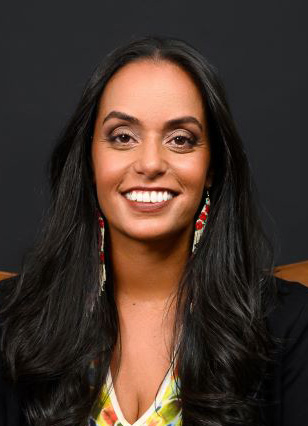
Rania Ibrahim
Founder SkinScience Analytics, USA

Nele Ameloot
Head of BioMolecules Business Development Center, Ghent University, Belgium

Lorena Bellas Domínguez
In Vivo Efficacy Test Manager, Zurko Research
References and notes
Smock J. Should We Be Scanning Our Beauty Products for Safety? Elle, 2024
https://www.elle.com/beauty/makeup-skin-care/a61457185/beauty-product-scanning/
Nagtode V, at al. Green Surfactants (Biosurfactants): A Petroleum-Free Substitute for Sustainability─Comparison, Applications, Market, and Future Prospects. ACS Omega 2023 https://pubs.acs.org/doi/10.1021/acsomega.3c00591
The Future of Retail? How LÓréal is Using AI to Transform Everyday Advertising
https://medium.com/@elinext/the-future-of-retail-how-lor%C3%A9al-is-using-ai-to-transform-everyday-advertising-87289d1212f8