
Panel discussion on...
How AI is Speeding
Up Beauty & Personal Care Innovation
About the Author
Eva Criado

Sr. Marketing & Communications Manager, Kensing

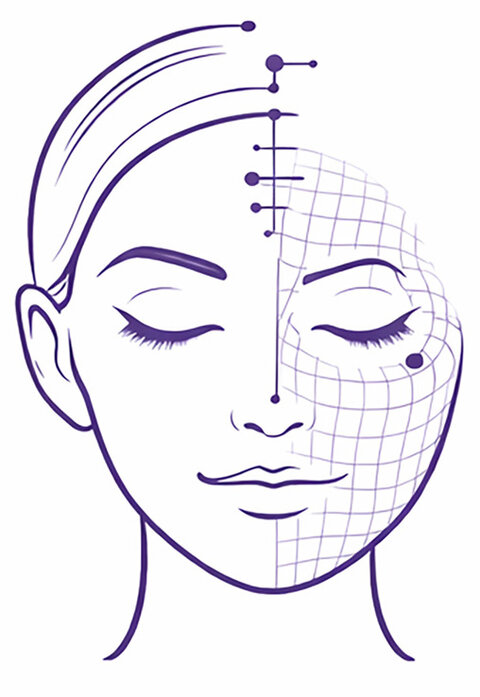
AI-Powered Personalization: Reshaping the Beauty Consumer Journey
In 2026, artificial intelligence is no longer a distant promise; it has become a daily reality, shaping my work and the personal care industry in general. From global tech titans to legacy beauty brands, everyone is racing to harness AI’s power and stay ahead. In the beauty and personal care world, "adapt or die" is no longer just a catchphrase; it’s the new normal. As ingredient transparency and hyper-personalized experiences become the expectation, I’ve found that embracing innovation isn’t just smart, it’s necessary. This article is my take on how these shifts are transforming the ingredients we use in personal care. In my role at Kensing, I focus on vitamin E, antioxidants, and biosurfactants, and on why staying open to change matters more than ever.
A new, AI-shaped consumer journey
Ingredient-scanning apps, like Yuka, are changing how people choose personal care and cosmetic products (1). These tools let shoppers scan products and instantly see how ingredients are rated for safety, efficacy, or environmental impact. This instant feedback is changing what ends up in the shopping cart and pushing brands to be more transparent. Having worked in the ingredient supply industry for years, I can honestly say this trend has made transparency and accountability the rule, not the exception.
AI-powered conversational chat platforms and virtual assistants are now a key way people discover and shop for beauty products. These tools let shoppers ask about ingredients, get tailored recommendations, and even complete a purchase, all in one conversation. AI interfaces are becoming the new shelf,shaping perceptions of ingredients before a product is ever picked up. Social media, livestreams, and influencer channels are also integrating these technologies, making advice and shopping more interactive and immediate. This shift is setting a new standard for convenience and customization.
Consumers are no longer relying solely on advice from beauty consultants, influencers, or brand stories on packaging. With ingredient ratings, social reviews, and personalized recommendations now at their fingertips, shoppers’ decisions are more informed than ever. Even scanning a barcode or using a skin analyzer at home gives people the power to choose products that match their unique needs and values. This scanner mindset is pushing brands to rethink everything from formulas to claims. Transparency is no longer a nice-to-have; it’s expected, and I think that’s a good thing.
What’s clear is that the trend in ingredients is rapidly shifting toward transparent, upcycled, sustainable, and natural options, as well as green chemistry. To give an example, there is growing interest in biosurfactants and natural alternatives such as natural vitamin E and plant-based antioxidants, which replace synthetic versions and support both performance and sustainability goals. Biosurfactants, made from renewable sources, are gaining attention for both their effective cleaning and environmental benefits (2).
Hyper‑personalization as the new baseline
Top beauty companies now see AI-driven personalization as a must-have. L’Oréal, for example, has invested heavily in Beauty Tech, using AI skin diagnostics, environmental data, and new tools to deliver precise product recommendations and even on-demand skincare with systems like Skin Screen, Perso, and Beauty Genius (3). These tools look at skin images, lifestyle, and preferences to suggest routines that fit each person, helping shoppers make choices more easily in busy markets. It’s honestly amazing how far technology has come in helping people personalize what works for them. And brands are even adapting their images and creativity to the customer´s journey.
Estée Lauder has also jumped in with AI for virtual try-ons, smart diagnostics, and chat tools to help people pick the right shade, texture, or benefit. It’s a win-win: shoppers get more of what they want, and brands see faster turnover. In these systems, active ingredients such as antioxidants or moisturizers are matched to each person’s needs by AI, taking into account everything from wrinkles to skin tone.
From consumer data to faster, smarter formulation
Changes in how people shop, such as scanning, reviewing, and sharing, generate real data that helps product developers and researchers. By collecting ingredient feedback from people with different skin and hair types, AI can identify which active ingredients work best and where there are still unmet needs.
Formulators use these insights and predictive tools to quickly design, test, and improve new ingredient combinations. AI can simulate ingredient swaps, like replacing synthetic by natural vitamin E, to see how it will impact product performance. This accelerates innovation and supports trends such as sustainable solutions.
Responsible personalization and consumer protection
As AI becomes embedded in everything from app advisors to in-store scanners, it’s clear to me that protections need to keep pace. Recommendation engines should be upfront about how they use data and how they weigh different criteria for ingredients. And these systems need to be tested with diverse groups of people to avoid increasing bias.
Experts and regulators should take a close look at the models and content used by scanning apps. By combining AI with transparency, ethics, and inclusion, the industry can offer faster, more relevant, and safer beauty products. But regulation in Europe and North America may force a separation in the data and apps allowed.
Looking ahead, I find myself asking what’s next. As algorithms play a bigger role in guiding formulations, ingredient choices, and personalized recommendations, we also have to face the reality of AI bias. The people designing these systems can influence which ingredients are promoted and which are overlooked, which could limit both innovation and consumer choice. And as robotics and automation become a bigger part of beauty research, development, and manufacturing, these questions will only grow. In this fast-moving era, I’m convinced that transparency, oversight, and ethical design must keep pace with technological progress. That’s the only way the future of beauty will stay as inclusive and diverse as the people it serves.
Panelists

Carina Dewar
Product Developer, Amka Products (Pty) Ltd

Ashlee Cannady
Director, Strategic Marketing, Amyris
Anastasiia Kharina
Senior Regulatory Affairs Expert, Angel Consulting Srl

Boris Gaspar
Head of Market Development Personal Care EMEA, BASF Personal Care and Nutrition GmbH

Clarisse BAVOUX
Toxicologist and Deputy Chief Executive Officer in charge of digital solutions, CEHTRA

Cécile GUYOT
Communication Manager, COPTIS

Rainer Kröpke
Cosmetic scientist, entrepreneur and founder of Cosmacon GmbH, Tojo Cosmetics GmbH, Cosactive GmbH and Innosicos GmbH

Yann Chilvers
Founder & Co-CEO, Covalo AG

Perry Romanowski
Cosmetic Chemist, Vice President Element 44 Inc

Elsa Jungman
Founder & CEO, HelloBiome

Olga V. Dueva-Koganov
VP and co-founder of Intellebio LLC

Eva Criado
Sr. Marketing & Communications Manager, Kensing

Carrie Mellage
Vice President, Beauty, Kline+Company

Sue Sender
Director of Marketing, Micro Powders

Dr. Mark Smith
NATRUE Director General

Francesco Ringressi
Business Development Manager, SEA Vision

Julie Rojas
AI Scientist, SMEY
Rania Ibrahim
Founder SkinScience Analytics, USA

Nele Ameloot
Head of BioMolecules Business Development Center, Ghent University, Belgium

Lorena Bellas Domínguez
In Vivo Efficacy Test Manager, Zurko Research
References and notes
Smock J. Should We Be Scanning Our Beauty Products for Safety? Elle, 2024
https://www.elle.com/beauty/makeup-skin-care/a61457185/beauty-product-scanning/
Nagtode V, at al. Green Surfactants (Biosurfactants): A Petroleum-Free Substitute for Sustainability─Comparison, Applications, Market, and Future Prospects. ACS Omega 2023 https://pubs.acs.org/doi/10.1021/acsomega.3c00591
The Future of Retail? How LÓréal is Using AI to Transform Everyday Advertising
https://medium.com/@elinext/the-future-of-retail-how-lor%C3%A9al-is-using-ai-to-transform-everyday-advertising-87289d1212f8