Panel discussion on...
How AI is Speeding
Up Beauty & Personal Care Innovation
About the Author
Rainer Kröpke

Cosmetic scientist, entrepreneur and founder of Cosmacon GmbH, Tojo Cosmetics GmbH, Cosactive GmbH and Innosicos GmbH

The use of AI
Apart from generative AI, how do you think AI is used specifically in your field of expertise in the beauty industry? Can you share some success stories related to AI?
AI helps us systematically analyze large raw material libraries—for example, in terms of functionality, regulatory compliance (EU Cosmetics Regulation), combination logic, and substitution options in the event of supply bottlenecks.
Success: This has enabled us to significantly reduce development times for market-ready formulations, especially for complex, regulation-sensitive combinations of active ingredients.
Regulatory & qualitative plausibility checks
AI-based testing mechanisms help us identify potential regulatory risks at an early stage – e.g., in claims, INCI combinations, or country-specific features.
Success: Fewer correction loops in Cosmetic Product Safety Report (CPSR) and Product Information File (PIF) processes and a significantly higher “first-time-right” rate for submissions.
Our approach is deliberately pragmatic: AI does not replace cosmetic expertise or regulatory responsibility. It is a tool for making data-based decisions – the responsibility always remains with humans.
Formulation and R&D
- Are you using AI to predict ingredient interactions, stability, or compatibility with other raw materials?
- Does AI help you identify sustainable or "green" alternatives to traditional ingredients?
At Cosmacon, we do not consider the use of AI itself a defining element of cosmetic R&D.
Our primary responsibility is the development of effective, highly tolerable, problem-solving cosmetic products.
AI-based tools can support basic tasks such as ingredient screening, compatibility checks or sustainability filtering. In our view, however, these are foundational activities that are already well covered by raw-material suppliers and standard databases.
True R&D value is created through formulation expertise, experimental lab work, stability and safety testing, and human scientific judgement. AI may assist in pre-selection or plausibility checks, but product performance, tolerance and reliability are still proven in the lab – not predicted by algorithms.
Ethical and regulatory challenges and claims substantiation
- What do you feel are the most significant ethical concerns AI raises in your sector of the beauty industry, and how should the industry address them?
- What regulatory frameworks or industry standards need to be developed to govern the responsible use of AI in your area of the cosmetics industry?
- How is AI currently being used to support efficacy testing and claims substantiation in your sector? What applications show the most promise?
In our view, AI does not raise fundamentally new ethical or regulatory challenges in the cosmetics sector, as cosmetic products are already comprehensively governed by strict legal frameworks; responsible use of AI is therefore sufficiently covered by existing product safety, efficacy, and compliance regulations, provided that scientific accountability and human responsibility remain clearly defined.
AI is increasingly used to identify new, previously unexplored efficacy hypotheses and claim concepts by analysing complex biological, formulation and consumer-related data. This opens the door to claims that would not have been considered using traditional development approaches. However, for this potential to be fully realised, testing institutes must become more flexible and move beyond standardised, one-size-fits-all test packages. Innovative, AI-driven claim concepts require equally innovative, tailored study designs rather than predefined standard tests.
Supply chain management
- We all rely on supply chains. What benefits do you see AI bringing to supply chain efficiency, cost management, or sustainability in your area of work?
- Can AI help identify supply chain risks (ingredient shortages, quality issues, regulatory changes, sustainability concerns) before they impact production?
- Can and should AI facilitate better collaboration and information sharing between suppliers, manufacturers, and brands in the supply chain?
In theory, AI could create significant value in cosmetic supply chains by improving demand forecasting, risk detection, cost transparency and sustainability tracking. In practice, however, the industry moves much more slowly than the technology.
This fundamentally limits the effectiveness of AI-driven optimisation.
AI can indeed help identify supply risks such as shortages, quality deviations or regulatory changes at an early stage, and it could greatly improve collaboration and data sharing across the supply chain. However, this requires a shift in mindset: faster decision-making, longer-term raw material strategies and pricing models that reflect availability and lead time, not just cost per kilogram.
AI is fast and data-driven – the industry must adapt its structures to fully benefit from it.
How do you see AI ultimately benefit consumers?
AI has the potential to enable better, more problem-oriented cosmetic products rather than purely price-optimised ones. In reality, slow industrial structures and even slower regulatory processes often limit this potential. Smaller, agile companies can act faster by combining AI-based concepts with scientific experience and rapid tolerance testing, translating ideas into real consumer benefit.
What consumer protections should be in place when AI is used for product recommendations or personalization?
Existing cosmetic safety regulations already provide a strong foundation for consumer protection. When AI is used for recommendations or personalization, transparency, scientific accountability and clear human responsibility must remain central.
Could AI negatively impact consumers by leading to overly similar products or ignoring minority needs?
Yes, if AI-driven development relies solely on historical market data, it may reinforce mainstream products and overlook minority skin needs. This risk can be mitigated by human-led R&D that actively challenges data-driven assumptions.
Risks, limitations and mitigation – recommendations from a Cosmacon / Tojo perspective
What are your three key recommendations for companies considering the use of AI – and what should they avoid?
- Use AI as a decision-support tool, not as an R&D replacement.
AI can accelerate idea generation, data screening and hypothesis building, but efficacy, safety and skin tolerance must always be validated experimentally.
Avoid replacing scientific responsibility with algorithmic output. - Stay problem-oriented, not data-driven only.
Successful cosmetic R&D starts with a real skin or hair problem, not with what data sets or trends suggest. AI should serve a clearly defined formulation goal.
Avoid letting AI optimise for speed, cost or similarity instead of performance. - Keep structures agile and controllable.
Smaller, flexible organisations can translate AI-based concepts into real products faster than large industrial setups.
Avoid long decision chains and rigid processes that neutralise AI’s potential.
How do you address intellectual property when using third-party AI platforms for proprietary ingredient or formulation development?
At Cosmacon and Tojo, AI platforms are used strictly for conceptual support and data evaluation, never as sources of proprietary substance generation. All IP-relevant development steps – formulation design, optimisation, testing and documentation – remain fully internal and human-controlled. Sensitive data is not uploaded to external systems, ensuring that ownership, confidentiality and responsibility remain clearly defined.
References and notes
Panelists

Carina Dewar
Product Developer, Amka Products (Pty) Ltd

Ashlee Cannady
Director, Strategic Marketing, Amyris
Anastasiia Kharina
Senior Regulatory Affairs Expert, Angel Consulting Srl

Boris Gaspar
Head of Market Development Personal Care EMEA, BASF Personal Care and Nutrition GmbH

Clarisse BAVOUX
Toxicologist and Deputy Chief Executive Officer in charge of digital solutions, CEHTRA

Cécile GUYOT
Communication Manager, COPTIS

Rainer Kröpke
Cosmetic scientist, entrepreneur and founder of Cosmacon GmbH, Tojo Cosmetics GmbH, Cosactive GmbH and Innosicos GmbH

Yann Chilvers
Founder & Co-CEO, Covalo AG

Perry Romanowski
Cosmetic Chemist, Vice President Element 44 Inc

Elsa Jungman
Founder & CEO, HelloBiome

Olga V. Dueva-Koganov
VP and co-founder of Intellebio LLC

Eva Criado
Sr. Marketing & Communications Manager, Kensing

Carrie Mellage
Vice President, Beauty, Kline+Company
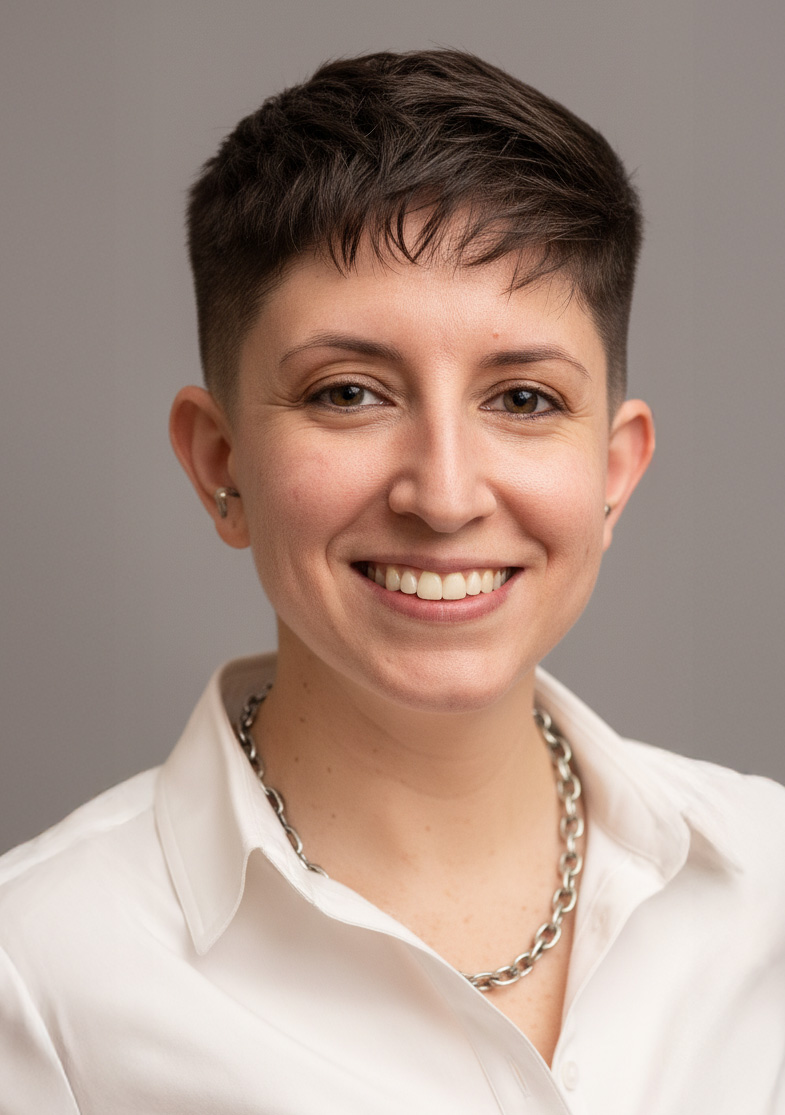
Sue Sender
Director of Marketing, Micro Powders

Dr. Mark Smith
NATRUE Director General

Francesco Ringressi
Business Development Manager, SEA Vision

Julie Rojas
AI Scientist, SMEY
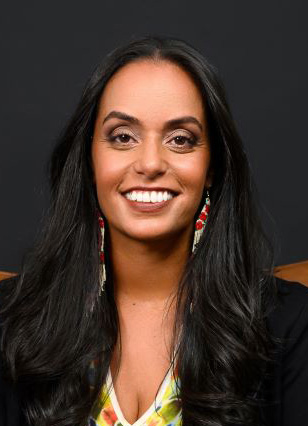
Rania Ibrahim
Founder SkinScience Analytics, USA

Nele Ameloot
Head of BioMolecules Business Development Center, Ghent University, Belgium

Lorena Bellas Domínguez
In Vivo Efficacy Test Manager, Zurko Research
References and notes
- Moussou, Philippe et. al. Biopeptides protect skin and scalp against silent inflammation. HPC Today. Vol 16(4) 2021. p. 34-37. https://www.teknoscienze.com/tks_article/biopeptides-protect-skin-and-scalp-against-silent-inflammation/