COLUMN: BEHIND THE CLAIM
Beyond Healthy Hair: How Consumer Trends Are Reshaping Hair Styling Evaluation
About the Author
Laura Cabrera
Laura Cabrera became a part of Zurko Research in 2017. Initially contributing to the Advanced Microbiology and Biocides Department, she now leads the HairCare Department. Recently, she successfully enhanced the department’s capabilities, focusing on innovative technologies for evaluating active ingredients and final hair care products. Laura Cabrera holds a Biology degree from Complutense University, specializing in Industrial Microbiology and Clinical Health Science. Her expertise extends to Human Microbiota studies, with a Master’s Degree in the field. Over time, Laura has pioneered various Microbiota and Microbiome measurement techniques, showcasing her commitment to advancing scientific knowledge.

Laura Cabrera
Haircare Technical Director, Zurko Research

KEYWORDS: Hair Styling; 3D Hair Analysis; Claim Substantiation; Hair Exposome; Curl Retention; Anti-Frizz
For many years, the success of a haircare product was closely linked to fundamental benefits such as cleansing, conditioning and shine. Today, however, consumer expectations have expanded considerably. Inspired by trends such as skinification, hair longevity and the growing understanding of the hair exposome, consumers now expect products that not only improve the appearance of hair but also preserve its health, protect it against environmental aggressions and maintain styling performance throughout the day.
This evolution is transforming not only product development, but also the way cosmetic efficacy should be evaluated.
From Hair Health to Styling Performance
One of the strongest trends in recent years has been the convergence between hair care and hair styling.
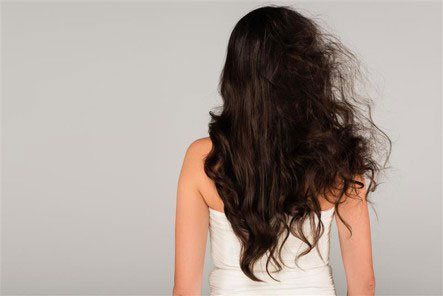
Consumers no longer see these categories as independent. They expect styling products to provide volume without weighing hair down, define curls without stiffness, control frizz under humid conditions and maintain movement while protecting the hair fibre from heat, UV radiation and pollution.
In other words, products are increasingly expected to combine care and performance.
As formulations become more sophisticated, the claims associated with these products also become more demanding. Demonstrating "more volume", "better curl retention" or "anti-frizz protection" requires objective methodologies capable of translating these consumer benefits into measurable scientific parameters.

Real Life Is Three-Dimensional
At the same time, our understanding of how hair behaves has evolved.
Hair is not a static structure. Throughout the day it continuously responds to humidity, temperature, gravity, brushing, mechanical manipulation and environmental exposure. These factors modify not only the visible appearance of the hairstyle but also its internal geometry and the spatial distribution of hair fibres.
Similarly, recent work on the hair exposome has highlighted that environmental aggressions rarely occur in isolation. Consumers are simultaneously exposed to UV radiation, humidity, chlorine, thermal styling and pollution, creating cumulative structural changes within the hair fibre.
These observations suggest that evaluating hair under simplified laboratory conditions may not always represent real consumer experiences.
Are Traditional Methods Measuring the Right Property?
Traditional styling evaluation has relied largely on visual grading, standardized photography and simple dimensional measurements.
These methodologies remain valuable and continue to provide reproducible information for many applications. However, some modern styling claims describe physical properties that are inherently three-dimensional.
Hair volume, for example, is defined by the space occupied by the hairstyle rather than by its projected width in a photograph. Likewise, anti-weigh-down performance depends not only on the visible dimensions of the hairstyle but also on how the fibres are distributed within that volume. Curl retention is associated with the preservation of curl geometry after deformation, while frizz reflects changes in fibre expansion and surface irregularity.
As these claims become more sophisticated, there is increasing interest in complementary methodologies capable of objectively characterising three-dimensional hair behaviour.
The Role of 3D Hair Analysis
Three-dimensional volumetric analysis represents one example of this evolution.
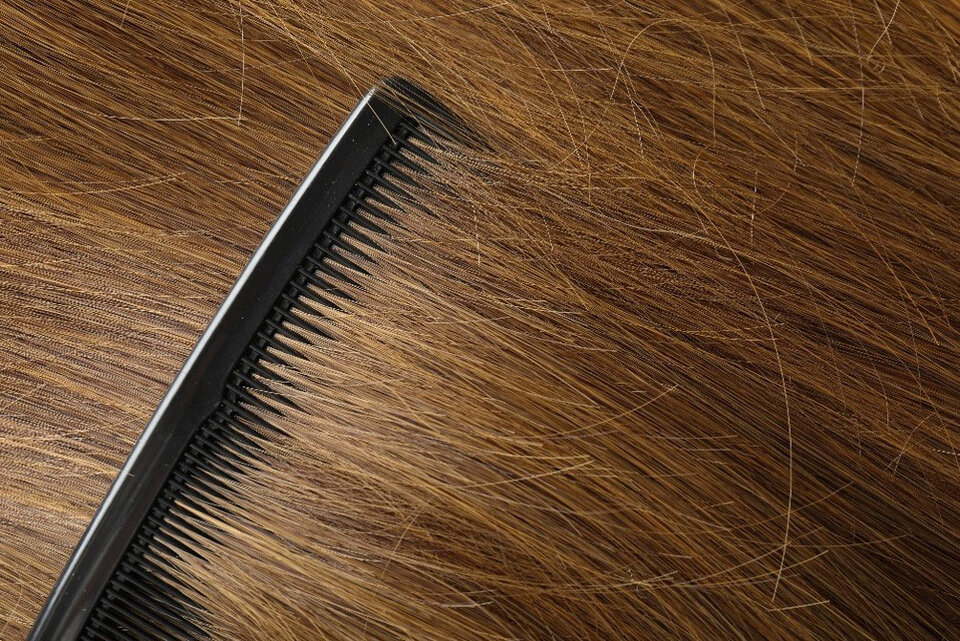
By reconstructing the complete geometry of a hair tress, volumetric systems allow objective quantification of parameters such as occupied volume, fibre density, frizziness and curl geometry.
These measurements provide information that extends beyond the visible silhouette of the hairstyle, enabling a more comprehensive understanding of how cosmetic products influence hair structure under different environmental or mechanical challenges.
Applications include the evaluation of volumizing effects, anti-frizz performance, curl retention and anti-weigh-down claims using standardized ex vivo models under controlled humidity, temperature or mechanical deformation.
Rather than replacing traditional methodologies, these approaches complement existing evaluation techniques by providing additional structural information directly related to the physical behaviour of the hair.
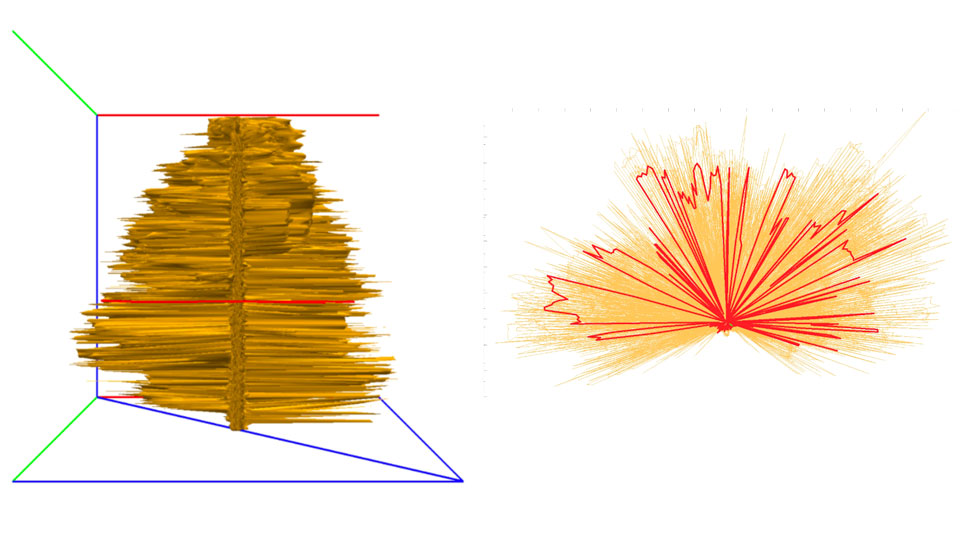
Advanced 3D Hair Analysis helps transform complex hair behaviour into objective, measurable data supporting both product development and robust claim substantiation.
Looking Ahead
This evolution is encouraging the development of more representative testing models capable of reproducing real-life environmental exposure while simultaneously capturing multiple aspects of hair behaviour.
Future efficacy testing is therefore likely to integrate controlled exposure models such as humidity, UV radiation, chlorine or thermal styling with multidimensional instrumental analysis capable of characterising not only how hair looks, but also how it behaves.
As consumer trends continue to redefine cosmetic innovation, testing methodologies will inevitably evolve alongside them, providing brands with stronger scientific evidence and consumers with products whose performance better reflects everyday life.
References and notes
- European Parliament and Council. Regulation (EC) No 1223/2009 of the European Parliament and of the Council of 30 November 2009 on Cosmetic Products. Official Journal of the European Union, L342, 22 December 2009.
- European Commission. Technical Document on Cosmetic Claims. Sub-Working Group on Claims, Version July 2017.
- Mintel Group Ltd. 2026 Global Beauty & Personal Care Predictions: From this year’s signals to tomorrow’s trends. mintel.com/insights/beauty-and-personal-care/beauty-trends