Panel discussion on...
Biotech Innovations in Personal & Home Care
About the Author
Claire Liu

Digital Marketing Project Manager - Cosmetics & Nutrition Active ingredients, Seppic

Biotech Innovation: scaling rare resources for advanced skincare
Biotechnology is increasingly appearing across many layers of personal care and home care— from ingredient development and manufacturing to material innovation and product performance. Where do you see the most meaningful shifts happening today?
We see two distinct evolutions occurring today, thanks to biotechnologies. On an environmental level, specialized industrial scaling via closed-loop photobioreactors enable to completely decouple manufacturing from the wild overexploitation of natural marine biomass. This controlled production ensures a fully secure, predictable, and traceable year-round supply that remains entirely independent of seasonal or climatic variations.
On a phytochemical level, dedicated technologies like blue biotechnologies grant stable access to rare and small algae. These microscopic stages cannot be effectively captured or standardized through traditional wild harvesting. Yet, they express highly specific biochemical profiles that offer unique biological benefits for skin longevity.
Beyond sustainability or ingredient replacement, how is biotechnology influencing the way products perform or are experienced by consumers?
Biotechnology elevates cosmetic performance by introducing targeted, high-performance ingredients that naturally support the skin’s youthful and radiant appearance.
For instance, through specialized plant cell culture biotechnology, it is possible to capture plant exosomes, achieving a high density of vesicles per microliter in native cells. These natural, membrane-bound structures integrate easily into cosmetic formulas, serving as messengers that optimize intercellular communication. Crucially, a direct biological link has been established between this exosome content and dermal reinforcement. Industrial in vitro screenings on human fibroblasts demonstrate that these isolated plant vesicles can significantly stimulate Type I collagen synthesis, with the complete dedifferentiated cell extract (Eryngium Maritimum Callus Culture Filtrate) showing a cumulative boost in matrix production.
Similarly, a blue biotechnology allows for the isolation of precise, low-molecular-weight fractions from the microscopic gametophyte stage of the giant kelp Macrocystis pyrifera. This process yields specific glucose polymers, called laminarins. Compared to traditional macroalgae extracts obtained from the wild sporophyte form, which lack these low-molecular-weight fractions entirely, this biotechnology-driven innovation offers an optimized approach to skin care, focusing on broader advantages such as supporting proteoglycan synthesis and protecting the extracellular matrix to sustain long-term skin resilience.
Many early biotechnology stories focused on creating more sustainable alternatives to existing materials. What do you think is emerging as the next phase of biotechnology in personal care/ home care?
Early biotechnology stories focused primarily on sustainable substitution, looking for more sustainable alternatives to already existing materials. Today, environmental interest has become quantitative, driven by a demand for tangible proof and environmental transparency throughout the ingredient lifecycle. The market demands verified metrics evaluating indicators such as carbon footprint, water usage, and overall manufacturing resource efficiency through comprehensive Life Cycle Assessments (LCA).
As biology becomes more integrated into how products and materials are conceived, made, and experienced, do you think the industry is beginning to move from simply using biotechnology toward designing with biology? If so, what new skills, collaborations, or ways of thinking will this require?
From our perspective, biotechnology is a gateway to go beyond basic natural harvesting, focusing on granting stable access to rare resources or small organisms that would otherwise be completely inaccessible. Beyond the traditional practice of standard material replication, our established vision has consistently centered on unlocking these elusive biological profiles.
We think that the current evolution lies in precise metabolic guidance. Our approach is to direct cellular production through highly calibrated, non-invasive physical and environmental stimuli within bioreactors, such as custom-tuned LED light spectra or controlled process optimization. These adjustments make it possible to increase biomass productivity and optimize its yield, thereby maximizing the recovery of targeted molecules of interest.
This approach demands deep multi-disciplinary collaboration, blending industrial bio-engineering and cell counting with specialized expertise in phytochemistry and taxonomy, which are vital for designing and maintaining unique culture collections and alga cell banks.
Despite the excitement around biotechnology, what limitations, tensions, or unresolved questions still need to be addressed within personal care/ home care?
The primary limitations in biotechnology center on strict international regulatory barriers, specifically regarding compliance with China’s INCI listings, and raw material formulation compatibility. Many innovative biotech active ingredients face global launch restrictions because they cannot clear these complex regulatory hurdles. To address this unresolved tension, manufacturing platforms must integrate global regulatory criteria from the very beginning.
Looking ahead, what kinds of products/ materials do you think biotechnology may enable that feel genuinely new or difficult to achieve through conventional approaches?
Biotechnology enables the creation of complex, fully standardized botanical totums that are structurally impossible to replicate chemically and far too ephemeral to capture via conventional wild harvesting. While standard chemical synthesis can effectively replicate a single isolated molecule, it cannot reproduce a complex, multi-component matrix where specialized metabolites, essential minerals, and concentrated natural structures are intrinsically woven together.
Biotechnology paves the way for entirely distinctive molecular compositions. For example, specialized bioprocesses can yield highly specific marine fractions characterized by precise low-molecular-weight polysaccharides that are entirely absent in traditional wild macroalgae extracts. Similarly, advanced plant cell cultures can deliver exceptionally rich matrices containing intact plant vesicles.
Sourcing these precise compositions allows the industry to meet a critical demand for high-performance topical applications. These complex botanical matrices achieve diverse biological and visible results that conventional single molecules or crude botanical extracts struggle to reach. By providing comprehensive, multi-faceted efficacy, substantiated through analytical characterization, cellular models, and in-vivo clinical trials, these biotech-derived materials enable completely new product categories that seamlessly address advanced skincare needs like skin longevity, deep hydration, and active skin smoothing.
References and notes
References and notes
- Taléns-Visconti R. et al., Cosmetic Interventions for Skin Microbiome Modulation: Current Strategies and Future Directions, 2026. https://onlinelibrary.wiley.com/doi/10.1111/srt.70352
- Dou J. et al., Applications of Probiotic Constituents in Cosmetics, 2023. https://www.mdpi.com/1420-3049/28/19/6765
- Karnwal A. et al., Microbial Biosurfactant as an Alternate to Chemical Surfactant for the Development of Personal Skincare Products, 2023. https://onlinelibrary.wiley.com/doi/10.1155/2023/2375223
- Nasser M. et al., Advances in the production of biosurfactants as green alternatives for the home and personal care sectors, 2024. https://www.frontiersin.org/journals/chemistry/articles/10.3389/fchem.2024.1382547/full
- Bektas K.I. et al., Isolation and characterization of detergent-compatible enzymes, 2023. https://link.springer.com/article/10.1007/s42770-023-00944-0
- Kuddus M. et al., Cold-active microbial enzymes and their biotechnological applications, 2024. https://pubmed.ncbi.nlm.nih.gov/38656876/
- Darbandi A. et al., Application of microbial enzymes in medicine and industry, 2024. https://www.tandfonline.com/doi/full/10.1080/17460913.2024.2398337
- Kathait P. et al., Harnessing exosomes and plant-derived nanovesicles, 2024. https://www.tandfonline.com/doi/full/10.1080/17435889.2024.2354159
- Chang T.M. et al., In Vitro Characterization of Centella asiatica Extracellular Vesicles and Their Skin Repair Effects in a UVB-Irradiated Mouse Model, 2025. https://www.mdpi.com/1422-0067/26/18/8982
- Kim K. et al., Anti-ageing activities of nanovesicles derived from Artemisia princeps in human dermal cells and human skin model, 2025. https://isevjournals.onlinelibrary.wiley.com/doi/10.1002/jex2.70033
Panelists

Annie Tsong
SVP of Corporate & Scientific Affairs, Amyris
Ashlee Cannady
Director of Strategic Marketing, Amyris

Alex Rosay
CEO, Cascade Bio

Rafael Bíscaro
Global Product Marketing Manager, Personal Care, Chemyunion

Tony Abboud
Chief Commercial Officer, Core Biogenesis
Lisa Heida
Marketing Lead, Covalo
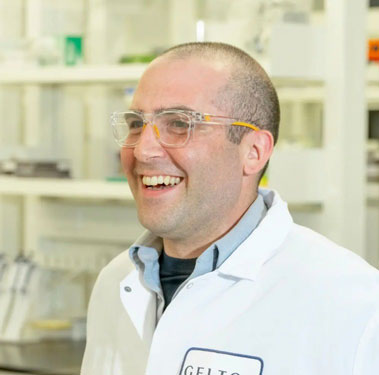
Alex Lorestani
Co-Founder & CEO, Geltor
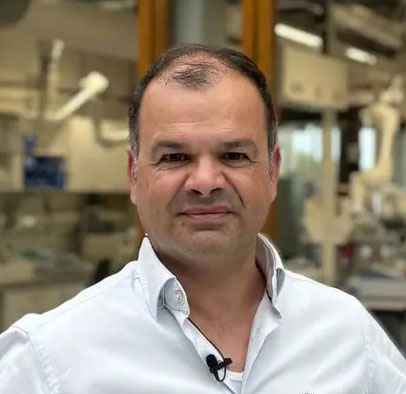
Sharief Barends
Global BioActives Research Director, IFF Health & Biosciences - IFF

Davide Mariani
Senior Expert Home & Personal Care Products, Innovhub SSI

Olga V. Dueva-Koganov
VP and co-founder of Intellebio
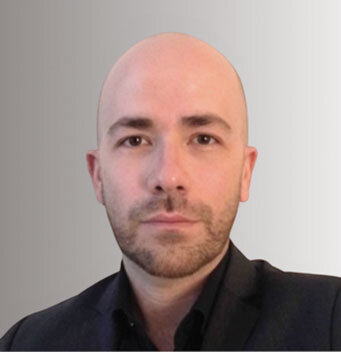
Denis Bendejacq
SVP Research & Innovation, Kensing

Dexter Hsu
Chief Executive Officer,
LCY Biosciences Inc.

Olya Vvedenskaya
Senior communications manager, Lipotype

Marc Desmarais
Product Development Activist, Origin by Ocean
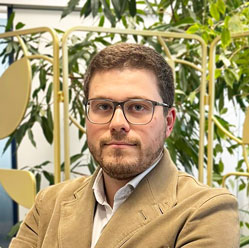
Giorgio Carelli
Product Manager Personal Care, ROELMI HPC

Julie Diamond
Bioprocessing Sales Specialist, RoosterBio, Inc.

Ilaria Campestri
Pharmacist, Chemist Cosmetologist & Nutritionist

Claire Liu
Digital Marketing Project Manager - Cosmetics & Nutrition Active ingredients, Seppic

Martina Herrmann
Director Process Development, Global Innovation Cosmetic Ingredients, Symrise
Jacqueline Scarborough
Director, Consumer Care,Tate & Lyle

Spencer Marsh
Chief Scientific Officer, The Tiny Cargo Company

Òscar Expósito
CEO, CSO and co-founder of
Vytrus Biotech S.A.

Lorena Bellas Domínguez
In Vivo Efficacy Test Manager,
Zurko Research