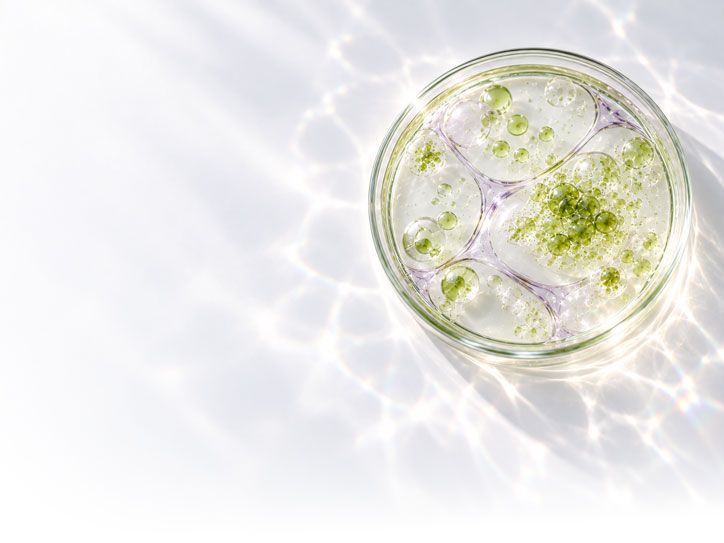
Panel discussion on...
Biotech Innovations in Personal & Home Care
About the Author
Olga V.
Dueva-Koganov

VP and co-founder of Intellebio

Beyond Sustainability, How Can Biotechnology Make Ingredients More Effective: Examples from the Industry
Biotechnology is currently a major driving force of innovation in personal care, influencing how plant-based and bio-based ingredients are developed, produced, and delivered. This includes moving from traditional extraction toward advanced extraction techniques, bio-engineering, fermentation, and lab-cultivation producing actives with higher efficacy and better sustainability.
Among the emerging technologies that I have observed in the market, Zeta Fraction Technology (ZFT) is an example of a distinctive plant-based extraction platforms in personal care (1, 2, 3). It utilizes the potential of living plants having maximum metabolic activity, which represent the best source for capturing the whole spectrum of natural complexes and compounds. ZFT is a solvent-free, electrokinetic extraction technology that processes fresh, living plant material in the field, separates intracellular colloidal dispersions, and fractionates them into high-potency, multi-functional cosmetic ingredients. It is based on scientific principals discovered by Van’t-Hoff and Debye, and on Derjaguin-Landau-Verwey-Overbeek colloidal science theory. ZFT uses no solvents, even water, requires minimal energy, no heat, and produces multi-functional, biologically active complexes rather than isolated actives, enabling multi pathway efficacy. It operates as a cradle-to-cradle process where remaining biomass is returned to the field. Additionally, it has been successfully used to remove specific undesirable compounds from biofunctional ingredients from different plant sources. Examples of removed substances include parthenolide, a skin sensitizer, high molecular weight peptides, patulin, a mycotoxin associated with dermal toxicity, pheophorbides and psoralen, both photosensitizers, and heavy metals (1).
From industry perspective, ZFT greatest commercial impact is not as a standalone extraction method but as a platform that is generating highly reproducible proprietary cosmetic actives with patent protection around both the process and the resulting compositions.
For instance, it was used to develop parthenolide-free ingredient from Feverfew (Chrysanthemum parthenium) utilized in many finished goods products that are currently on the market (4). Recent ZFT applications include a method for obtaining a bioactive serum fraction derived from fresh rose flowers (Rosa spp.), and compositions comprising the same (5); and skin care compositions and cosmetic applications comprising synergistic blend of sacred lotus and tea plant or sacred lotus and German chamomile (6).
Another example of emerging technology is a whole fresh plant or algae biomass biorefinery model integrating extrusion, ultrasonication, enzymatic hydrolysis, and fermentation. The hydrated state of the biomass facilitates mechanical disruption and enzymatic accessibility. The process enhances the functional diversity and biological relevance of cosmetic actives and generates multi-component complexes with defined functional profiles. It provides higher yield of active compounds compared to conventional extraction, enhanced bioavailability due to enzymatic breakdown of structural polysaccharides, synergistic activity from co-presence of plant actives + postbiotics + prebiotics and versatile downstream processing (drying, lyophilization, concentration) enabling multiple cosmetic formats (7).
In sum, the advanced extraction technologies provide foundation for ingredient innovation and allow formulators to move beyond traditional solvent-based extracts and instead access high-purity, multifunctional plant and marine complexes that deliver superior performance, stronger claims, and sustainability advantages.
They are becoming a core driver of innovation and competitive differentiation across modern personal care.
References and notes
References and notes
- M. Koganov, O. Dueva-Koganov, A. Duev, L. Zhang. Multifunctional Sustainable Zeta Fractions from Living Plants. Sofw journal. 2017; 143, 1+2/17: 42-47. https://www.ashland.com/file_source/Ashland/Industries/Personal%20and%20Home%20Care/Articles/170102_PDF_Ashland_Koganova_E.pdf
- Koganov, M. US 7,442,391, Bioactive botanical cosmetic compositions and processes for their production and use. https://patents.google.com/patent/US7442391B2/en?oq=US+7%2c442%2c391
- Koganov, M. EU 2,919,757, A method for preparing bioactive botanical compositions and the compositions made from said method using an electromagnetic field of grater than 3 GHz. https://patents.google.com/patent/EP2919757B1/en?oq=EU+2%2c919%2c757
- Koganov, M. US 7,537,791, Parthenolide free bioactive ingredients from Feverfew (Tanacetum parthenium) and processes for their production. https://patents.google.com/patent/US7537791B2/en?oq=US+7%2c537%2c791
- Koganov, M., Dueva-Koganov O., Duev A. et.al. EP4447927A1, Bioactive serum fractions from fresh rose flowers and methods for their preparation and uses. https://patents.google.com/patent/EP4447927A1/en?oq=US20260124266A1
- Koganov, M., Dueva-Koganov O., Duev A. et.al. US20260124266A1, Skin care compositons comprising synergistic blend of sacred lotus and tea plant or sacred lotus and german chamomile and cosmetic applications thereof. https://patents.google.com/patent/US20260124266A1/en?oq=US202601242
- Stredansky M., Stredanska S. EP4700131A1, Process of preparing cosmetic ingredients containing active components from plant or algae biomass, European Patent Application, 2024. https://patents.google.com/patent/EP4700131A1/en
Panelists

Annie Tsong
SVP of Corporate & Scientific Affairs, Amyris
Ashlee Cannady
Director of Strategic Marketing, Amyris

Alex Rosay
CEO, Cascade Bio

Rafael Bíscaro
Global Product Marketing Manager, Personal Care, Chemyunion

Tony Abboud
Chief Commercial Officer, Core Biogenesis
Lisa Heida
Marketing Lead, Covalo
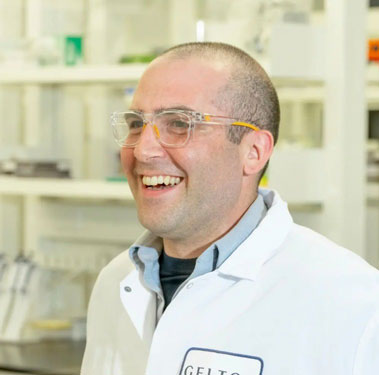
Alex Lorestani
Co-Founder & CEO, Geltor
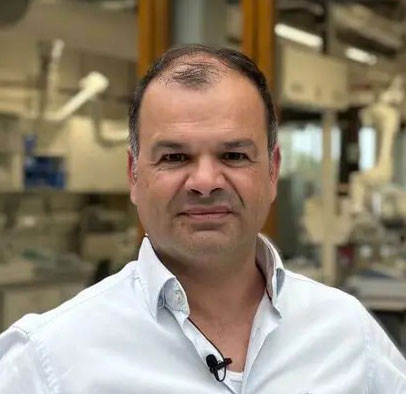
Sharief Barends
Global BioActives Research Director, IFF Health & Biosciences - IFF

Davide Mariani
Senior Expert Home & Personal Care Products, Innovhub SSI

Olga V. Dueva-Koganov
VP and co-founder of Intellebio

Denis Bendejacq
SVP Research & Innovation, Kensing

Dexter Hsu
Chief Executive Officer,
LCY Biosciences Inc.

Olya Vvedenskaya
Senior communications manager, Lipotype

Marc Desmarais
Product Development Activist, Origin by Ocean
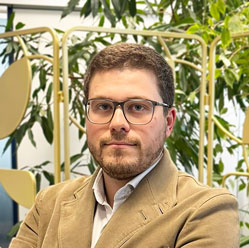
Giorgio Carelli
Product Manager Personal Care, ROELMI HPC
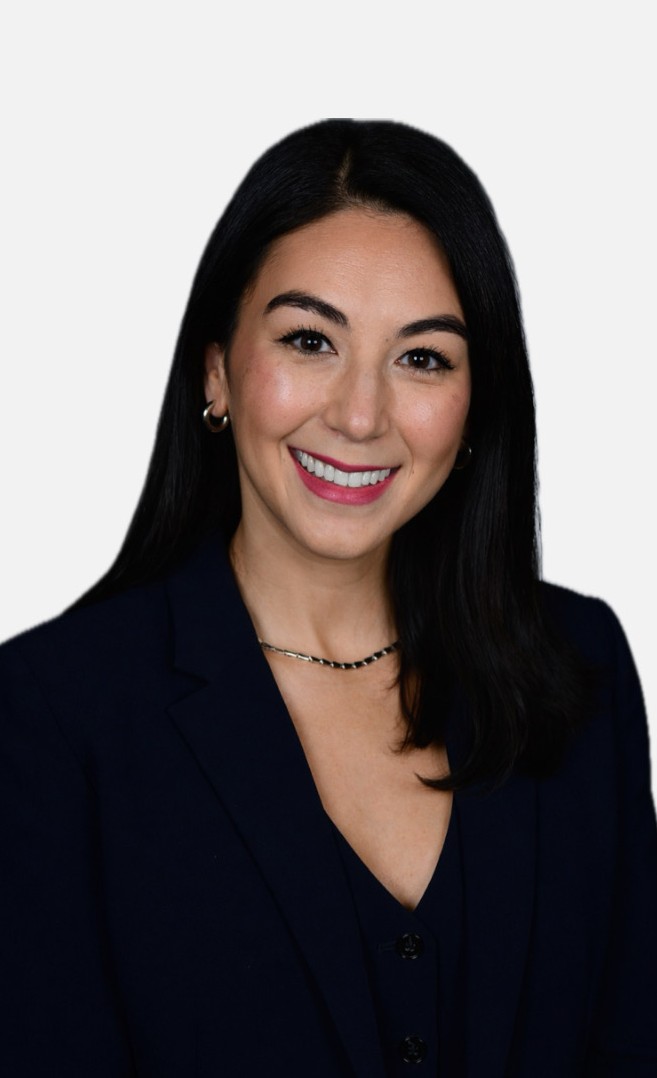
Julie Diamond
Bioprocessing Sales Specialist, RoosterBio, Inc.

Ilaria Campestri
Pharmacist, Chemist Cosmetologist & Nutritionist

Claire Liu
Digital Marketing Project Manager - Cosmetics & Nutrition Active ingredients, Seppic
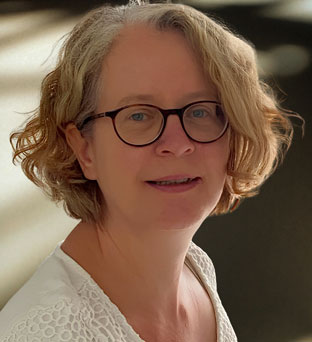
Martina Herrmann
Director Process Development, Global Innovation Cosmetic Ingredients, Symrise
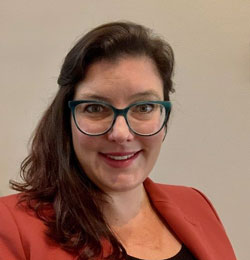
Jacqueline Scarborough
Director, Consumer Care,Tate & Lyle

Spencer Marsh
Chief Scientific Officer, The Tiny Cargo Company

Òscar Expósito
CEO, CSO and co-founder of
Vytrus Biotech S.A.
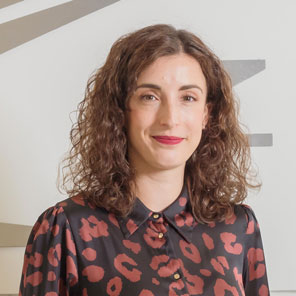
Lorena Bellas Domínguez
In Vivo Efficacy Test Manager,
Zurko Research