Panel discussion on...
Biotech Innovations in Personal & Home Care
About the Author
Ilaria Campestri

B2B Health & Beauty, ESG Industrial Processes Expert | Pharmacist, Chemist Cosmetologist & Nutritionist

Biotech Innovations in Personal & Home Care: From Replacement to Biological Design
Biotechnology is no longer entering personal and home care only as a sustainability tool. In my view, the most meaningful shift is the transition from “bio-based substitution” to “biological functionality”: using fermentation, enzymes, microbiome science and bio-derived structures to create materials that behave differently, not simply materials with a different origin.
In personal care, this is particularly visible in the way we now think about the skin as an ecosystem. Formulation is moving beyond the classical idea of cleansing, protecting or correcting the skin surface, towards a more dynamic interaction with the skin barrier, microbiota, immune signalling and sensory perception. This does not mean that every product must become “microbiome-active”, but it does mean that formulators need to understand how surfactants, preservatives, emulsifiers, delivery systems and actives influence the biological environment of the skin.
In home care, biotechnology is already well established through enzymes, especially in laundry and cleaning applications. However, the next phase will not simply be “more enzymes”. It will involve better enzyme engineering, improved stability, low-temperature performance, compatibility with concentrated formulations and reduced dependence on harsh chemical systems. This is where biotechnology can help reconcile performance, lower environmental impact and consumer convenience.
Beyond sustainability, biotechnology is influencing performance in several ways. Biosurfactants and bioferments, for example, can contribute not only to biodegradability but also to mildness, sensory profile, moisturization and interfacial behaviour. Fermentation can transform raw materials into more bioavailable, multifunctional or sensorially interesting ingredients. Enzymes can allow more selective action, reducing the need for aggressive chemistries. In skin care, postbiotics and microbiome-oriented ingredients suggest a future where performance is measured not only by immediate visible effects, but also by resilience, barrier recovery and long-term skin comfort.
I believe the next phase of biotechnology in personal and home care will be “precision biofunctionality”. This includes precision fermentation, designed peptides and biopolymers, bio-inspired delivery systems, microbial or plant-derived vesicles, enzymatic modification of natural substrates and upcycled biomolecules with controlled composition. The key point is control: reproducibility, characterization and evidence will be more important than the generic claim of being natural or biotech-derived.
This brings us to a deeper question: are we moving from using biotechnology to designing with biology? I think yes, but only partially. Designing with biology means accepting complexity. Biology is not a catalogue of ingredients; it is a network of interactions. To work in this way, the industry will need more interdisciplinary teams: cosmetic chemists, microbiologists, biotechnologists, material scientists, toxicologists, data scientists and regulatory experts working from the earliest stages of development. It will also require a different innovation mindset: less linear, more iterative, and more based on systems thinking.
At the same time, several unresolved questions remain. First, the gap between promising biological mechanisms and robust cosmetic or home care evidence is still significant. Many biotech concepts are scientifically fascinating but difficult to translate into stable, scalable and legally compliant products. Second, standardization is a major challenge: biological materials can vary depending on strain, substrate, fermentation conditions, extraction process and downstream purification. Third, communication must be responsible. The industry should avoid overclaiming, especially around microbiome modulation, exosomes, postbiotics or “living” technologies, where consumer enthusiasm may move faster than scientific validation.
Regulation is another important tension. Personal care and home care products operate in categories with specific boundaries. If biotechnology introduces materials that interact more deeply with biological pathways, the distinction between cosmetic, detergent, medical device, biocidal or pharmaceutical positioning may become more complex. This is not a barrier, but it requires careful design from the beginning.
Looking ahead, I think biotechnology may enable products that are genuinely new in three directions. The first is adaptive performance: products that respond to pH, enzymes, sebum, humidity, malodour molecules or microbial activity. The second is biological delivery: systems inspired by vesicles, biopolymers or cell-like architectures that improve deposition, release or targeting without relying on conventional synthetic structures. The third is regenerative material innovation: biofabricated polymers, bio-based structuring agents and functional surfaces that combine performance with a lower ecological footprint.
For me, the most exciting opportunity is not to replace chemistry with biology, but to integrate them intelligently. The future of personal and home care will not be purely biotech, nor purely synthetic. It will be hybrid: evidence-based, sensorially refined, scalable, safe and designed around the real interface between products, people and the environment.
References and notes
References and notes
- Taléns-Visconti R. et al., Cosmetic Interventions for Skin Microbiome Modulation: Current Strategies and Future Directions, 2026. https://onlinelibrary.wiley.com/doi/10.1111/srt.70352
- Dou J. et al., Applications of Probiotic Constituents in Cosmetics, 2023. https://www.mdpi.com/1420-3049/28/19/6765
- Karnwal A. et al., Microbial Biosurfactant as an Alternate to Chemical Surfactant for the Development of Personal Skincare Products, 2023. https://onlinelibrary.wiley.com/doi/10.1155/2023/2375223
- Nasser M. et al., Advances in the production of biosurfactants as green alternatives for the home and personal care sectors, 2024. https://www.frontiersin.org/journals/chemistry/articles/10.3389/fchem.2024.1382547/full
- Bektas K.I. et al., Isolation and characterization of detergent-compatible enzymes, 2023. https://link.springer.com/article/10.1007/s42770-023-00944-0
- Kuddus M. et al., Cold-active microbial enzymes and their biotechnological applications, 2024. https://pubmed.ncbi.nlm.nih.gov/38656876/
- Darbandi A. et al., Application of microbial enzymes in medicine and industry, 2024. https://www.tandfonline.com/doi/full/10.1080/17460913.2024.2398337
- Kathait P. et al., Harnessing exosomes and plant-derived nanovesicles, 2024. https://www.tandfonline.com/doi/full/10.1080/17435889.2024.2354159
- Chang T.M. et al., In Vitro Characterization of Centella asiatica Extracellular Vesicles and Their Skin Repair Effects in a UVB-Irradiated Mouse Model, 2025. https://www.mdpi.com/1422-0067/26/18/8982
- Kim K. et al., Anti-ageing activities of nanovesicles derived from Artemisia princeps in human dermal cells and human skin model, 2025. https://isevjournals.onlinelibrary.wiley.com/doi/10.1002/jex2.70033
Panelists

Annie Tsong
SVP of Corporate & Scientific Affairs, Amyris
Ashlee Cannady
Director of Strategic Marketing, Amyris


Alex Rosay
CEO, Cascade Bio

Rafael Bíscaro
Global Product Marketing Manager, Personal Care, Chemyunion

Tony Abboud
Chief Commercial Officer, Core Biogenesis
Lisa Heida
Marketing Lead, Covalo
Alex Lorestani
Co-Founder & CEO, Geltor
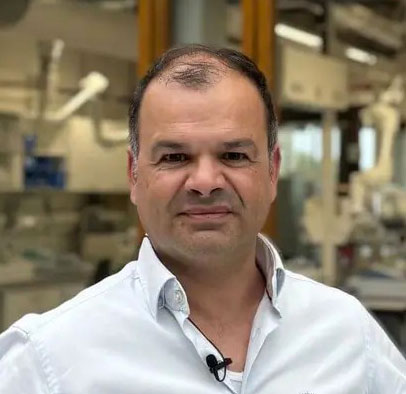
Sharief Barends
Global BioActives Research Director, IFF Health & Biosciences - IFF

Davide Mariani
Senior Expert Home & Personal Care Products, Innovhub SSI

Olga V. Dueva-Koganov
VP and co-founder of Intellebio

Denis Bendejacq
SVP Research & Innovation, Kensing

Dexter Hsu
Chief Executive Officer,
LCY Biosciences Inc.

Olya Vvedenskaya
Senior communications manager, Lipotype

Marc Desmarais
Product Development Activist, Origin by Ocean
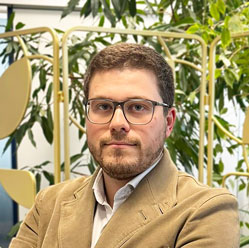
Giorgio Carelli
Product Manager Personal Care, ROELMI HPC
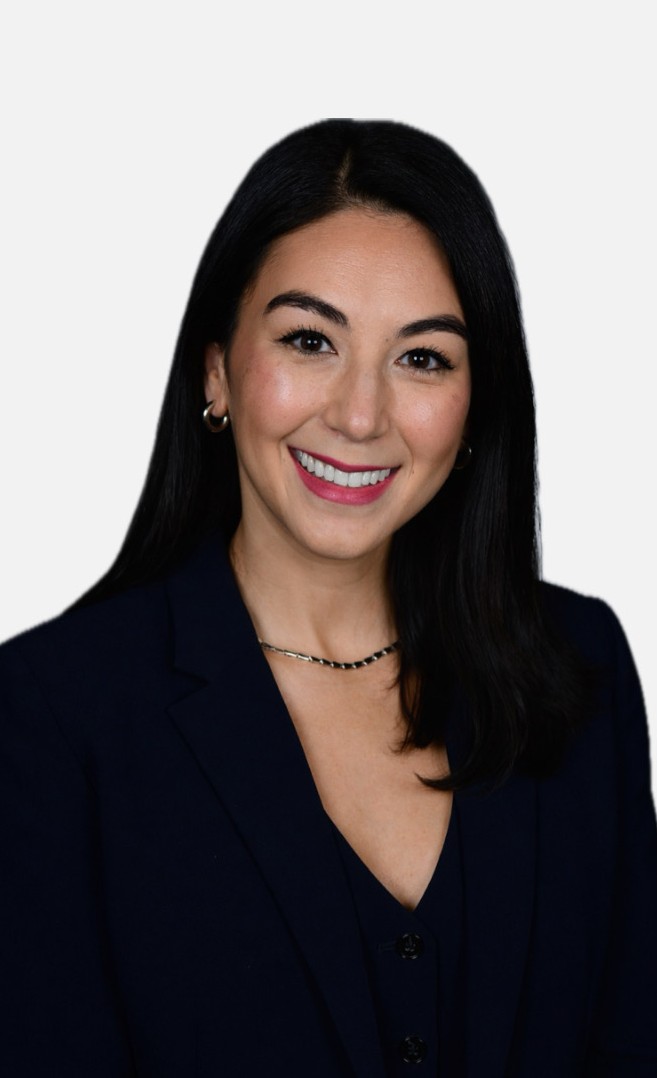
Julie Diamond
Bioprocessing Sales Specialist, RoosterBio, Inc.

Ilaria Campestri
Pharmacist, Chemist Cosmetologist & Nutritionist

Claire Liu
Digital Marketing Project Manager - Cosmetics & Nutrition Active ingredients, Seppic

Martina Herrmann
Director Process Development, Global Innovation Cosmetic Ingredients, Symrise
Jacqueline Scarborough
Director, Consumer Care,Tate & Lyle

Spencer Marsh
Chief Scientific Officer, The Tiny Cargo Company
Òscar Expósito
CEO, CSO and co-founder of
Vytrus Biotech S.A.

Lorena Bellas Domínguez
In Vivo Efficacy Test Manager,
Zurko Research