Panel discussion on...
Biotech Innovations in Personal & Home Care
About the Author
Dexter Hsu, Ph.D.

Chief Executive Officer,
LCY Biosciences Inc.

Designed, Not Sourced: Rethinking Stability, Purity and Performance Through Fermentation
Biotechnology is increasingly appearing across many layers of personal care and home care— from ingredient development and manufacturing to material innovation and product performance. Where do you see the most meaningful shifts happening today?
Through our work with fermentation, the shift we find most meaningful is one of intent. For years fermentation was treated as a sourcing question — a cleaner, more secure way to make a molecule we already knew. The more interesting question is no longer “can we ferment this ingredient?” but “what does fermentation let us make that other routes cannot?”
The most difficult actives show why. Take astaxanthin: the synthetic version is a blend of three stereoisomeric forms, yet only one can be found in nature — the form found in wild salmon. The microalgae version is closer to nature but arrives esterified and at low purity. Neither route hands a formulator the clean, single, salmon-identical molecule the market wants; a well-designed fermentation route can. That is an unmet need solved — not a greener way to make the same compromise.
Beyond sustainability or ingredient replacement, how is biotechnology influencing the way products perform or are experienced by consumers?
This is where biotechnology stops being an environmental story and becomes a solution to the unmet needs. From our perspective, this story is best told from the consumer’s point of view rather than the chemistry. Consistent, clean delivery matters, but on its own it is table stakes. The real lever is designing the molecule to the problem the formulator is actually trying to solve.
Astaxanthin makes it concrete: the conventional pain points — an esterified structure and low purity — undermine the taste, the odour and bioavailability and force the elaborate delivery-form workarounds the consumers have come to accept. Designing the active to meet the real need, rather than formulating around its shortcomings, is what biotechnology now makes possible. Performance you can feel from the first application is a more powerful argument than a sustainability claim on a label.
Many early biotechnology stories focused on creating more sustainable alternatives to existing materials. What do you think is emerging as the next phase of biotechnology in personal care/ home care?
The first phase was substitution: make the same molecule, more responsibly. It mattered, but few consumers pay more for green on its own; they pay for real value, and sustainability becomes the icing rather than the cake. The next phase has to earn its price on performance: fermentation has to improve how the product works, and it has to fix something the incumbent molecule is bad at.
Conventional thinking treats everything other than the target molecule as contamination to be stripped away. But a well-designed biological system produces a matrix, and the synergy of the matrix is what should reach the consumer. Residual carotenoids that accompany a fermented retinoid, for instance, are not waste; they can act as co-active antioxidants that protect the molecule and add to its effect. The goal is not maximal isolation but the right composition — a designed mixture that can outperform the pure synthetic molecule. Nature, after all, almost never stores a valuable molecule in isolation.
As biology becomes more integrated into how products and materials are conceived, made, and experienced, do you think the industry is beginning to move from simply using biotechnology toward designing with biology? If so, what new skills, collaborations, or ways of thinking will this require?
Yes, and this is perhaps the most consequential shift of all. Using biotechnology means selecting fermentation as a route for an already-specified molecule. Designing with biology means treating the organism, the feedstock and the pathway as part of the design space itself.
Vitamin A makes the distinction vivid. For thirty years the industry pursued the same loop: a sugar feedstock, a push to pure free retinol, an instability wall, then a bolted-on ester to compensate. It was tunnel vision — copying the synthetic target. The alternative is to copy nature: fat-rich natural sources, such as egg yolk and fish liver, store vitamin A not as free retinol but as stable ester mixtures. Designing towards that fact yields something inherently stable, needing no corrective chemistry.
That demands new collaborations. The linear hand-off from chemist to procurement to formulator gives way to continuous dialogue among strain engineers, fermentation scientists and formulators, with end-product requirements feeding upstream into how the molecule is grown. The valuable skill is fluency in both biology and formulation at once.
Despite the excitement around biotechnology, what limitations, tensions, or unresolved questions still need to be addressed within personal care/ home care?
It would be dishonest to present this as solved. Fermentation-derived actives still face difficult scale-up economics, and a buyer culture that often prices ingredients as commodities without valuing their lifecycle or performance advantages. Regulatory and labelling questions around “nature-identical” versus “natural” remain unsettled, and a consumer-education gap persists: many shoppers do not yet understand that a fermented molecule can be cleaner than its conventional counterpart. Much of this is a marketing question — meeting shoppers where they are rather than leading with the chemistry.
Looking ahead, what kinds of products/ materials, do you think biotechnology may enable that feel genuinely new or difficult to achieve through conventional approaches?
None of this is new. Pharmaceutical manufacturing has used fermentation for decades wherever chemistry struggles: single-enantiomer actives, molecules that need too many synthetic steps to be economical. Biology solves those problems by recreating inside a fermenter what nature already worked out.
What is new is the comparison we choose. Fermentation is almost always benchmarked against synthesis, and we think that framing is wrong. The right benchmark is natural extraction, made far more efficient and far more controllable in fermenters.
Fermented astaxanthin carries almost the same total carotenoids profile as found in nature, without the marine odour and excess lipid that come with the microalgae extract. For retinoids, we let yeast build the ester profile same as in fish liver oil in much higher strength, accompanied by its own antioxidants, and the result is a retinoid without the irritation reported for synthetic free retinol.
Neither product came from asking how to make the molecule better. Both came from asking what the market actually wants and letting the biology answer.
References and notes
References and notes
- M. Koganov, O. Dueva-Koganov, A. Duev, L. Zhang. Multifunctional Sustainable Zeta Fractions from Living Plants. Sofw journal. 2017; 143, 1+2/17: 42-47. https://www.ashland.com/file_source/Ashland/Industries/Personal%20and%20Home%20Care/Articles/170102_PDF_Ashland_Koganova_E.pdf
- Koganov, M. US 7,442,391, Bioactive botanical cosmetic compositions and processes for their production and use. https://patents.google.com/patent/US7442391B2/en?oq=US+7%2c442%2c391
- Koganov, M. EU 2,919,757, A method for preparing bioactive botanical compositions and the compositions made from said method using an electromagnetic field of grater than 3 GHz. https://patents.google.com/patent/EP2919757B1/en?oq=EU+2%2c919%2c757
- Koganov, M. US 7,537,791, Parthenolide free bioactive ingredients from Feverfew (Tanacetum parthenium) and processes for their production. https://patents.google.com/patent/US7537791B2/en?oq=US+7%2c537%2c791
- Koganov, M., Dueva-Koganov O., Duev A. et.al. EP4447927A1, Bioactive serum fractions from fresh rose flowers and methods for their preparation and uses. https://patents.google.com/patent/EP4447927A1/en?oq=US20260124266A1
- Koganov, M., Dueva-Koganov O., Duev A. et.al. US20260124266A1, Skin care compositons comprising synergistic blend of sacred lotus and tea plant or sacred lotus and german chamomile and cosmetic applications thereof. https://patents.google.com/patent/US20260124266A1/en?oq=US202601242
- Stredansky M., Stredanska S. EP4700131A1, Process of preparing cosmetic ingredients containing active components from plant or algae biomass, European Patent Application, 2024. https://patents.google.com/patent/EP4700131A1/en
Panelists

Annie Tsong
SVP of Corporate & Scientific Affairs, Amyris
Ashlee Cannady
Director of Strategic Marketing, Amyris


Alex Rosay
CEO, Cascade Bio

Rafael Bíscaro
Global Product Marketing Manager, Personal Care, Chemyunion

Tony Abboud
Chief Commercial Officer, Core Biogenesis
Lisa Heida
Marketing Lead, Covalo
Alex Lorestani
Co-Founder & CEO, Geltor
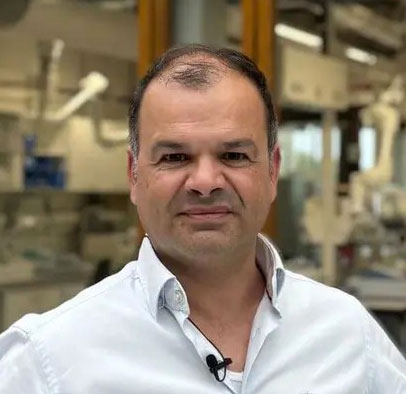
Sharief Barends
Global BioActives Research Director, IFF Health & Biosciences - IFF

Davide Mariani
Senior Expert Home & Personal Care Products, Innovhub SSI

Olga V. Dueva-Koganov
VP and co-founder of Intellebio

Denis Bendejacq
SVP Research & Innovation, Kensing

Dexter Hsu
Chief Executive Officer,
LCY Biosciences Inc.

Olya Vvedenskaya
Senior communications manager, Lipotype
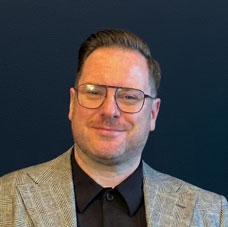
Marc Desmarais
Product Development Activist, Origin by Ocean
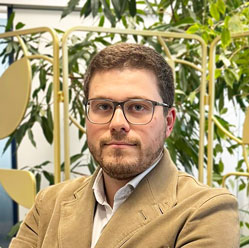
Giorgio Carelli
Product Manager Personal Care, ROELMI HPC

Julie Diamond
Bioprocessing Sales Specialist, RoosterBio, Inc.

Ilaria Campestri
Pharmacist, Chemist Cosmetologist & Nutritionist

Claire Liu
Digital Marketing Project Manager - Cosmetics & Nutrition Active ingredients, Seppic

Martina Herrmann
Director Process Development, Global Innovation Cosmetic Ingredients, Symrise
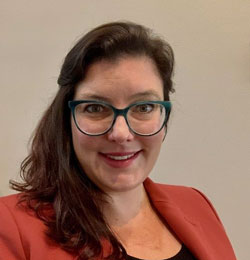
Jacqueline Scarborough
Director, Consumer Care,Tate & Lyle

Spencer Marsh
Chief Scientific Officer, The Tiny Cargo Company
Òscar Expósito
CEO, CSO and co-founder of
Vytrus Biotech S.A.

Lorena Bellas Domínguez
In Vivo Efficacy Test Manager,
Zurko Research