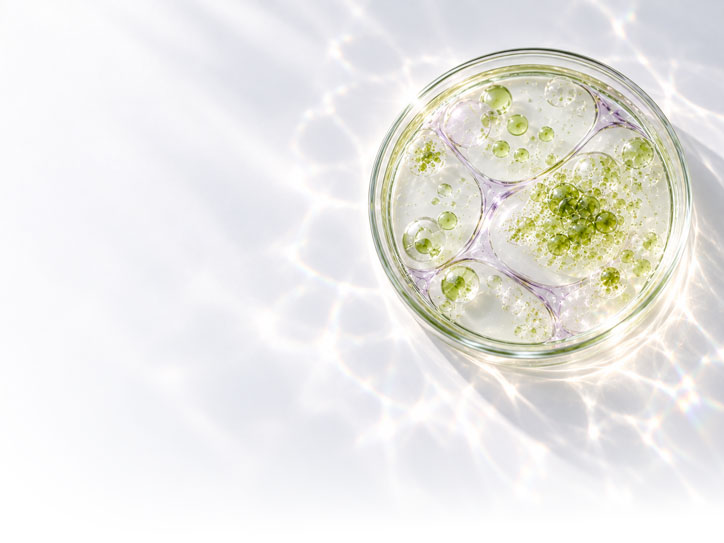
Panel discussion on...
Biotech Innovations in Personal & Home Care
About the Author
Rafael Bíscaro

Global Product Marketing Manager, Personal Care, Chemyunion

From Greener Swaps to Designing With Biology
Where do you see the most meaningful shifts happening today?
The most meaningful shift is biotechnology moving upstream, from a sourcing-and-manufacturing question to a discovery question. For years, biotech mostly answered “how do we make this known molecule more sustainably?” Increasingly it answers “which biological signals should an ingredient send in the first place?” Fermentation and postbiotic platforms are no longer just cleaner production routes; they are becoming tools to identify and produce actives whose value lies in how they interact with skin and hair biology. The interesting frontier is less about the footprint of an existing ingredient and more about reaching functions that were previously hard to access. Sustainability remains a baseline expectation here, not the differentiator it once was.
Beyond sustainability or ingredient replacement, how is biotechnology influencing how products perform or are experienced?
Biotechnology can enable new design strategies by tailoring material–substrate interactions. For example, because damaged hair becomes more polar following the loss of its hydrophobic 18-MEA layer, film-forming systems can be designed to preferentially interact with compromised regions of the fibre, the opposite affinity profile of a conventional silicone, which tends to deposit on virgin hair. One example of this approach is a fermentation-derived film-forming system based on pullulan, together with trehalose, arginine and lactic acid, developed for split-end repair. The point is not a “greener silicone” but a different mode of action: substrate-aware repair that withstands washing and mechanical stress. That kind of selectivity is difficult to engineer from petrochemical building blocks, and it is where biotechnology earns its place on performance grounds, not only sustainability ones.
What do you think is emerging as the next phase of biotechnology in personal care?
The first wave substituted materials; the next wave instructs biology. Rather than depositing something onto skin or hair, newer actives aim to reactivate the body’s own processes. For example, one active area of research is the development of postbiotic ingredients, such as Lactobacillus ferment lysates, designed to target the pathways involved in hair pigmentation: instead of dyeing fibres, they work upstream on the follicle’s pigmentary system, supporting melanogenesis, melanosome transfer and the melanocyte stem-cell niche while buffering oxidative stress. The ambition is restorative rather than cosmetic cover-up. This phase requires a stronger scientific basis, because the claim becomes biological rather than purely sensorial, and it blurs the historical line between “cosmetic” and “biologically active”, which is exactly what makes it both exciting and demanding.
Is the industry moving from using biotechnology toward designing with biology? What will this require?
Yes; and the clearest signal is how ingredients are now selected. From an industrial R&D perspective, the logic is increasingly reversed: rather than starting with a botanical and a hoped-for benefit, development can begin from a biological target, screening candidates against a panel of genes governing, say, pigmentation, melanosome transport and stem-cell survival, and then selecting the material with the desired modulation profile. That is designing with biology: starting from the mechanism and working back to the ingredient. It requires new collaborations and skills, with bioinformatics and data analysis sitting alongside biology and formulation, and marketers who can read a gene-expression table as fluently as a sensory panel. The cultural change is treating biological data as a design input, not merely as post-hoc substantiation.
What limitations, tensions or unresolved questions still need to be addressed?
Several. Consumer understanding of fermentation, postbiotics and “GMO-free yet biotech-derived” is still thin, and education has to precede enthusiasm. Regulatory frameworks lag behind novel categories, especially where an ingredient acts on biological pathways yet must remain a cosmetic. Fermentation also brings batch-to-batch consistency and scale-up challenges that formulators tend to underestimate. And there is an honest scientific tension: ex vivo gene modulation is promising, but translating it into visible, reproducible in vivo outcomes and substantiating claims responsibly is where most of the hard work lives. The field’s credibility depends on not presenting mechanism as if it were already proven benefit.
What might biotechnology enable that feels genuinely new?
The most novel direction is actives that read context and act conditionally, repairing only what is damaged, pigmenting only where pigment is lost, responding to a biomarker rather than to a dose. Combined with discovery platforms that mine biology for unexpected functions, this points toward personal care that behaves less like a coating and more like a biological collaborator: restorative, selective and quietly intelligent. Those are properties that are genuinely hard to reach by formulating with conventional, inert building blocks and they are what make this moment feel like a beginning rather than an optimisation.
References and notes
References and notes
Panelists

Annie Tsong
SVP of Corporate & Scientific Affairs, Amyris
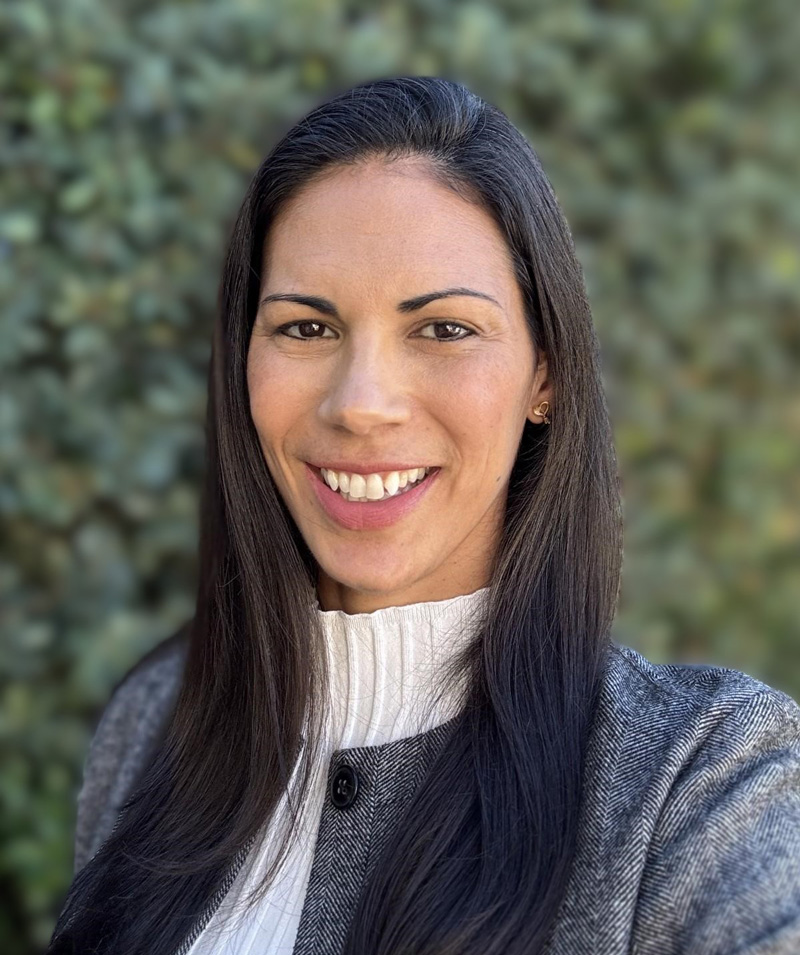
Ashlee Cannady
Director of Strategic Marketing, Amyris

Alex Rosay
CEO, Cascade Bio

Rafael Bíscaro
Global Product Marketing Manager, Personal Care, Chemyunion

Tony Abboud
Chief Commercial Officer, Core Biogenesis
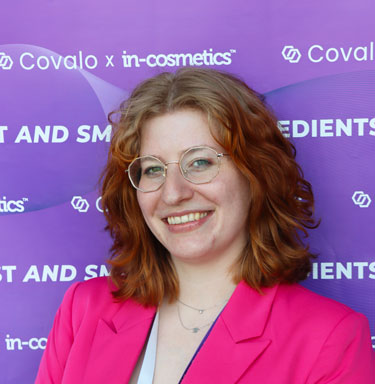
Lisa Heida
Marketing Lead, Covalo
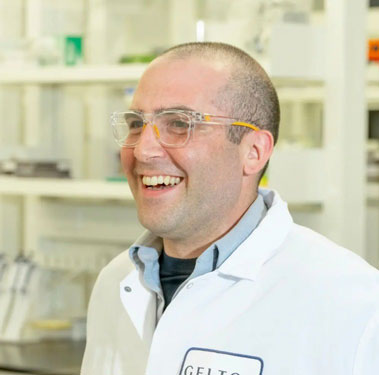
Alex Lorestani
Co-Founder & CEO, Geltor
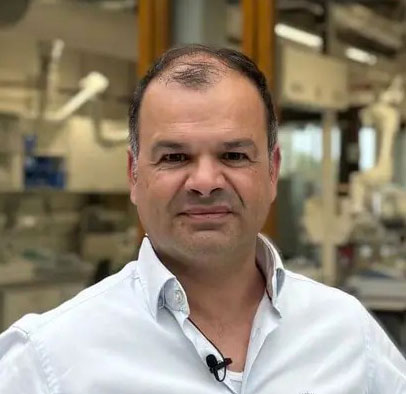
Sharief Barends
Global BioActives Research Director, IFF Health & Biosciences - IFF

Davide Mariani
Senior Expert Home & Personal Care Products, Innovhub SSI

Olga V. Dueva-Koganov
VP and co-founder of Intellebio
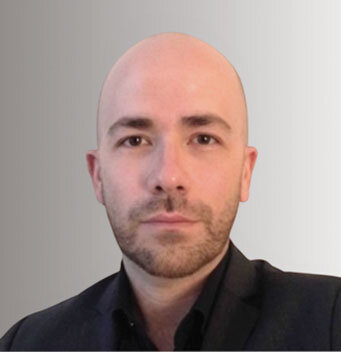
Denis Bendejacq
SVP Research & Innovation, Kensing

Dexter Hsu
Chief Executive Officer,
LCY Biosciences Inc.

Olya Vvedenskaya
Senior communications manager, Lipotype
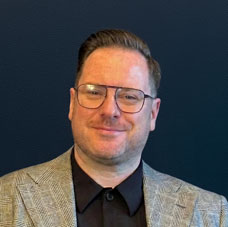
Marc Desmarais
Product Development Activist, Origin by Ocean
Giorgio Carelli
Product Manager Personal Care, ROELMI HPC
Julie Diamond
Bioprocessing Sales Specialist, RoosterBio, Inc.

Ilaria Campestri
Pharmacist, Chemist Cosmetologist & Nutritionist

Claire Liu
Digital Marketing Project Manager - Cosmetics & Nutrition Active ingredients, Seppic

Martina Herrmann
Director Process Development, Global Innovation Cosmetic Ingredients, Symrise
Jacqueline Scarborough
Director, Consumer Care,Tate & Lyle
Spencer Marsh
Chief Scientific Officer, The Tiny Cargo Company
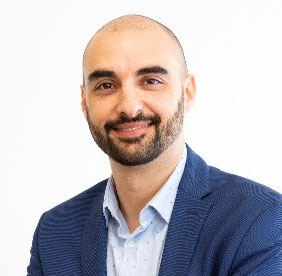
Òscar Expósito
CEO, CSO and co-founder of
Vytrus Biotech S.A.
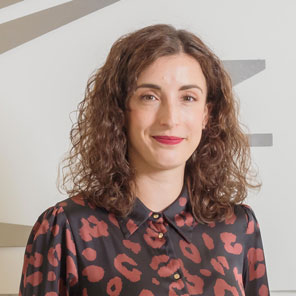
Lorena Bellas Domínguez
In Vivo Efficacy Test Manager,
Zurko Research