Panel discussion on...
Biotech Innovations
in Personal & Home Care
About the Author
Rae Cutlan, M.Sc.

Molecular biologist, innovation strategist and founder of Cutlan Studio
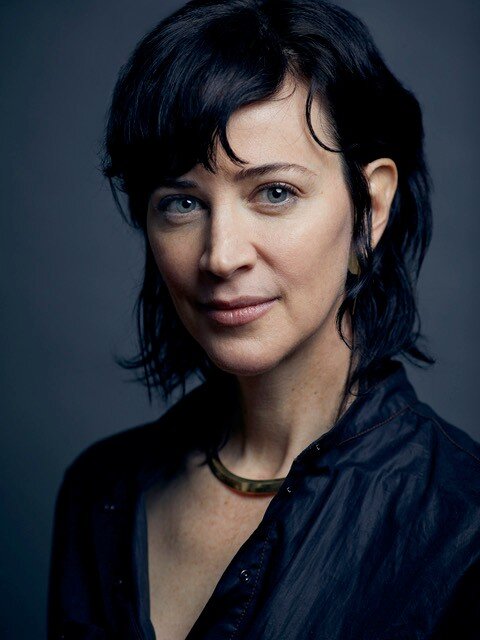
Rae Cutlan is a molecular biologist and founder of Cutlan Studio, an independent consultancy that brings biological thinking into product innovation for beauty, wellness and biotechnology companies. She previously served as VP of Scientific Innovation at The Rootist and founded Biophile, an award-winning skincare line formulated from biological materials and principles. Across more than two decades, her work has explored how biology can guide not just what we make, but how we design — for us, and for the more-than-human world we depend on.
Commentary article
Designing for Life: From New Materials to Biological Formulation
HPC Today gathered more than twenty voices from across biotechnology and the personal and home care ecosystem—ingredient developers and suppliers, testing specialists and consultants—to ask where this science is actually heading. The clearest signal is a field expanding in two directions at once: toward an unprecedented range of biological materials and functions, and toward a more relational way of designing with them. But the panel returns just as often to a harder truth: novelty only matters once it survives translation into a product someone chooses.
Biology’s Expanding Palette
Biology is not a single technology, but a vast new palette: designed proteins, precision fermentation, plant biofactories, enzymes, cell-free systems, algae, extracellular vesicles and complex biological matrices. Some platforms remake familiar materials through safer or more reliable routes. Others open access to structures and functions that were previously impractical—or unavailable.
Geltor makes that scale tangible: the human collagen family includes 28 types encompassing roughly 130 proteins, while conventional sourcing focuses on the most abundant and accessible. Cascade Bio widens the machinery itself, combining engineered microbes, isolated and immobilized enzymes, cell-free systems and hybrid chemoenzymatic processes—tools that can work together rather than compete. SEPPIC shows what this access can unlock: microscopic life stages of giant kelp yield laminarins absent from conventional extracts, while plant-cell cultures preserve vesicles and complex matrices that chemistry cannot readily reconstruct.
AI is also helping us navigate this vastness. Geltor uses it to model biological targets and evaluate millions of candidate sequences, while IFF extends its use from research and product development into production and supply chains. Looking across the ingredient landscape, Covalo sees AI-assisted discovery, computational biology and precision fermentation converging to reshape how ingredients are discovered and designed.
There is something humbling here. We may not understand all of biology’s rules, but these platforms let us create with its intelligence rather than simply extract what nature offers.
Learning to Design with Biology
As our ability to work with biology grows, biology itself can teach us how to design—through relationships and systems, with greater attention to context and interaction.
LCY questions whether maximal purification is always desirable, looking instead to how molecules are stored and organized within biological matrices. Innovhub imagines materials whose behavior emerges through interaction with their biological environment—pH, enzymes, metabolites or microbial activity. Chemyunion describes actives that can “read context and act conditionally,” even using the phrase “biological collaborator.” ROELMI takes the collaborative idea further, framing living systems as active co-designers and products as “co-authored with nature.”
Biodesign asks us to pay closer attention to living systems. When relationships and context become part of the design, function can be amplified or coordinated, materials can respond to changing conditions, and multiple activities can be organized within one system. Maybe the deeper possibility is a different understanding of where function lives—not only within the ingredient, but in its relationships with the product around it and the biological system it encounters.
From Possibility to Product
Biology may open an extraordinary design space, but novelty alone does not create a market. Sustainability has often been the pitch, but rarely the sell. Performance, cost and meaningful consumer benefit drive adoption.
The challenges appear at every step—from manufacturing an ingredient at scale to proving its benefit in a finished product and convincing brands to adopt it. Geltor points to the need for consistent, economical manufacturing. Tiny Cargo describes a field in which early claims sometimes ran ahead of the tools needed to measure and characterize the technology. The demand for stronger evidence is a sign of maturation, not disillusionment. Lipotype captures the full journey: performance must move from bench to bottle to a meaningful user result. Origin by Ocean adds the commercial bind: brands wait for affordability and scale, while suppliers need commitments to achieve them.
An ingredient does not move from lab to market unchanged. The people making decisions about manufacturing, formulation, testing and brand development all shape how it performs, what can be claimed and what benefit it ultimately delivers. When those teams work in dialogue rather than through downstream handoffs, translation becomes part of the innovation itself.
Taking Biological Thinking to the Bench
The final product is where all of this has to become real. What would it mean to carry biology’s intelligence all the way to the formulation bench? A formula containing biotech ingredients is not necessarily a biological formulation.
Kensing sees biotechnology moving from ingredient substitution toward formulation redesign, with compatible or synergistic combinations simplifying formulas and reducing ingredient counts. There is elegance in that economy: fewer ingredients doing more, each one earning its place. LCY calls for finished-product needs to feed upstream into how a molecule is grown—“the active is designed for the formulation, not the reverse.” Tate & Lyle and IFF extend the idea: performance emerges through material relationships and processing, and biological materials may become architects of new product formats and systems.
What may need unlearning is not chemistry, but the assumption that the ingredient is finished before the formula begins. Placing it into a familiar chassis may validate its activity while underserving its full possibility.
The formula is not a neutral container; it helps determine what the ingredient can actually do. As a biologist, I look to life as both collaborator and teacher—not only as a source of materials, but as a guide to how we create. A biological formulation need not be alive; it could take cues from living systems. Designing with biology may be the method. Designing for life is the larger ambition.

Panelists

Beta Montemayor
Vice-President; Director Science Regulation and Market Access, Cosmetics Alliance Canada


John Chave
Director General, Cosmetics Europe

Alexander Mohr
President, IFRA – International Fragrance Association

Mark Smith
Director General, NaTrue

Thomas F. Myers
President & CEO, Personal Care Products Council (PCPC)

Sybille Millet
Regulatory affairs manager at Cosmed- SMEunited representative, Cosmetics Working Group
Panelists

Carina Dewar
Product Developer, Amka Products (Pty) Ltd
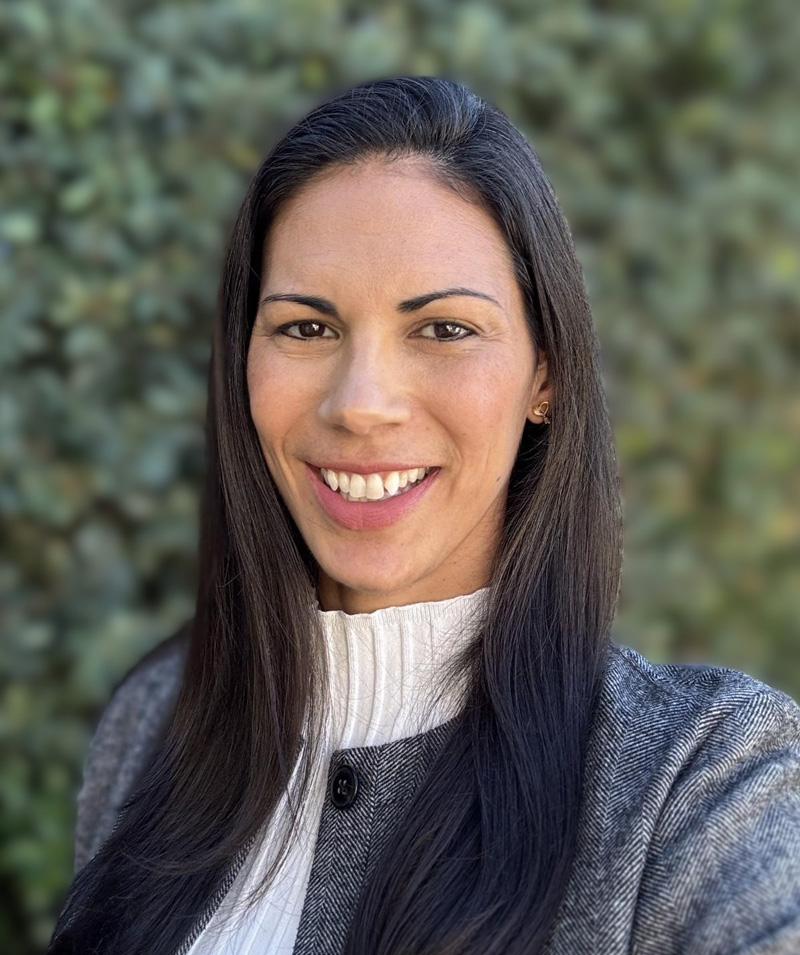
Ashlee Cannady
Director, Strategic Marketing, Amyris

Anastasiia Kharina
Senior Regulatory Affairs Expert, Angel Consulting Srl

Boris Gaspar
Head of Market Development Personal Care EMEA, BASF Personal Care and Nutrition GmbH
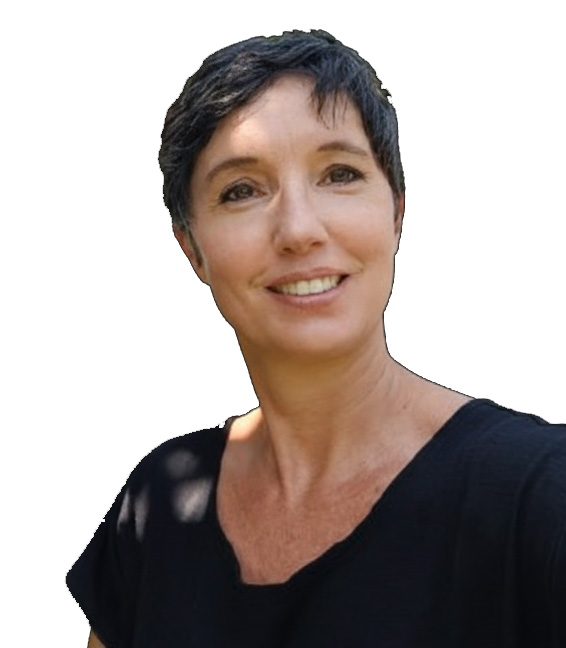
Clarisse BAVOUX
Toxicologist and Deputy Chief Executive Officer in charge of digital solutions, CEHTRA

Cécile GUYOT
Communication Manager, COPTIS

Rainer Kröpke
Cosmetic scientist, entrepreneur and founder of Cosmacon GmbH, Tojo Cosmetics GmbH, Cosactive GmbH and Innosicos GmbH

Yann Chilvers
Founder & Co-CEO, Covalo AG

Perry Romanowski
Cosmetic Chemist, Vice President Element 44 Inc

Elsa Jungman
Founder & CEO, HelloBiome

Olga V. Dueva-Koganov
VP and co-founder of Intellebio LLC

Eva Criado
Sr. Marketing & Communications Manager, Kensing

Carrie Mellage
Vice President, Beauty, Kline+Company

Sue Sender
Director of Marketing, Micro Powders

Dr. Mark Smith
NATRUE Director General
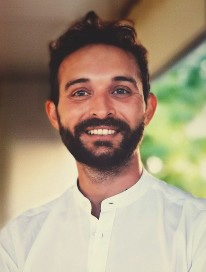
Francesco Ringressi
Business Development Manager, SEA Vision

Julie Rojas
AI Scientist, SMEY
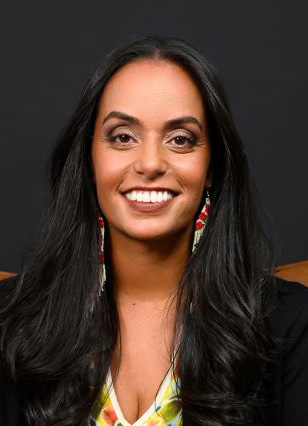
Rania Ibrahim
Founder SkinScience Analytics, USA
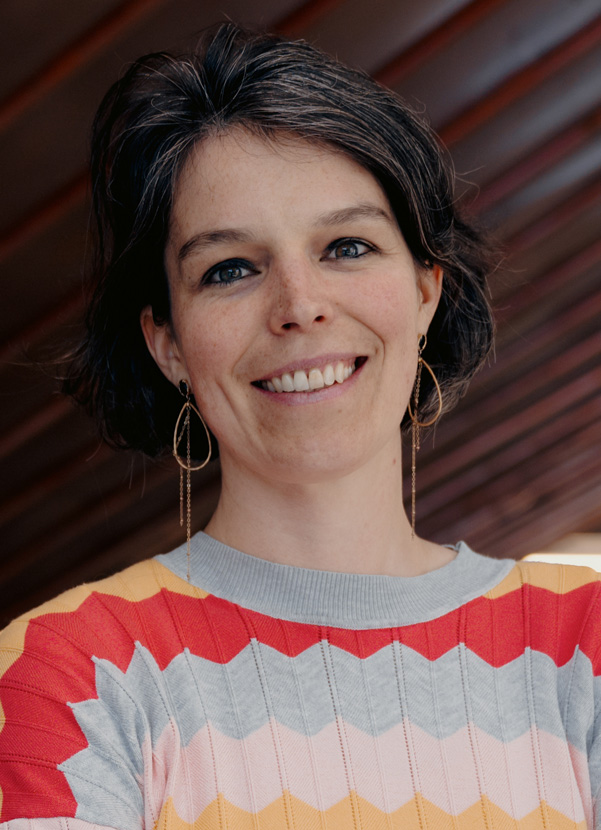
Nele Ameloot
Head of BioMolecules Business Development Center, Ghent University, Belgium

Lorena Bellas Domínguez
In Vivo Efficacy Test Manager, Zurko Research
References and notes
- Howes, M.J.R., Simmonds, M.S.J. and Kite, G.C. (2004) 'Evaluation of the quality of sandalwood essential oils by gas chromatography–mass spectrometry', Journal of Chromatography A, 1028(2), pp. 307-312. doi: 10.1016/j.chroma.2003.11.093.
- RTI Health, Social, and Economics Research (2002) 'The Economic Impacts of Inadequate Infrastructure for Software Testing', Report prepared for the National Institute of Standards and Technology (NIST), Gaithersburg, MD.