Panel discussion on...
Biotech Innovations in Personal & Home Care
About the Author
Sharief Barends

Global BioActives Research Director, IFF Health & Biosciences - IFF
The Rise of Biological Design in Personal and Home Care
Biotechnology is increasingly appearing across many layers of personal care and home care— from ingredient development and manufacturing to material innovation and product performance. Where do you see the most meaningful shifts happening today?
I believe the most meaningful shifts in biotechnology aren’t isolated to a single area, but are instead emerging systematically across the entire value chain. Beyond simply replacing fossil-based processes that have been standard for over a century, biotechnology is now actively enabling circularity, superior functionality, and end-of-life design. As a highly tuneable, sustainable solution, biotechnology has unlocked many innovative building blocks including engineered enzymes, designed enzymatic biopolymers, advanced biotics, and more. These ingredients can then be combined into nearly endless configurations for other solutions in personal and home care.
Beyond sustainability or ingredient replacement, how is biotechnology influencing the way products perform or are experienced by consumers?
Biotechnology is increasingly shaping not only how products are made, but also how they perform and how consumers experience them. Beyond sustainability or ingredient replacement, biotech enables entirely new product architectures, enhanced sensorial experiences, and more targeted performance benefits. Take enzymes in home care for example. Rather than acting as passive functional ingredients, these specialized enzymes are quickly becoming central system architects for a myriad of next-generation products. They can support high cleaning performance at lower temperatures for both dish and laundry, while demanding less water to do so. Furthermore, enzymes can empower brands to move beyond traditional formats such as standard powders, unlocking the potential to design high concentrated and convenient detergent formats to enhance the consumer experience.
In beauty and personal care, biotechnology is expanding the formulation design space by enabling ingredients with new functionalities and performance profiles. Recent advances in enzymatically designed biopolymers allow formulators to enhance conditioning, foam quality, and sensory appeal. At the same time, sustainability can be built into the ingredient design itself, rather than treated as a trade-off.
Many early biotechnology stories focused on creating more sustainable alternatives to existing materials. What do you think is emerging as the next phase of biotechnology in personal care/ home care?
The next phase of biotechnology is about delivering solutions that perform beyond what traditional materials can achieve. Designed enzymatic biopolymers and biotics are especially exciting; when combined with engineered enzymes, they can create new dimensions of product performance and experience for consumers.
However, it’s important to note that in order to have meaningful impact and enable mainstream adoption, we must first ensure that products are scalable, cost effective, and compatible within existing manufacturing processes. This is an area where artificial intelligence (AI) can be an incredibly useful tool to accelerate research and product development times, streamline production, and optimize supply chains.
As biology becomes more integrated into how products and materials are conceived, made, and experienced, do you think the industry is beginning to move from simply using biotechnology toward designing with biology? If so, what new skills, collaborations, or ways of thinking will this require?
At IFF, we had foreseen the value of biological design, and so, were prepared to integrate biology across the entire product lifecycle.
I believe the most meaningful breakthroughs in biological product design happen when diverse expertise converges around a shared challenge. In our company, scientists, engineers, application experts, and commercial teams work together to unlock new possibilities, while advances in biotechnology increasingly inspire innovation across our flavor and fragrance businesses. Collaborations with customers, academic institutions, and other innovators bring fresh perspectives, accelerate discovery, and help transform scientific potential into solutions that improve products, experiences, and everyday life. This combination of multidisciplinary collaboration and external partnership is essential for driving the next generation of innovation.
Because true biological product design demands collaboration between many different experts including biologists, data scientists, and formulators, we’re always looking to work with others and highly value our industry partners. Together, we leverage biology as a design platform that enables innovation and next-generation solutions.
Despite the excitement around biotechnology, what limitations, tensions, or unresolved questions still need to be addressed within personal care/ home care?
In my view, biotechnology is advancing at an accelerated pace, and is quickly becoming more integrated and foundational to modern innovation. However, while this rapid acceleration is exciting, it’s crucial that regulators and policymakers evolve alongside laboratory breakthroughs. This is where global affairs becomes a strategic pillar. As groundbreaking as the science may be, it must fit into existing and emerging policy frameworks.
Proactively collaborating with regulators and associations, monitoring the geopolitical landscape, and anticipating future restrictions are all critical to maintaining compliance and ensuring that safety requirements are met.
For example, this proactive advocacy was instrumental in successfully defending enzymes as both sustainable and safe under the EU detergents regulation revisions, which threatened to limit their use in detergents. Ultimately, regulatory and advocacy experts are extremely important to removing barriers to adoption, educating stakeholders, and ensuring compliance so that biological advancements can actually be put into practice.
Looking ahead, what kinds of products/ materials, do you think biotechnology may enable that feel genuinely new or difficult to achieve through conventional approaches?
I anticipate that biotechnology will move towards intentionally designed and customized solutions. What makes this possible is the rise of technology stacks. By combining software, cloud infrastructure, AI, and lab equipment to research, design, and manufacture biological products, we can now achieve predictive, structure-function design optimized by machine learning. This technology will enable new materials and products that cannot be created through conventional chemistry.
References and notes
References and notes
- Voyant Beauty. Ingredient Insight - Resurrection Plant (Internet). Voyant Beauty Blog. 2022. Available from: https://www.voyantbeauty.com/ingredient-insight-resurrection-plant/
- Poulsen-Silva E, et al. Secondary Metabolites of Lichens: The Untapped Biomedical and Pharmaceutical Potential of Antimicrobial Molecules (Internet). Fungal Biology Reviews. 2025;51:100410. Available from:https://doi.org/10.1016/j.fbr.2024.100410
- Albuquerque M et al. Extremophile-Derived Bioactives in Cosmeceuticals: Bridging Nutraceuticals and Skincare for Holistic Wellness [Internet]. PMC / NCBI. 2025. Available from:https://pmc.ncbi.nlm.nih.gov/articles/PMC12734273/
- Jardim M. Biotech Ingredients in Cosmetics: A Scientific Perspective (Internet). Covalo Blog. 2025. Available from:https://blog.covalo.com/personal-care/biotech-ingredients-in-cosmetics-a-scientific-perspective
- Waldeck S. How Biotech and AI Transform Active Ingredient Innovation (Internet). Personal Care Insights. 2025. Available from:https://www.personalcareinsights.com/news/biotech-beauty-innovation.html
- Heida L. The Future of Biotech in Beauty: Redefining 'Natural' (Internet). Covalo Blog. 2024. Available from:https://blog.covalo.com/personal-care/the-future-of-biotech-in-beauty-redefining-natural
- Koestline K. Biotechnology in Beauty: The Future of Formulation – A Cosmetic Chemist's Perspective (Internet). Cosmetics & Toiletries. 2025. Available from:https://www.cosmeticsandtoiletries.com/cosmetic-ingredients/actives/article/22945748/kkt-innovation-labs-biotechnology-in-beauty-the-future-of-formulation-a-cosmetic-chemists-perspective
- IndexBox. Face Care Market in the United Kingdom — Market Report (Internet). IndexBox. 2026. Available from:https://www.indexbox.io/store/united-kingdom-face-care-market-analysis-forecast-size-trends-and-insights/
- Istituto Marangoni. The Blooming Trend: Skintellectual Wave [Internet]. Istituto Marangoni Maze35. 2025. Available from:https://www.istitutomarangoni.com/en/maze35/game-changers/skintellectual-beauty-trend-2025
Panelists

Annie Tsong
SVP of Corporate & Scientific Affairs, Amyris
Ashlee Cannady
Director of Strategic Marketing, Amyris

Alex Rosay
CEO, Cascade Bio

Rafael Bíscaro
Global Product Marketing Manager, Personal Care, Chemyunion

Tony Abboud
Chief Commercial Officer, Core Biogenesis
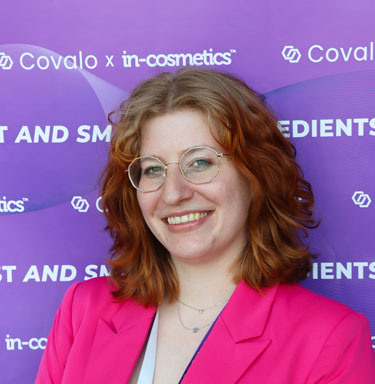
Lisa Heida
Marketing Lead, Covalo
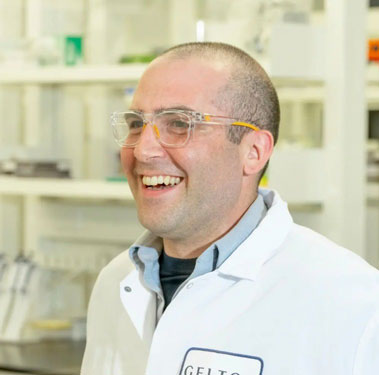
Alex Lorestani
Co-Founder & CEO, Geltor
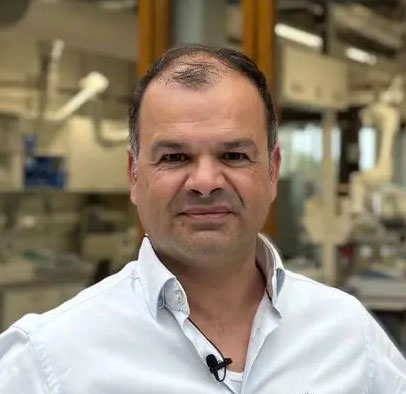
Sharief Barends
Global BioActives Research Director, IFF Health & Biosciences - IFF

Davide Mariani
Senior Expert Home & Personal Care Products, Innovhub SSI

Olga V. Dueva-Koganov
VP and co-founder of Intellebio
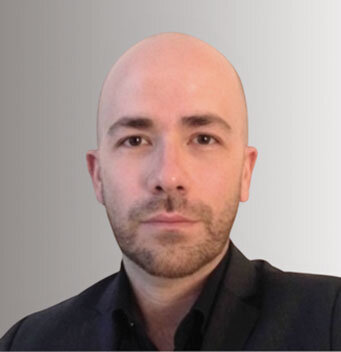
Denis Bendejacq
SVP Research & Innovation, Kensing

Dexter Hsu
Chief Executive Officer,
LCY Biosciences Inc.

Olya Vvedenskaya
Senior communications manager, Lipotype

Marc Desmarais
Product Development Activist, Origin by Ocean
Giorgio Carelli
Product Manager Personal Care, ROELMI HPC
Julie Diamond
Bioprocessing Sales Specialist, RoosterBio, Inc.

Ilaria Campestri
Pharmacist, Chemist Cosmetologist & Nutritionist

Claire Liu
Digital Marketing Project Manager - Cosmetics & Nutrition Active ingredients, Seppic

Martina Herrmann
Director Process Development, Global Innovation Cosmetic Ingredients, Symrise
Jacqueline Scarborough
Director, Consumer Care,Tate & Lyle

Spencer Marsh
Chief Scientific Officer, The Tiny Cargo Company

Òscar Expósito
CEO, CSO and co-founder of
Vytrus Biotech S.A.
Lorena Bellas Domínguez
In Vivo Efficacy Test Manager,
Zurko Research