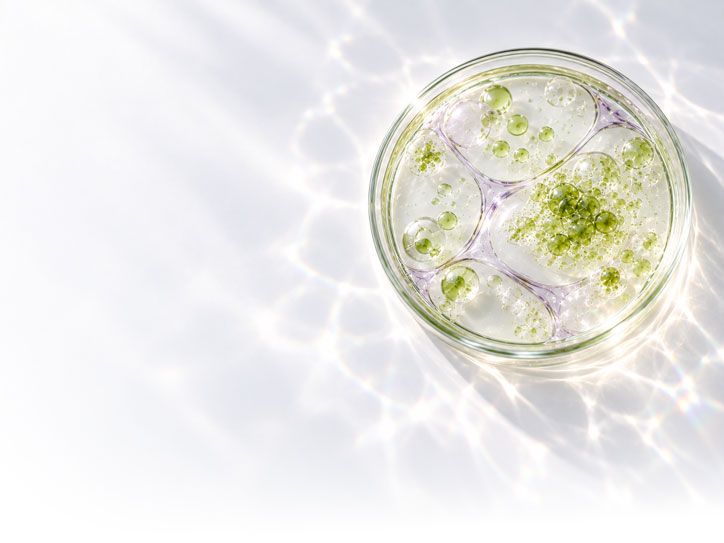
Panel discussion on...
Biotech Innovations in Personal & Home Care
About the Author
Alex Rosay

CEO, Cascade Bio

From Manufacturing to Molecular Design: Biotechnology’s Next Chapter in Home & Personal Care
The use of biotechnology in home and personal care has accelerated over the past two decades, driven by successive waves of scientific innovation, commercial investment, and growing demand for more sustainable manufacturing. What began as an effort to produce familiar ingredients through biological processes is evolving into something much broader: an expanding toolkit for designing, manufacturing, and discovering the next generation of ingredients.
In many ways, the industry is coming full circle. Early soaps and detergents were produced from bio-based oils and fats derived from plants and animals before the rise of petrochemicals transformed manufacturing during the twentieth century. Today, much of the industry still relies on fossil-derived building blocks for surfactants, polymers, silicones, preservatives, and other functional ingredients. Biotechnology is beginning to expand the manufacturing toolbox once again, not simply by replacing petrochemical feedstocks with renewable ones, but by enabling entirely new molecules and production methods that were previously out of reach.
The first wave of modern industrial biotechnology centered on fermentation. Companies demonstrated that microbes could reliably produce high-value ingredients at commercial scale, often by replacing conventional manufacturing routes with more sustainable biological ones. One of the best-known examples was Amyris, whose fermentation-derived squalane transformed an ingredient once associated with shark liver oil into one of biotechnology’s defining commercial success stories.
Today, the industry’s ambitions have grown. Biotechnology no longer means fermentation alone. The toolbox now includes engineered microorganisms, isolated enzymes, immobilized enzymes, cell-free systems, computational protein engineering, and hybrid chemoenzymatic processes. Rather than competing with one another, these technologies are increasingly complementary. Fermentation may efficiently produce a starting material, enzymes can perform highly selective transformations that remain difficult through conventional chemistry, and synthetic chemistry can complete the final product. Manufacturers are beginning to choose the best combination of biological and chemical tools for each application.
This broader toolbox is also expanding what can be manufactured. Commercial biosurfactants such as Evonik’s rhamnolipids illustrate how biotechnology can introduce entirely new classes of surfactants rather than simply replacing existing ones. Cell-free biocatalysis represents another exciting frontier. By assembling enzymatic pathways outside of living cells, manufacturers gain greater flexibility to explore novel reaction pathways, rapidly prototype new molecules, and develop specialty ingredients that may be difficult to access through either fermentation or traditional chemistry alone. At Cascade Bio, we are exploring how reusable immobilized enzymes and cell-free systems can help unlock next-generation surfactants and other specialty ingredients while integrating into existing chemical manufacturing infrastructure.
Perhaps the greatest opportunity, however, is not simply developing better manufacturing technologies, but it is deciding what molecules to manufacture in the first place.
During my time at Zymergen, we developed software and data science platforms capable of generating extensive libraries of molecules that biology could theoretically produce. Machine learning models were then used to predict properties ranging from UV absorbance and toxicity to solubility and other physicochemical characteristics, allowing chemists to prioritize the most promising candidates for experimental validation. Today’s advances in artificial intelligence, protein design, and computational chemistry are making these capabilities even more powerful. Rather than searching for a biological route to an existing ingredient, researchers can increasingly begin with a desired product performance and work backwards to identify entirely new molecular solutions.
This represents a fundamental shift in how innovation happens. Biology is no longer just expanding the manufacturing toolbox, it is expanding the molecular design space available to formulators. Novel biosurfactants, precision lipids, functional esters, designer carbohydrates, and multifunctional ingredients are beginning to move from academic research toward commercial reality. As our ability to design, predict, and manufacture biological molecules continues to improve, entirely new formulation possibilities will emerge.
Of course, important challenges remain. The first is choosing the right molecules to pursue. Biology can theoretically produce an enormous number of compounds, but commercial success depends on identifying those that solve meaningful customer problems. The second is economics. Biological manufacturing must compete not only on sustainability, but also on cost, reliability, scalability, and supply chain resilience. The technologies that succeed will be those that deliver compelling performance while fitting within existing manufacturing and formulation workflows.
The future of home and personal care will not be defined by biology replacing chemistry. It will be defined by biology, chemistry, engineering, and computation working together as an increasingly powerful innovation platform. As these disciplines continue to converge, biotechnology will not just help us manufacture ingredients more sustainably, it will fundamentally expand our ability to imagine and create products that were previously impossible.
References and notes
References and notes
Panelists

Annie Tsong
SVP of Corporate & Scientific Affairs, Amyris

Ashlee Cannady
Director of Strategic Marketing, Amyris

Alex Rosay
CEO, Cascade Bio

Rafael Bíscaro
Global Product Marketing Manager, Personal Care, Chemyunion

Tony Abboud
Chief Commercial Officer, Core Biogenesis
Lisa Heida
Marketing Lead, Covalo
Alex Lorestani
Co-Founder & CEO, Geltor
Sharief Barends
Global BioActives Research Director, IFF Health & Biosciences - IFF

Davide Mariani
Senior Expert Home & Personal Care Products, Innovhub SSI

Olga V. Dueva-Koganov
VP and co-founder of Intellebio

Denis Bendejacq
SVP Research & Innovation, Kensing

Dexter Hsu
Chief Executive Officer,
LCY Biosciences Inc.

Olya Vvedenskaya
Senior communications manager, Lipotype

Marc Desmarais
Product Development Activist, Origin by Ocean
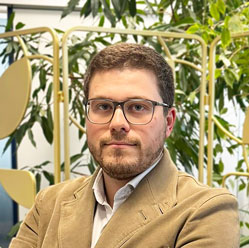
Giorgio Carelli
Product Manager Personal Care, ROELMI HPC

Julie Diamond
Bioprocessing Sales Specialist, RoosterBio, Inc.

Ilaria Campestri
Pharmacist, Chemist Cosmetologist & Nutritionist

Claire Liu
Digital Marketing Project Manager - Cosmetics & Nutrition Active ingredients, Seppic

Martina Herrmann
Director Process Development, Global Innovation Cosmetic Ingredients, Symrise
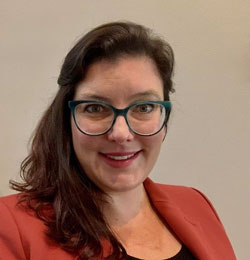
Jacqueline Scarborough
Director, Consumer Care,Tate & Lyle

Spencer Marsh
Chief Scientific Officer, The Tiny Cargo Company
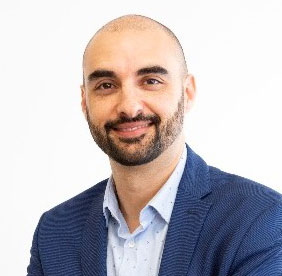
Òscar Expósito
CEO, CSO and co-founder of
Vytrus Biotech S.A.
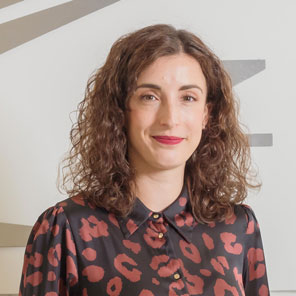
Lorena Bellas Domínguez
In Vivo Efficacy Test Manager,
Zurko Research