Home Care: Laundry & Cleaning
Skin care
KEYWORDS
Sustainable Laundry;
Sustainable Surfactants; Cold-Water Washing; Home Care Ingredients;
Laundry Sheets

Peer Reviewed
Sustainability Trends in Household and Professional Laundry
Laura Mahecha1, Carlos Galan2
1. Director – Professional Cleaning, Kline & Company, Parsippany, New Jersey, USA
2. Project Lead – Chemicals & Materials, Kline & Company, Prague, Czech Republic
ABSTRACT: In both consumer and professional settings, users of laundry products are seeking more eco-friendly products that contain less-harsh ingredients, fewer dyes and fragrances, and more energy efficiency as part of their repertoire. From more cold-water products to waterless detergents, we are seeing both ingredient/formulation trends and consumer preferences evolve towards more sustainable and cleaner products. This article examines these trends from the ingredient and formulation perspective to end user preferences and perceptions of sustainability in laundry.
Introduction
Laundry products are shifting towards more eco-friendly and sustainable options in both consumer/household uses and professional operations. Areas with interest for users include cold-water washing, concentrated products, waterless formats, packaging reduction, enzyme-based performance, biodegradable ingredients, reduced dyes, and fragrances; driving innovation in both market segments.
In the household laundry space, consumers are seeking products that are convenient, effective, gentle, and easy to understand. In professional laundry, end users seek solutions that reduce water, energy, logistics, and operating costs without compromising cleaning performance.
Eco-friendly and waterless detergents are gaining traction among commercial laundry users; detergent sheets are moving from niche products to broader innovation platforms, and enzymes are becoming central to low-temperature performance. At the same time, cost, efficacy, and scalability remain critical barriers. The article below explores these trends based on research from Kline & Company.
The companies that lead in laundry sustainability will not be those that focus only on “green” claims. They will be those that understand how sustainability is reshaping the full laundry system, from ingredients and formulations to equipment, operations, packaging, and end-user expectations.
Laundry sustainability is no longer only about greener ingredients
Laundry care is the largest household application for cleaning ingredients in the U.S., making it an important indicator of how sustainability, formulation strategies, and consumer preferences are reshaping ingredient demand across the broader cleaning market (Figure 1) (2).
Sustainability in laundry care is moving from a marketing claim to a formulation and operating requirement. Across both household and professional laundry, users are increasingly looking for products that reduce environmental impact while still delivering strong cleaning performance, fabric care, convenience, and cost efficiency.
This shift is changing how laundry products are developed. The focus is no longer limited to replacing one ingredient with another. Instead, sustainability is influencing the entire laundry system, from surfactants, enzymes, sequestrants, and fragrances to product concentration, packaging formats, washing temperatures, water use, and operational efficiency. In both consumer and professional settings, users are seeking laundry products with less-harsh ingredients, lower energy requirements, and more sustainable formats such as concentrated liquids, waterless detergents, and detergent sheets.
For decision-makers, the important question is not whether sustainability matters. It is where sustainability is creating real changes in formulation strategy, product design, ingredient demand, and end-user behavior.
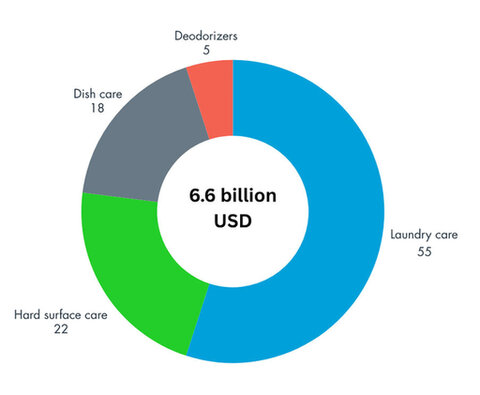
Figure 1. Market value of ingredients used in household applications in the U.S., 2026.
The shift is from cleaning alone to cleaning, care, and efficiency
Laundry care has always required strong cleaning performance, but the definition of performance is expanding. In recent years, the focus on hygiene and deep-cleaning efficacy has gradually broadened. Users continue to prioritize cleanliness, but they are also paying closer attention to fabric care, long-lasting freshness, garment longevity, skin sensitivity, and environmental impact.
This shift is particularly visible in household laundry. Liquid detergents, unit-dose detergents, fabric softeners, scent boosters, and laundry boosters have supported stronger growth than more traditional formats. Powder detergents, by contrast, continue to decline as consumers favor liquid formats that offer convenience, better solubility, compatibility with modern washing machines, and greater formulation flexibility. In the U.S., laundry care has outperformed the broader household cleaning segment, supported by liquid detergents, unit doses, fabric softeners, and laundry boosters.
The same direction is visible in professional laundry, although the drivers are more operational. Commercial and institutional laundry operators are under pressure to reduce costs, water use, energy consumption, labor complexity, and environmental footprint. Sustainability therefore becomes practical rather than purely image-driven. Products that support cold-water washing, reduce transport weight, simplify dosing, minimize packaging, or improve water and energy efficiency create measurable value.
The result is a more complex innovation environment. Laundry products must clean effectively, protect fabrics, support sustainability goals, improve user experience, and remain cost competitive. Ingredient suppliers and formulators need to address all these expectations at the same time.
Cold-water washing is reshaping the role of enzymes
One of the clearest sustainability shifts in laundry is the growing importance of cold-water washing (2). Lower-temperature washing helps reduce energy consumption because heating water represents a significant share of the energy used in a laundry cycle. However, reducing water temperature also changes the performance requirements of the detergent system.
As a result, enzymes are becoming increasingly important in both household and professional laundry products. By breaking down stains such as proteins, fats, and starches, enzymes enable effective cleaning in cold-water conditions while reducing reliance on harsher chemistries. Their ability to support energy savings, concentrated formulations, and high-performance stain removal has made them a key ingredient in modern sustainable laundry detergents, particularly in liquid, unit-dose, and premium formats.
Concentration is becoming a sustainability strategy
Concentrated laundry products are another major part of the sustainability story. At a first glance, concentration may appear to be mainly a packaging or logistics trend. In practice, it has deeper formulation implications.
Concentrated laundry products have become a major focus of sustainability efforts across both household and professional laundry. By reducing the amount of water transported in finished products, concentrated formulations help lower packaging requirements, transportation emissions, storage needs, and overall material consumption. In the U.S., where liquid detergents dominate (Figure 2), concentration has become one of the most visible sustainability initiatives, often accompanied by smaller packaging formats, recycled materials, and refill concepts (2).
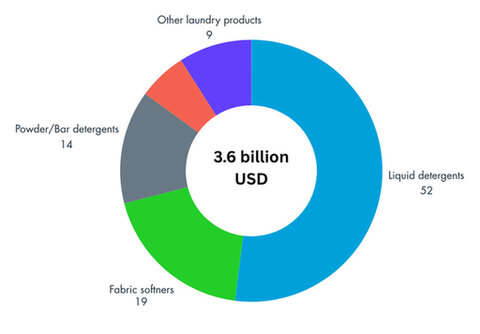
Figure 2. Value of ingredients used in laundry care applications in the U.S., 2026.
For professional laundry operators, concentration can also reduce logistics costs and improve operational efficiency. Less product volume means less storage space, fewer deliveries, and potentially simpler handling. In commercial and institutional settings, these benefits are especially relevant because laundry operations typically manage high volumes and recurring chemical purchasing.
However, concentration also raises formulation complexity. Ingredients must remain stable at higher active levels. Surfactants, enzymes, sequestrants, polymers, fragrances, and rheology modifiers must be balanced carefully to maintain cleaning performance, viscosity, dissolution, dosing accuracy, and compatibility. Concentration, therefore, increases the value of high-performance ingredients that can deliver more at lower use levels.
Kline & Company’s research among commercial and institutional laundry operators shows clear interest in these solutions. In the professional laundry segment, 40% of end users already use eco-friendly or waterless detergents, while 35% use them occasionally (Figure 3), suggesting that green laundry solutions are moving beyond niche adoption (1).
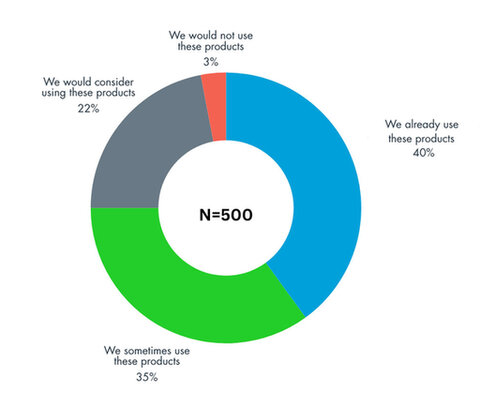
Figure 3. Likelihood of buying eco-friendly detergents among laundry end users.
Among those considering adoption, 37% plan to integrate eco-friendly solutions within the next two years, while 36% aim to do so as early as next year (Figure 4) (1). These figures point to a clear shift toward environmentally responsible laundry operations.
This is why sustainability in laundry cannot be understood only through ingredient origin. A detergent may become more sustainable through lower packaging, lower transport emissions, or lower water content, even when the core ingredient of chemistry remains familiar. For suppliers and formulators, the opportunity lies in helping brands achieve more efficient formulations rather than simply adding greener claims.
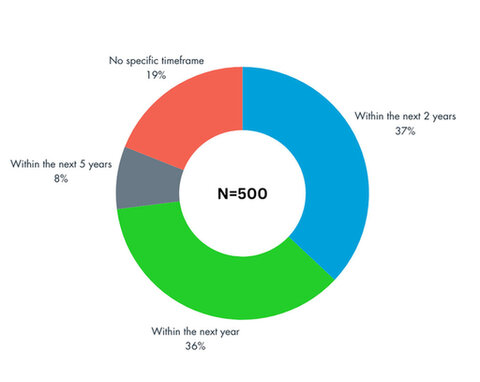
Figure 4. Timeframe required for adding green cleaning products among laundry end users.
Waterless detergents and sheets are pushing product design further
Waterless laundry formats are taking the concentration trend one step further. Detergent sheets, power sheets, and other dry or low-water formats are gaining attention because they combine multiple sustainability benefits in one product concept: less water, less plastic, lower transport weight, smaller storage space, and simpler dosing.
Power sheets are also emerging as a promising innovation in professional laundry. According to the Laundry Chemicals U.S. Market Analysis and Opportunities, 30.2% of users currently use them, while 35.8% are open to adopting them in future operations (1).
This is important because it shows that waterless formats are not only a household trend. They are gaining attention among institutional users as well, especially where sustainability, storage, dosing, and logistics benefits are relevant.
Household laundry innovation is moving in the same direction. Procter & Gamble’s Tide Evo detergent sheets, described as fiber-detergent tiles, are positioned around a 100% concentrated, waterless detergent format, six-layer fiber technology, plastic-free recyclable paper packaging, and cold-water washing compatibility. Seventh Generation’s Laundry Detergent Sheets also reflect the same direction, combining a sheet format with a Free & Clear positioning, bio-enzyme-based stain removal, EPA Safer Choice certification, and a formula free from dyes and fragrances (1).
These examples show how sustainability, convenience, and performance are converging. Detergent sheets are not only about removing water from the formula. They are also about changing how consumers perceive laundry: easier to dose, easier to store, lighter to transport, and easier to connect with sustainability claims.
The key limitation is performance expectations. Users may be willing to try greener or waterless formats, but long-term adoption depends on cleaning efficacy. In professional environments, this is especially critical. Green products must work reliably under real operating conditions, including heavy soil loads, hard water, mixed textiles, and demanding washing cycles.
Professional laundry is adopting sustainability, but effectiveness remains the deciding factor
Commercial and institutional laundry end users are increasingly open to greener products, but their priorities differ from household consumers. For professional users, sustainability must also support operational performance. Products need to clean consistently, protect textiles, meet hygiene expectations, reduce rewash rates, and fit into existing equipment and workflows.
Kline & Company’s research shows high demand among commercial and institutional laundry operators for eco-friendly, phosphate-free, and biodegradable detergents. It also points to increased adoption of water recycling systems and energy-efficient equipment to reduce costs and emissions. This suggests that sustainability in professional laundry extends beyond the detergent itself. It includes the full operating system: chemistry, water, energy, equipment, process efficiency, and waste reduction.
Cost remains a barrier for some users, but product performance has improved significantly. This is important because it changes the adoption equation. Green laundry products are increasingly viable, but effectiveness remains the deciding factor for long-term use. Many users express willingness to pay more for sustainable solutions, but only if the products meet performance expectations.
This creates a clear message for suppliers: sustainability claims alone are not enough. In professional laundry, the strongest value proposition combines environmental benefits with operational efficiency. Products that reduce energy use, lower water consumption, simplify dosing, reduce linen damage, extend textile life, and avoid performance trade-offs will have a stronger commercial case.
Ingredient choices are being shaped by sustainability and functionality together
Laundry sustainability is often associated with bio-based or biodegradable ingredients, but ingredient reformulation is more nuanced. The most important changes occur where sustainability and functionality reinforce each other.
Surfactants remain in the backbone of laundry detergents (2). However, the category has been under pressure from raw material cost volatility, especially for petroleum-derived ingredients. In 2026, petroleum-based surfactants such as ABS faced significant price pressures linked to geopolitical tensions and feedstock volatility.
At the same time, there is growing interest in surfactants derived from renewable feedstocks, such as alkyl polyglucosides, bio-based alcohol ethoxylates, and fermented surfactants (2). These ingredients can support biodegradability, renewable content, and sustainability positioning. However, they are typically used selectively because cost, performance, and availability still limit broad substitution. In many formulations, bio-based or milder surfactants act as co-surfactants rather than full replacements for core cleaning agents.
The move toward “less harsh” products is changing the meaning of performance, as one of the most important trends in laundry care is the shift away from performance defined only as cleaning power. Users increasingly expect laundry products to deliver effective cleaning while being gentler on fabrics, skin, and the environment.
Household and professional laundry are converging, but not becoming identical
Household and professional laundry are influenced by many of the same sustainability trends, but they adopt them for varied reasons.
In household laundry, sustainability is closely linked to consumer perception. Claims such as biodegradability, plant-based, dye-free, plastic-free, concentrated, waterless, and cold-water compatible are visible and easy to communicate. Consumers also value convenience, especially in unit-dose detergents, detergent sheets, and other pre-measured formats.
In professional laundry, sustainability must be operationally credible. Laundry operators evaluate products based on cleaning reliability, cost-in-use, compatibility with equipment, water and energy savings, textile life, packaging efficiency, and compliance with procurement or institutional sustainability requirements. A greener product that increases rewash rates or complicates operations will struggle, even if the environmental positioning is strong.
Despite these differences, both markets are moving toward more efficient and lower-impact laundry systems. The convergence is visible in cold-water detergents, concentrated formulas, enzyme-based products, waterless formats, and reduced packaging.
For suppliers, this means innovation can often move across channels, but the commercial message must change. A household detergent sheet may be marketed around convenience, reduced plastic, and sustainability. A professional laundry version may need to emphasize storage efficiency, dosing consistency, cost-in-use, and operational impact.
Conclusion
Sustainability in laundry care is becoming broader, more practical, and increasingly formulation-driven. It is no longer limited to greener ingredients or environmental claims. It now includes cold-water washing, concentrated products, waterless formats, packaging reduction, enzyme-based performance, biodegradable ingredients, reduced dyes and fragrances, and more efficient professional laundry operations.
The strongest opportunities will come from solutions that connect sustainability with measurable value. In household laundry, that means products that are convenient, effective, gentle, and easy to understand. In professional laundry, it means products that reduce water, energy, logistics, and operating costs without compromising cleaning performance.
The transition is already underway. Eco-friendly and waterless detergents are gaining traction among commercial laundry users; detergent sheets are moving from niche products to broader innovation platforms, and enzymes are becoming central to low-temperature performance. At the same time, cost, efficacy, and scalability remain critical barriers.
The companies that lead in laundry sustainability will not be those that focus only on “green” claims. They will be those that understand how sustainability is reshaping the full laundry system, from ingredients and formulations to equipment, operations, packaging, and end-user expectations.
About the Authors
Laura Mahecha is Director, Professional Cleaning Products, at Kline & Company, an international advisory and market research firm based in Parsippany, NJ. She has authored and managed multiple studies, including market research, analysis, survey, and sample design, and writing for the Professional Cleaning industry. Laura’s expertise is utilized on various market studies and topics related to the professional cleaning market, including large-scale studies on janitorial cleaning products, foodservice cleaning products, laundry chemicals, I&I cleaning wipes, away-from-home hand care, and floor care pads and tools. Her work also includes market assessments, brand perception, new product concept tests, end-user analyses, competitive analyses, innovation analyses, and forecasting. Laura has contributed numerous articles and speeches for international and U.S. trade conferences and publications and presentations at ISSA and INDA World of Wipes.

Laura Mahecha
Director – Professional Cleaning, Kline & Company, Parsippany, New Jersey, USA
Carlos Galan is a Project Lead in Kline & Company's Chemicals practice, specializing in Personal Care and HI&I product ingredients. With a Chemical Engineering degree and a Master's in Sustainable Development, Carlos has delivered multiple global market analysis reports, focusing on sustainable ingredient trends. Over his five years of experience, he has led key projects that influenced industry strategies. Known for his collaborative leadership, Carlos guides cross-functional teams to drive data-driven insights, enhancing both product innovation and sustainability efforts in the sector.
Carlos Galan
Project Lead – Chemicals & Materials, Kline & Company, Prague, Czech Republic


References and notes
- Kline & Company. Laundry Chemicals U.S. Market Analysis and Opportunities. 2025. https://producthub.klinegroup.com/chemicals-&-materials/laundry-chemical-products-u-s-market-analysis-and-opportunities?utm_source=pr&utm_medium=pr&utm_content=HPC+Today+Issue+5+-+Home+Care&utm_campaign=C%26amp;M+-+CC+-+Q22026+-+From+Active+to+Impact+-+MT+-+PR+%232
- Kline & Company. Ingredients for Household, Industrial and Institutional Cleaning Applications. 2026. www2.klinegroup.com/chemicals/ingredients-for-hii-cleaning-applications