Panel discussion on...
Biotech Innovations in Personal & Home Care
About the Author
Alex Lorestani

Co-Founder & CEO, Geltor
From collagen to peptides: how designing with biology is redefining ingredient performance, consumer trust, and what’s commercially possible
Where do you see the most meaningful shifts happening today?
The most meaningful shift is the move from sourcing ingredients to designing them. Historically, the industry worked with what could be extracted from nature, and that naturally limited what was possible. Today, biotechnology allows us to start with the function we want to achieve and design the molecule to deliver it.
Collagen is a great example. Most people think of it as a single ingredient, but there are actually 28 collagen family members encompassing roughly 130 proteins in the human body. The industry has traditionally focused on the collagen types that were most abundant and easiest to source, not necessarily those best suited for a particular application. Biodesign removes that constraint. The question is no longer what can be sourced, but what will deliver the desired function.
How is biotechnology influencing the way products perform or are experienced by consumers?
Consumers are far more sophisticated than many brands give them credit for. They want efficacy, but they also want to understand how a product works and what’s driving the results. Biotechnology enables ingredients with defined mechanisms of action, making performance easier to understand, validate, and trust.
More importantly, it changes how ingredients interact with the body. That creates a fundamentally different performance story: not just adding ingredients to a formula but designing molecules that work with the body’s natural biology.
What is emerging as the next phase of biotechnology in personal care/home care?
The first wave of biotechnology focused largely on sustainability and replacing conventional materials. The next phase is about precision, and AI is dramatically accelerating that shift. We can now model biological targets, evaluate millions of potential sequences, and identify promising candidates in a fraction of the time previously required. That fundamentally changes the pace and scope of biodesign.
We’re moving beyond ingredients that simply replicate what exists in nature toward ingredients that are intentionally designed to achieve a specific outcome. Some of the most impactful molecules of the future may not exist in nature at all.
Is the industry beginning to move from using biotechnology toward designing with biology? What will this require?
Yes, and it’s an important distinction. Using biotechnology means producing an ingredient differently. Designing with biology means starting with the outcome you want and engineering the molecule to achieve it.
That requires a different approach to innovation. Brands, suppliers, and technology partners need to work much more closely together, bringing together biological expertise, creative thinking, and application knowledge earlier in the development process.
The companies that succeed will be the ones that can combine scientific capability with the agility to turn ideas into commercial reality.
What limitations, tensions, or unresolved questions still need to be addressed?
Education remains one of the biggest barriers to adoption. Biotechnology is advancing rapidly, but many consumers—and even some industry stakeholders—still rely on outdated assumptions about what biotech ingredients are and how they’re produced.
Regulatory fragmentation is another challenge. Definitions, standards, and certification frameworks vary across regions and have not always kept pace with advances in biotechnology, creating complexity for global brands and slowing adoption of otherwise proven innovations.
Finally, scale remains a critical differentiator. Many promising biotech innovations perform well in the lab but never achieve commercial viability. The future of biotechnology won’t be defined by what can be invented. It will be defined by what can be manufactured consistently, economically, and at meaningful scale.
What kinds of products or materials might biotechnology enable that feel genuinely new?
Peptides represent one of the most exciting near-term opportunities. Biotechnology enables the production of increasingly complex peptide structures that would be difficult or costly to create through conventional methods, opening new possibilities for efficacy and product performance.
As AI and biodesign continue to advance, we’ll be able to create entirely new molecules designed to interact with targeted biological pathways and deliver highly defined outcomes.
Biotechnology is expanding what’s possible. It’s not just improving existing ingredients but making entirely new levels of performance achievable. In the case of peptides, fermentation makes complex peptide structures commercially viable that would be prohibitively expensive to produce through conventional synthesis. That’s not an incremental improvement. It’s a different class of ingredient.
References and notes
References and notes
- Voyant Beauty. Ingredient Insight - Resurrection Plant (Internet). Voyant Beauty Blog. 2022. Available from: https://www.voyantbeauty.com/ingredient-insight-resurrection-plant/
- Poulsen-Silva E, et al. Secondary Metabolites of Lichens: The Untapped Biomedical and Pharmaceutical Potential of Antimicrobial Molecules (Internet). Fungal Biology Reviews. 2025;51:100410. Available from:https://doi.org/10.1016/j.fbr.2024.100410
- Albuquerque M et al. Extremophile-Derived Bioactives in Cosmeceuticals: Bridging Nutraceuticals and Skincare for Holistic Wellness [Internet]. PMC / NCBI. 2025. Available from:https://pmc.ncbi.nlm.nih.gov/articles/PMC12734273/
- Jardim M. Biotech Ingredients in Cosmetics: A Scientific Perspective (Internet). Covalo Blog. 2025. Available from:https://blog.covalo.com/personal-care/biotech-ingredients-in-cosmetics-a-scientific-perspective
- Waldeck S. How Biotech and AI Transform Active Ingredient Innovation (Internet). Personal Care Insights. 2025. Available from:https://www.personalcareinsights.com/news/biotech-beauty-innovation.html
- Heida L. The Future of Biotech in Beauty: Redefining 'Natural' (Internet). Covalo Blog. 2024. Available from:https://blog.covalo.com/personal-care/the-future-of-biotech-in-beauty-redefining-natural
- Koestline K. Biotechnology in Beauty: The Future of Formulation – A Cosmetic Chemist's Perspective (Internet). Cosmetics & Toiletries. 2025. Available from:https://www.cosmeticsandtoiletries.com/cosmetic-ingredients/actives/article/22945748/kkt-innovation-labs-biotechnology-in-beauty-the-future-of-formulation-a-cosmetic-chemists-perspective
- IndexBox. Face Care Market in the United Kingdom — Market Report (Internet). IndexBox. 2026. Available from:https://www.indexbox.io/store/united-kingdom-face-care-market-analysis-forecast-size-trends-and-insights/
- Istituto Marangoni. The Blooming Trend: Skintellectual Wave [Internet]. Istituto Marangoni Maze35. 2025. Available from:https://www.istitutomarangoni.com/en/maze35/game-changers/skintellectual-beauty-trend-2025
Panelists

Annie Tsong
SVP of Corporate & Scientific Affairs, Amyris
Ashlee Cannady
Director of Strategic Marketing, Amyris


Alex Rosay
CEO, Cascade Bio

Rafael Bíscaro
Global Product Marketing Manager, Personal Care, Chemyunion

Tony Abboud
Chief Commercial Officer, Core Biogenesis
Lisa Heida
Marketing Lead, Covalo
Alex Lorestani
Co-Founder & CEO, Geltor
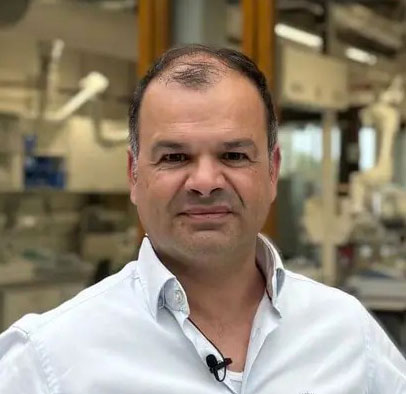
Sharief Barends
Global BioActives Research Director, IFF Health & Biosciences - IFF

Davide Mariani
Senior Expert Home & Personal Care Products, Innovhub SSI

Olga V. Dueva-Koganov
VP and co-founder of Intellebio

Denis Bendejacq
SVP Research & Innovation, Kensing

Dexter Hsu
Chief Executive Officer,
LCY Biosciences Inc.

Olya Vvedenskaya
Senior communications manager, Lipotype

Marc Desmarais
Product Development Activist, Origin by Ocean
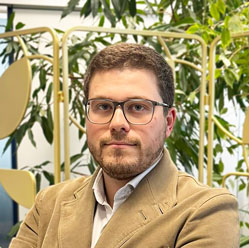
Giorgio Carelli
Product Manager Personal Care, ROELMI HPC

Julie Diamond
Bioprocessing Sales Specialist, RoosterBio, Inc.

Ilaria Campestri
Pharmacist, Chemist Cosmetologist & Nutritionist

Claire Liu
Digital Marketing Project Manager - Cosmetics & Nutrition Active ingredients, Seppic

Martina Herrmann
Director Process Development, Global Innovation Cosmetic Ingredients, Symrise

Jacqueline Scarborough
Director, Consumer Care,Tate & Lyle

Spencer Marsh
Chief Scientific Officer, The Tiny Cargo Company

Òscar Expósito
CEO, CSO and co-founder of
Vytrus Biotech S.A.

Lorena Bellas Domínguez
In Vivo Efficacy Test Manager,
Zurko Research