EVENTS
REPORT
9th Intercontinental Personal Care Excellence Conference
Beyond the Future: Science Leading Change
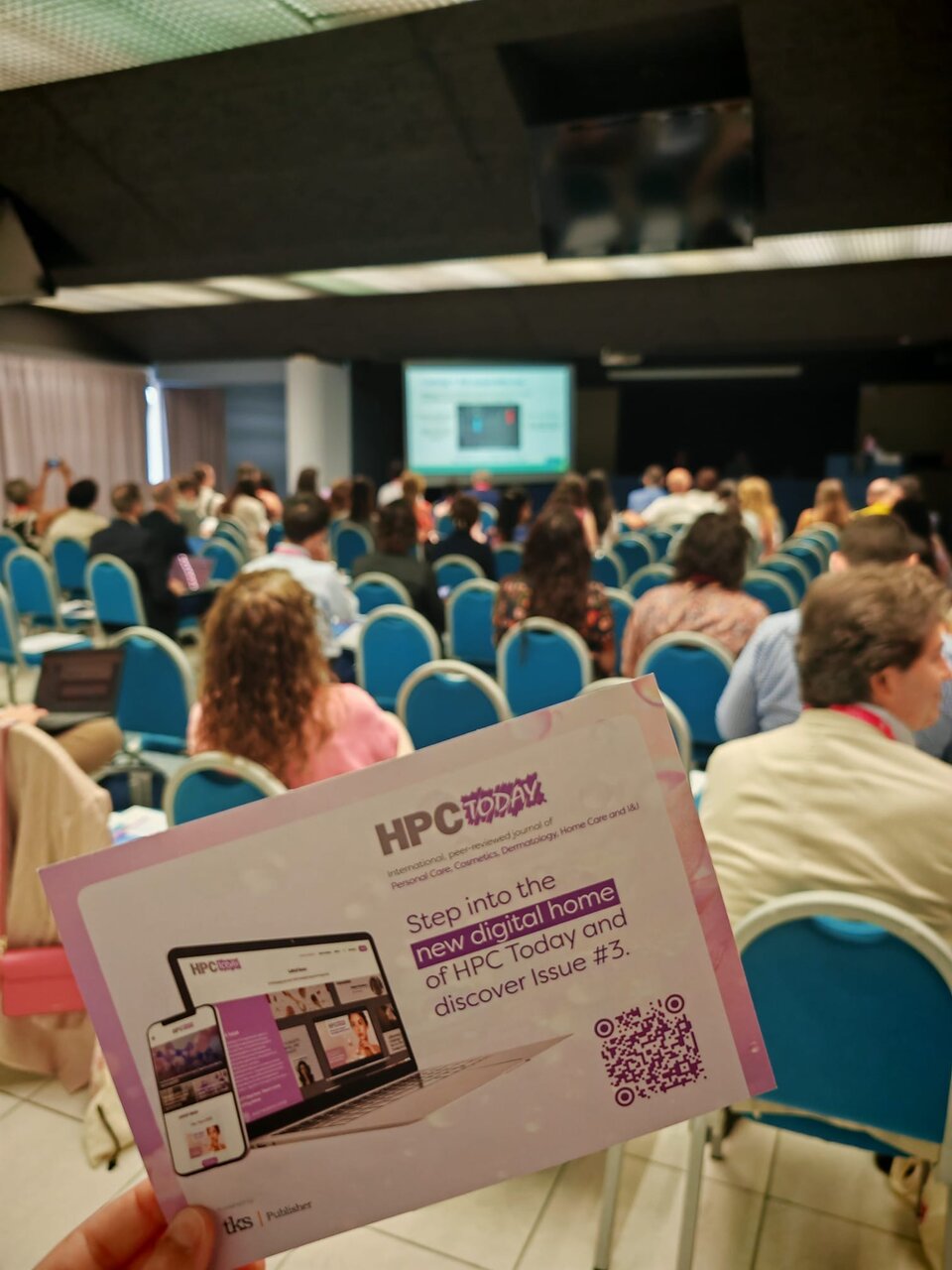
The 9th edition of the IPCE Conference, organised by SICC (Italian Society of Cosmetic Chemists) took place on 30 June - 1 July at the Grand Hotel Continental, located on the Pisa seaside.
The main focus of this year was to discuss current advances and future perspectives in cosmetic science and technology and the event acted, as usual, as a bridge between the last IFSCC Congress, held in Cannes, and the next one, which will take place in Perth. The scientific programme featured internationally renowned speakers and some of the best posters presented at the latest IFSCC Congress.
This year's programme was further enriched by the presence of Abel, the empathic robot, introduced by one of its creators, Lorenzo Cominelli, a researcher at the University of Pisa. Thanks to the technology behind its design, Abel interacted with the audience, demonstrating how empathic technologies are already reshaping research, innovation, and communication across the cosmetics industry.
Talking about innovation, the keynote lecture delivered by Dr. McPherson offered a journey through Australia's vibrant cosmetic science ecosystem. The presentation illustrated how the country's unique biodiversity, world-class research institutions and biotechnology companies are driving the evolution of A-Beauty—a science-led, nature-inspired approach built on sustainability, transparency and high-performance ingredients. Drawing on examples from Universities, research centres and innovative companies across Australia, McPherson highlighted advances in green chemistry, marine biotechnology, ingredient upcycling, precision fermentation and native botanical actives, demonstrating how collaboration between academia and industry is shaping the future of cosmetic science.
Several scientific presentations highlighted the continuous evolution of cosmetic technology towards more inclusive, efficient and sustainable solutions and a growing focus on skin health and consumer wellbeing. Among the many topics explored during the conference, these were the ones that particularly caught our attention.
Dr. Gunji from KOSÉ Corporation presented an innovative concealing technology designed to enhance the beauty of every skin tone while maintaining a natural-looking finish, reflecting the industry's growing commitment to inclusivity and the development of more personalized colour cosmetics.
Professor Perugini from the University of Pavia presented a new tool for evaluating overall skin barrier wellbeing, emphasizing that barrier function is influenced by multiple factors, including ageing, genetics, hormonal changes, UV exposure and environmental conditions. The study also explored the integration of digital tools and AI-based analysis to better assess the impact of environmental exposure on skin health.
Ingredient innovation and sustainability represented another major focus. In particular, Dr. Katayama, from Iwase Cosfa, discussed the development of alternatives to talc in makeup applications, presenting metal-soap powders as promising substitutes capable of providing functional benefits while responding to evolving market expectations.
Another example of sustainable innovation was presented by Dr. J. Rodrigues Jr., Federal University of Rio de Janeiro, who introduced a novel conditioning agent obtained from Amazonian Pracaxi Oil. This work demonstrated the potential of transforming bio-based resources into effective cosmetic ingredients, combining natural origin with advanced formulation strategies.
The second part of the Conference was introduced by Andrea Maltagliati, General Secretary at EFfCI, who addressed key industry priorities, including evolving regulatory frameworks, ingredient safety, transparency and the need for stronger collaboration across the cosmetic value chain.
Advanced skin technologies were highlighted in the keynote speech held by Dr. Ezure, from Shiseido, who presented the concept of moving from 3D to 4D skin analysis, introducing a new perspective on facial ageing and skin sagging. The research showed that sagging is not simply caused by gravity, but is strongly linked to changes in skin tension and structural support, opening new perspectives for the development of targeted skincare solutions.
Sun protection emerged as another key area of innovation, where efficacy, safety, sensory properties and sustainability must be addressed simultaneously. Dr. Nakatani, from Pola Chemical Industries, presented an innovative sunscreen technology based on fiber emulsification, designed to overcome limitations associated with conventional oil-in-water systems. By trapping oils within selected fibres, including sustainable bamboo-derived materials, the technology aims to improve product performance.
New-generation ingredients and sustainability were also key topics presented by Professor Manfredini, from University of Ferrara, who introduced his research on upcycled oligopeptides as sustainable alternatives to quaternary ammonium compounds, demonstrating the possibility of developing effective and more environmentally responsible solutions for hair care formulations.
The scientific programme was complemented by a rich cultural programme, designed to foster interaction and networking among speakers and participants in a more informal and inspiring environment. These moments provided valuable opportunities to create new connections and exchange ideas beyond the scientific sessions, within prestigious artistic settings such as the Bistrot dell’Opera, located in the heart of Pisa. The event ended with a closing speech by the organisers, who were already looking ahead to the upcoming IFSCC conferences and to the next edition of IPCE, which is expected to take place in another UNESCO cultural heritage setting.
Giulia Donatiello
Editorial Assistant, TKS Publisher
References and notes
References and notes
- Lai K, Herringshaw E. The use of GLP-1 agonists in the management of cutaneous Disease. J Clin Aesthet Dermatol. 2024;17(9):34-37.
- Pegel DM, GouldSJ. Exosomes. Annu Rev Biochem. 2019;Jun 20;88:487-514.
- Matsui MS, Pelie E, Dong K. Biological rhythms in the skin. Int J Mol Sci. 2016 May 24;17(6):801.
- Kaufman BP, Alexis AF. A randomized, controlled. Split-face, double-blind study comparing topical malassezin to hydroquinone 4% for melasma. J Drugs Dermatol. 2020;Sep 1 19(9):822-827.
- Mawazi SM, Tong JA, Riyanto TW. Application of niosomes in cosmetics: a systematic review. Cosmetics. 2022;9(6):127.
- Dumbuya H, Podimatis K, Grimes P. Evaluation of tinted sunscreens protection against blue light using transmittance spectroscopy in vitro technique. Photodermatol Photoimmunol Photomed. 2026 Mar;4(2):e70075.
- Mann T, Eggers K, Rogers T, nRiedel J, Lutgens M, Thiele L, Moller N, Weise JM, Kolbe L. Visible light induces skin darkening in vivo: comparative pilot studies reveal enhanced susceptibility in melasma ans its mitigation by a human tyrosinase inhibitor. Photochem & Photobiol Sci. 2026;25:299-306.
- Vyas KS, Kaufman J, Munavalli GS, Robertson K, Behfar A, Wyles SP. Exposomes: the latest in regenerative aesthetics. Regen Med. 2023 Feb;18(2):181-194.
- Ash M, Zibitt M, Shauly O, Losken A, Gould D. The innovative and evolving landscape of topical exosome and peptide therapies: a systematic review of the available literature. Aesthet Surg J open forum. 2024 Mar 19;6: ojae017.
About the Author
Howard Epstein is Director of Technical Services for Susonity LLC. He was a scholar in residence at the University of Cincinnati department of Dermatology and received his Ph.D. from the Union Institute & University in Cincinnati, Ohio during that time. He has been in the cosmetics industry for many years since he began his career formulating cosmetics for Estee Lauder, Maybelline, Max Factor, Bausch & Lomb and Kao Brands. In addition to his interest in botanicals Howard previously served as editor of the Journal of the Society of Cosmetic Science and is a member of the International Academy of Dermatology. He is on the editorial board of the dermatological journal SKINmed representing the cosmetics industry to dermatologists. Howard has authored chapters in various cosmetic technology textbooks including various chapters in Harry’s Cosmeticology and holds eight patents. He received the Maison G. deNavarre Medial Award in 2020, the society’s highest honor supporting the best interests of the cosmetics and personal care industry.

Howard Epstein, PhD
Director of Technical Services, Susonity LLC, Port Wentworth, GA., USA